Radiators Cold Downstairs But Hot Upstairs? Common Causes and Fixes for UK Homes
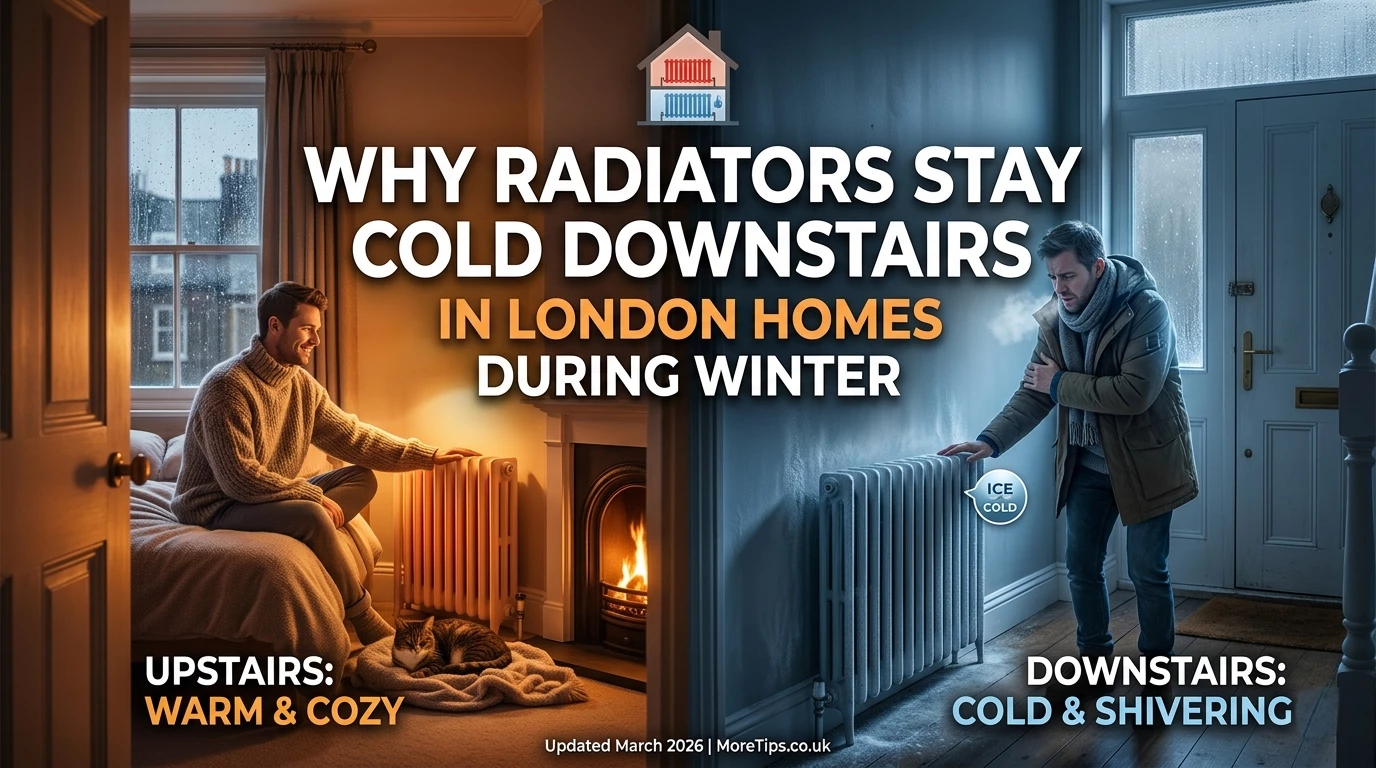
If your downstairs radiators are cold but the upstairs ones are heating up fine, you are not alone — this is one of the most commonly searched heating problems in the UK, especially during winter. In most cases the fix is straightforward and does not require an engineer. This guide walks through every likely cause in order, starting with the ones you can check yourself right now.
Quick Navigation
1. Why downstairs radiators stay cold in many UK homes
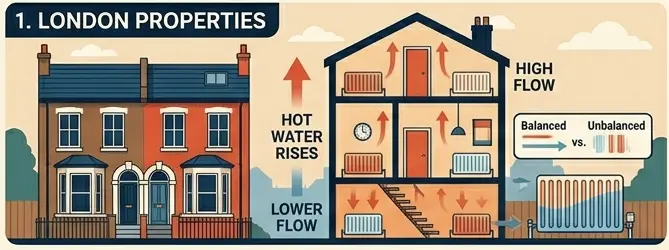
This is a very common issue across the UK, especially in older London terraced houses, converted flats, and Victorian properties where heating systems have often been altered or extended over the years.
The underlying reason is simple: hot water naturally rises through a heating circuit. If circulation is even slightly restricted or unbalanced, upper radiators will always receive hot water first — leaving downstairs rooms waiting or cold altogether.
Older pipe layouts compound the problem further. In many properties, downstairs pipe runs are longer or partially restricted by decades of corrosion, which reduces water flow before it ever reaches the ground floor radiators evenly. If your thermostat also seems unresponsive, that can mask the real problem and is worth ruling out early.
2. Trapped air — the most common reason for cold downstairs radiators
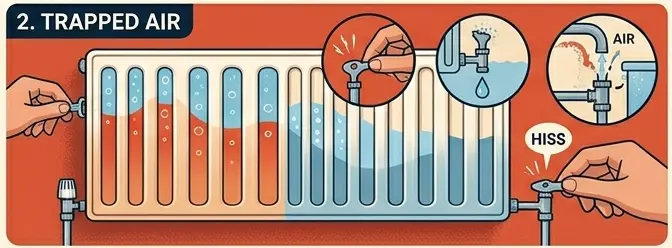
Trapped air inside a radiator stops hot water circulating through it properly. This is the single most common cause of a radiator that is cold at the top, or barely warm at all — particularly on the ground floor.
It usually becomes noticeable after long periods without heating, after bleeding another radiator elsewhere, or whenever boiler pressure shifts slightly.
- Gurgling or knocking noises when the heating is on
- Cold patches at the top of the radiator
- One room warming much more slowly than others
- Pressure dropping shortly after bleeding
Bleeding the affected radiator is usually enough to fix this. You will need a brass radiator key to release the trapped air — turn it slowly anticlockwise until water starts to drip, then close it again. Always check boiler pressure afterwards, as bleeding removes a small amount of water from the system.
If pressure keeps dropping after bleeding, there may be a deeper issue with why the radiator is cold at the top even after bleeding, which is worth checking separately.
3. Heating sludge inside older pipework
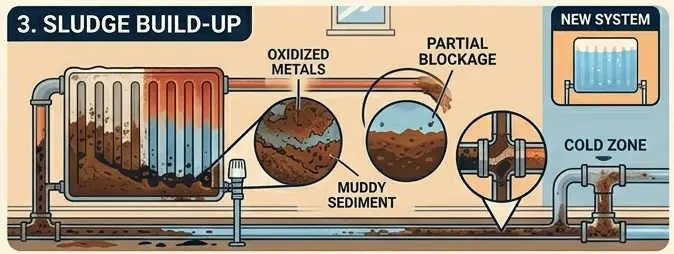
In older UK heating systems, sludge build-up is one of the most overlooked causes of downstairs radiators not heating up properly. Over time, rust particles and debris from internal corrosion settle at the bottom of the system — and because downstairs radiators sit lowest in the circuit, they collect this build-up first.
The tell-tale signs are a radiator that is warm at the top but cold or lukewarm at the bottom, or dark brown water coming out when you bleed it.
- Radiator warm at top but cold below
- Dark or rusty water when bleeding
- Heating taking noticeably longer than before
- Some radiators staying cold even after balancing
Adding a central heating inhibitor to your system slows future corrosion significantly. For more severe cases, fitting a magnetic system filter captures iron particles before they settle into radiators. If multiple radiators are badly affected, a professional power flush may be needed to clear the circuit properly.
4. Balancing radiators to fix uneven heating upstairs and downstairs
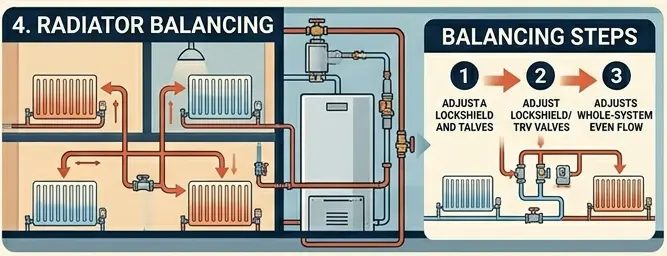
Balancing is the process of adjusting the lockshield valves on each radiator so that hot water is shared more evenly around the whole house. It is one of the most effective — and underused — fixes for cold downstairs radiators.
Without balancing, radiators closest to the boiler receive the strongest flow and heat up fastest, while distant downstairs units get whatever is left. This becomes especially noticeable in larger homes or multi-storey properties.
- Slightly close the lockshield valves on upstairs radiators that heat quickly
- Open the valves further on lower radiators that stay cold
- Allow 20–30 minutes between adjustments before checking temperatures
- Aim for a roughly even temperature difference across all radiators
Many homeowners find that balancing alone solves the problem without any further work. If your TRV heads are stuck or worn, a replacement TRV head can make balancing much more effective by restoring proper valve control.
5. Low boiler pressure causing cold downstairs radiators
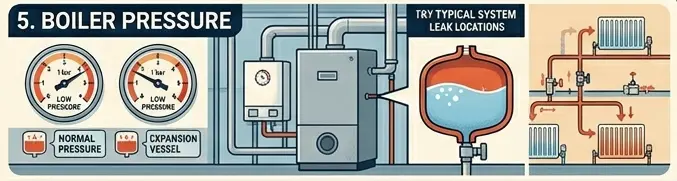
Low boiler pressure is another frequent culprit when downstairs radiators won't heat up. Lower radiators sit furthest from the pump and rely on adequate system pressure to receive enough hot water. When pressure drops, they are often the first to suffer.
For most UK combi and system boilers, pressure should sit between 1 and 1.5 bar when the system is cold. You can check this on the pressure gauge on the front of your boiler — if the needle is below 1 bar, the system needs repressurising.
- Small hidden leaks in pipework or radiator valves
- Pressure lost after recent radiator bleeding
- A faulty pressure relief valve
- Expansion vessel problems
Our full guide on what boiler pressure should be in a UK home covers how to repressurise safely and what the correct readings look like for different boiler types. If pressure keeps dropping overnight or between heating cycles, it is worth reading about why boiler pressure drops overnight — repeated pressure loss usually means there is an underlying fault that needs attention.
6. When to call a heating engineer about cold downstairs radiators
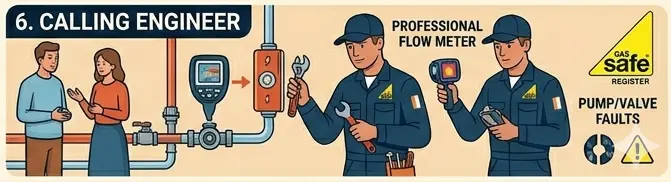
If you have bled the radiators, checked and corrected boiler pressure, and balanced the valves — and the downstairs radiators are still not heating properly — there is likely a deeper fault in the system.
- Circulation pump running weakly or at too low a speed setting — see our circulation pump guide for what to check
- Partially blocked or seized thermostatic valves — a replacement TRV head often resolves this
- Internal boiler restriction or heat exchanger issues
- Pipework blockages from heavy sludge accumulation
A qualified Gas Safe engineer can test flow rates, check pump performance, and confirm whether the system needs cleaning, component replacement, or a full power flush. If the boiler itself is struggling — for example not firing up reliably — take a look at our guide on why a boiler won't fire up before arranging a call-out.
Questions & Answers
Real questions from homeowners — answered by our team.
Community Questions
Frequently Asked Questions — Cold Downstairs Radiators UK
Why are my downstairs radiators cold but the upstairs ones are hot?
This is one of the most common heating complaints in UK homes, particularly in older properties. The most likely cause is that hot water is reaching upstairs radiators first — either because the system is unbalanced, there is trapped air in a downstairs radiator, or sludge has built up in the lower parts of the circuit. Checking boiler pressure and bleeding affected radiators are good starting points before looking at balancing the valves.
Can bleeding my radiators fix cold downstairs heating?
Yes, in many cases bleeding is all that is needed. If a downstairs radiator has trapped air inside, bleeding releases it and allows hot water to circulate through the full panel again. Always check boiler pressure after bleeding — it can drop slightly and may need topping up. If bleeding does not help and the radiator is still cold at the top, there may be a circulation or valve issue worth investigating.
Can old pipework in UK houses cause downstairs radiators to stay cold?
Yes, older pipework is a frequent cause of uneven radiator heating in many UK properties. In London especially, older systems often contain narrow pipes or long circulation routes that reduce water flow over time. Sludge and internal corrosion can also build up inside older heating systems, which often affects downstairs radiators first because they sit lower in the circuit.
Does low boiler pressure cause downstairs radiators to stay cold?
Low boiler pressure can often affect downstairs radiators before upstairs ones because lower radiators rely on steady circulation pressure to receive enough hot water. Most UK boilers work best between 1 and 1.5 bar when cold. If pressure falls below this range, downstairs rooms may heat slowly or some radiators may remain partly cold. If pressure keeps dropping, read our guide on why boiler pressure drops overnight for likely causes.
Is radiator balancing important in larger London houses?
Yes, balancing is especially important in larger London homes where radiators are spread across several floors. Without balancing, radiators nearest the boiler often take most of the heat while those further away receive less flow. Adjusting lockshield valves carefully can improve heat distribution and make downstairs rooms warm more evenly.
When should I call a heating engineer about cold downstairs radiators?
If bleeding radiators, checking boiler pressure, and balancing valves do not improve heating, it is time to call a qualified heating engineer. Persistent cold downstairs radiators can indicate circulation pump weakness, blocked pipework, faulty TRV valves, or internal boiler problems that need professional diagnosis and testing.