Radiator Cold at the Top After Bleeding? UK Troubleshooting Guide
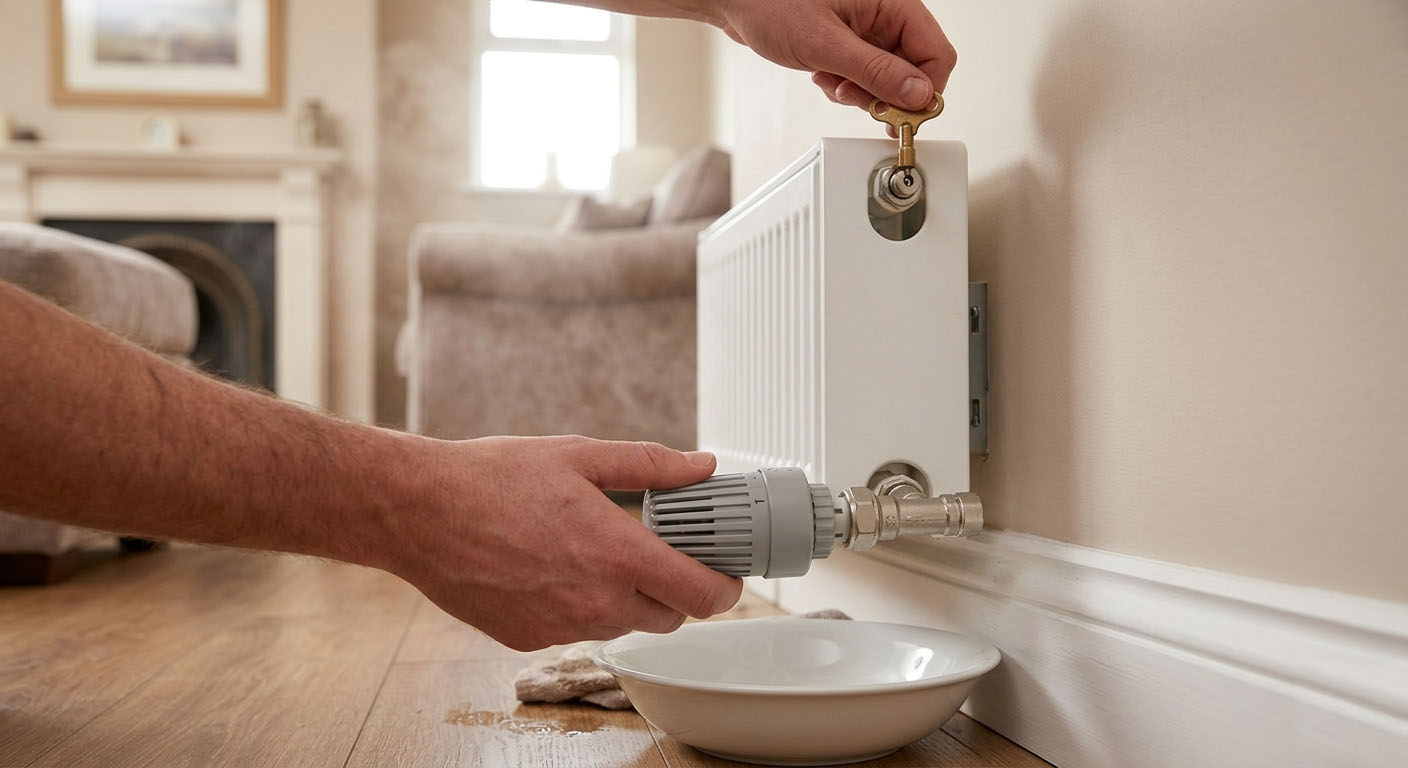
In most British central heating systems, a radiator that remains cold at the top after bleeding suggests that either the air wasn't fully removed, or the system doesn't have enough pressure to push hot water into the top of the panel. Knowing the best boiler pressure for your UK home is essential, as a drop in bars often occurs immediately after you've released air from the valves. This guide covers the common UK causes and how to fix them without calling an engineer.
Quick Navigation
1. Did You Check the Boiler Pressure?
This is the number one reason a radiator stays cold at the top after bleeding. When you bleed a radiator, you are letting air (and a little water) out of a sealed system. This causes the overall system pressure to drop.
- The Symptom: The air stops coming out of the bleed valve, but water doesn't start. This means there isn't enough pressure to push the water to the top of the panel. If you notice this alongside a boiler not firing up, your pressure is likely too low to trigger the sensors.
- The Fix: Check the gauge on your combi boiler. If it is below 1.0 bar, you need to use the filling loop (usually two blue levers or a braided flexible hose) to top it up to roughly 1.3 bar. Once the pressure is restored, try bleeding the radiator again to ensure the air is fully purged.
2. Dealing with Stubborn Airlocks
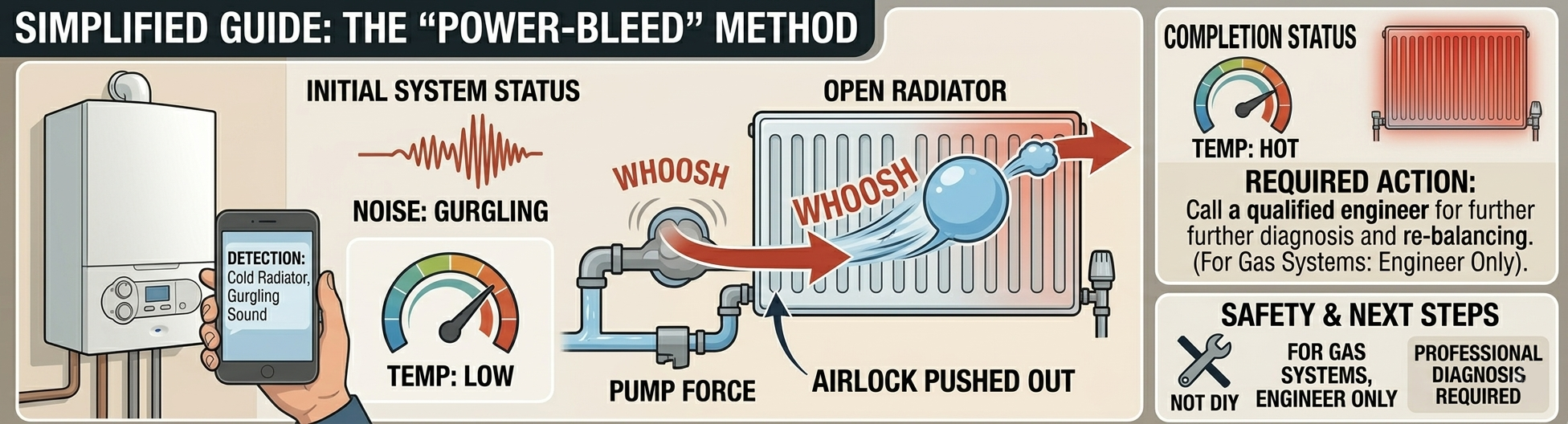
Sometimes air gets trapped in the pipework (the "tails") leading to the radiator rather than the radiator itself. This creates an airlock that prevents the pump from pushing hot water through.
The "Power-Bleed" Method: Turn off all the other radiators in your house by turning their valves to '0' or 'off'. Leave only the cold radiator fully open. Turn the heating on for 10-15 minutes. This forces the full flow of the central heating pump through that one radiator, often dislodging stubborn air pockets.
If your system is noisy while doing this, such as a boiler vibrating noise, it confirms that air is moving through the heat exchanger. Once the radiator gets hot, turn the other radiators back on one by one to balance the system.
3. The Stuck TRV Pin
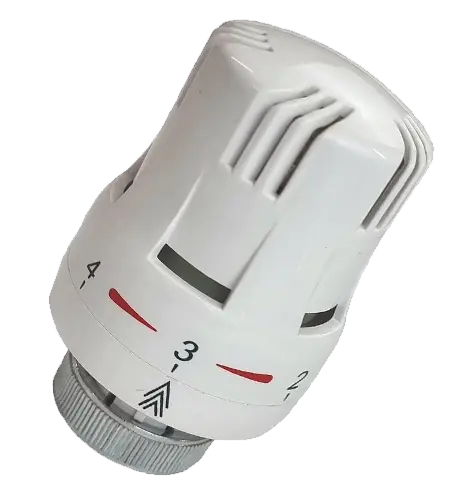
The Thermostatic Radiator Valve (TRV) is the dial you turn to change the temperature. Inside, there is a small metal pin that can get stuck in the "closed" position, especially if the heating has been off all summer.
- How to Access: Pop off the plastic head of the TRV. On most UK models (like Drayton or Honeywell), this is done by unscrewing a textured metal ring at the base of the plastic head.
- The Fix: You will see a small metal pin poking up. Try to push it down with the flat of a screwdriver. It should have about 2-3mm of "springy" movement.
- If Seized: If the pin doesn't move, it is stuck closed. Do not pull it hard with pliers as it may come out and cause a leak. Instead, gently tap the side of the brass valve body with a small hammer or the handle of a screwdriver. The vibration usually causes the pin to pop back up, allowing hot water to enter the radiator.
Tools & Parts for the Job
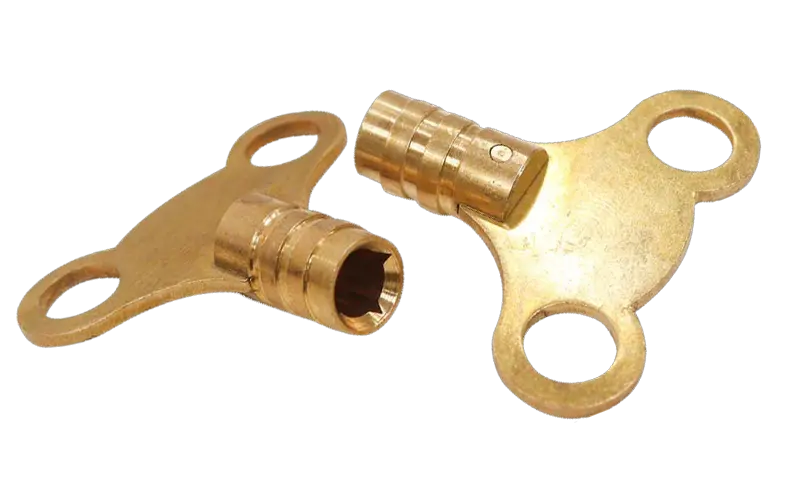
Most radiator issues can be solved with these basic UK plumbing supplies.
Radiator Troubleshooting FAQs
Why is the radiator hot at the bottom but cold at the top?
This is the classic sign of trapped air. Air is lighter than water, so it rises to the top of the radiator panel, preventing the hot water from filling the space. Bleeding is the first step, but checking boiler pressure is the second.
What if the radiator is cold at the bottom but hot at the top?
This is usually NOT air. Cold at the bottom typically indicates a build-up of sludge (magnetite). The sludge is heavy and sinks to the bottom, blocking the flow. This may require a manual flush or a professional powerflush.
How do I know if my system is "sealed" or "open-vented"?
If you have a combi boiler with a pressure gauge, it’s a sealed system. If you have a large water tank in the loft (an expansion tank), it’s an open-vented system. Open systems don't need manual topping up via a loop; they use gravity and the tank in the loft to maintain pressure.
Can a faulty pump cause cold radiators?
Yes. If the pump is weak or failing, it might struggle to push water to the furthest radiators or upstairs. If all your radiators are struggling to get warm, the pump or a "system balance" issue is more likely than trapped air.
When to Call a Gas Safe Engineer
If you have restored the pressure, bled the air, and checked the TRV pin but the radiator is still cold, there may be a more serious issue:
- Faulty Diverter Valve: If your hot water works but radiators don't.
- Seized Pump: If the boiler fires up but the heat doesn't move.
- Internal Blockage: If the pipes are severely restricted by limescale or sludge.
Always use a Gas Safe Registered engineer for any work involving your boiler's internal components.