Central Heating Pump Replacement: Choosing a Grundfos or Wilo Pump
If your radiators are cold at the top, your boiler is making a "kettling" noise, or the pump is humming without circulating water, your central heating circulation pump may be failing. This guide covers the signs of a failing pump, how to choose a compatible ErP-compliant replacement like a Grundfos UPS3 or Wilo Yonos PICO, and how to fit one yourself.
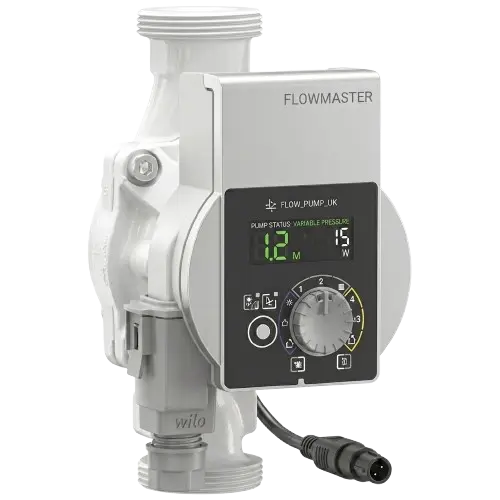
The Heart of Your Heating System
In the UK, 90% of homes use a standard 130mm or 150mm port-to-port circulation pump. Modern "Smart" pumps save significant energy compared to old fixed-speed models:
- Energy Efficiency: Modern pumps use ECM technology to reduce electricity bills by up to 80%.
- Universal Fit: Most Grundfos and Wilo domestic pumps are designed to be direct swaps for older units.
- Self-Venting: High-end models automatically remove air, preventing "air locks" in your pipework.
Signs Your Central Heating Pump Is Failing
A circulation pump rarely fails all at once. Watch for these warning signs before it stops completely:
If the pump runs fine but radiators are still cold, the cause is often elsewhere — see radiator cold at the top after bleeding for trapped air, or cold downstairs radiators if the cold is at the bottom (usually sludge).
Grundfos vs Wilo: Which is Better?
Both brands dominate the UK market and meet strict European ErP regulations. Choosing between them usually comes down to what is already installed.
Where to Buy a Central Heating Pump in the UK
Expect to pay between £100 and £180 for a high-quality domestic pump. We recommend buying from reputable merchants to ensure you receive a genuine unit with a full warranty.
| Retailer | Stock Status | Top Pick | Link |
|---|---|---|---|
| Screwfix | In Stock | Grundfos UPS3 15-50/65 | View at Screwfix |
| Toolstation | Available | Wilo Yonos PICO 25/1-6 | View at Toolstation |
| Amazon UK | Quick Shipping | Universal Replacement Pumps | Check Prices |
How to Replace a Central Heating Pump
Replacing a pump is a common DIY task for those comfortable with basic plumbing. However, if your pump is integrated inside the boiler casing, you must hire a Gas Safe registered engineer.
Power & Water Off
Switch off the heating at the fused spur. Next, close the Gate Valves on either side of the pump by turning them clockwise. Warning: These valves often seize; if they don't move, you may need to drain the system.
The "Big Spanner" Job
Place a bucket underneath to catch spills. Use a large adjustable wrench or "water pump pliers" to loosen the large nuts (unions) connecting the pump to the pipework. Remove the old pump and old rubber washers.
Check the Flow Direction
Look for the arrow on the side of the new pump housing. It must point in the same direction as the old one (usually upwards or towards the boiler). Insert new rubber washers (always use new ones to prevent leaks) and tighten the nuts.
Plug and Play
Most modern Grundfos and Wilo pumps use a "Molex" style plug. Wire your existing cable into the provided plug (Live, Neutral, and Earth) and click it into the pump. Ensure the cable is secured and not touching hot pipes.
Bleeding the Air
Open the gate valves. Switch on the power. If the pump is noisy, it likely has air inside. Most modern pumps have an automatic de-airing function, but some older-style models require you to loosen the large silver screw on the front slightly until water drips out. Draining the system will also drop your boiler pressure, so top it back up afterwards with a filling loop.
💡 Pump Troubleshooting Tips
- Stuck Pump: If the pump hums but doesn't spin after summer, it might be "stuck." Gently tapping the pump body or turning the internal shaft manually (if accessible) can often free it.
- Port-to-Port: Ensure you check the distance between the two threaded ends. Standard UK pumps are 130mm, but some older systems use 150mm or 180mm.
- Speed Settings: Always start a new pump on "Constant Pressure" or "Proportional Pressure" mode. High-speed settings are usually only needed for very large homes with many radiators.
- Protect the new pump: Sludge is the number one pump killer. Keep the system dosed with central heating inhibitor and fit a magnetic system filter to catch debris before it reaches the impeller.
Frequently Asked Questions
What are the signs of a failing central heating pump?
Common signs are radiators that are warm at the bottom but cold at the top, a humming pump that isn't circulating water, no warmth from the radiators despite the boiler firing, leaks around the pump body, and unusual noise or vibration. A pump that is hot to touch but silent has often seized.
What size central heating pump do I need?
Around 90% of UK homes use a standard 130mm port-to-port pump, though some older systems use 150mm or 180mm. Measure the distance between the two threaded connections on your existing pump before buying a replacement.
Is Grundfos or Wilo better for a UK home?
Both meet European ErP efficiency rules and are reliable. Grundfos UPS3 and Alpha pumps are the UK favourite and common in older British Gas installations, while Wilo Yonos PICO and Stratos pumps are favoured by many installers for their compact size and simple controls. The easiest choice is usually a direct match for what is already fitted.
Can I replace a central heating pump myself?
An external pump on the pipework is a common DIY job for someone comfortable with basic plumbing and wiring. However, if the pump is integrated inside the boiler casing, it must be replaced by a Gas Safe registered engineer.
Why is my central heating pump noisy?
A noisy pump usually has trapped air inside or is starting to seize. Most modern pumps remove air automatically; on older models, loosening the central bleed screw until water appears releases the air. Persistent noise can also indicate sludge in the system or a worn bearing.
How long does a central heating pump last?
A good quality circulation pump typically lasts around 10 to 15 years. Sludge build-up shortens its life, so keeping the system dosed with inhibitor and fitting a magnetic filter helps the pump last longer.