Boiler Losing Pressure Overnight: Causes & Fixes for UK Homes
Quick Answer
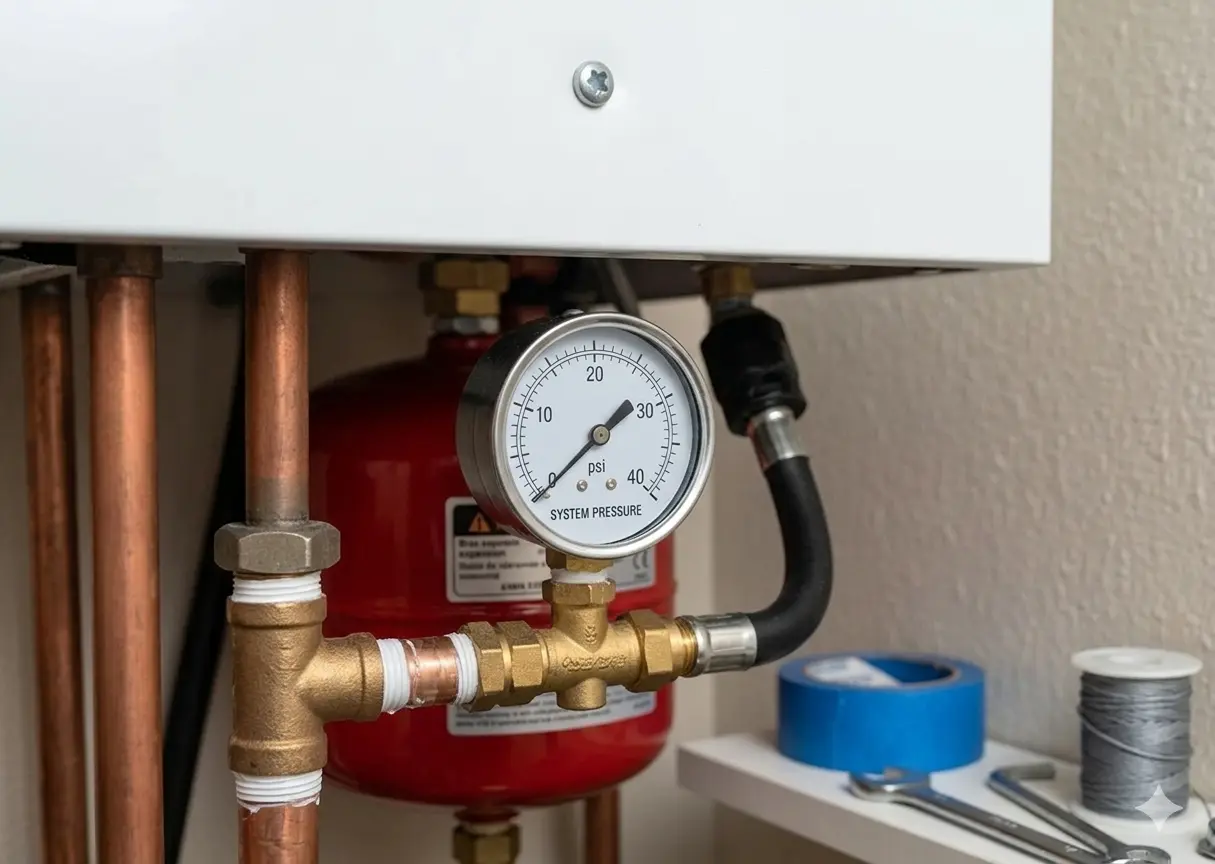
A boiler losing pressure overnight is almost always caused by water leaving the sealed system. The three most common reasons are a failed expansion vessel, a faulty pressure relief valve releasing water during cooling, or a slow leak at a pipe joint or radiator valve. Topping up the pressure once is fine but if it keeps dropping, call a Gas Safe registered engineer.
Quick Navigation
Why Does a Boiler Lose Pressure Overnight?
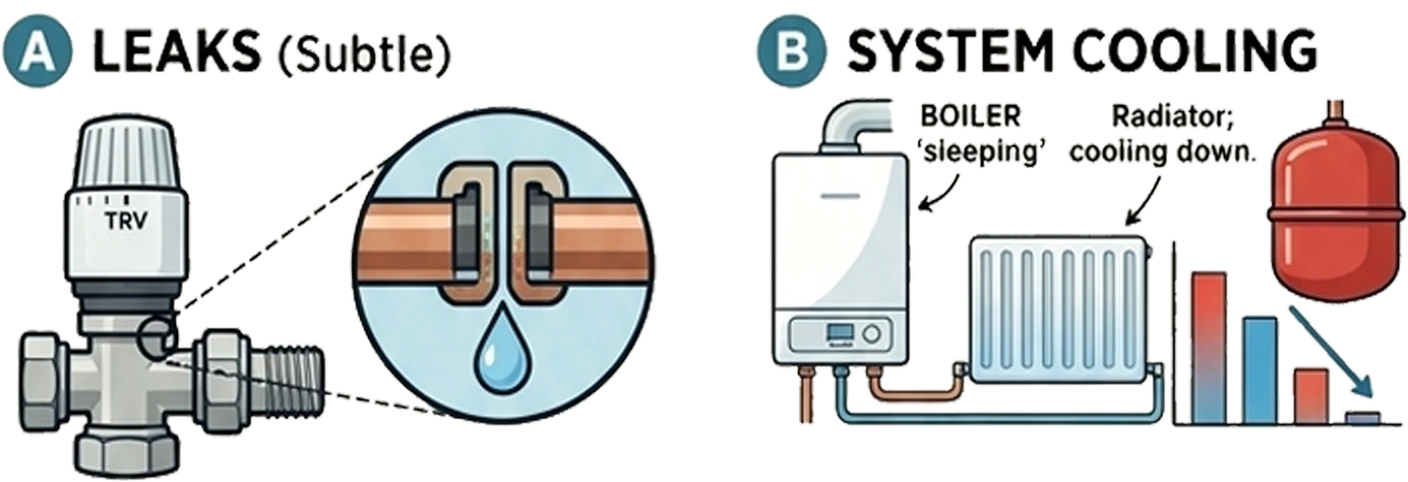
A sealed central heating system holds a fixed volume of water under pressure. If that pressure drops especially while the boiler is switched off overnight it means water has left the system somewhere. There is no other explanation.
The reason overnight is particularly noticeable is straightforward: as the system cools, water contracts, pipe joints relax, and any small weep or drip that was masked by heat becomes more apparent. You go to bed with 1.5 bar on the gauge and wake up to 0.8 bar.
The three most common causes are:
- Failed expansion vessel The expansion vessel contains a rubber diaphragm that absorbs pressure changes as water heats and cools. When it fails, the system can no longer buffer those swings and pressure becomes erratic shooting high when hot and crashing low overnight when cold.
- Pressure relief valve (PRV) weeping The PRV is a safety valve that opens if pressure gets too high. A worn PRV can begin releasing small amounts of water during heating cycles and stay partially open overnight. Check the small copper discharge pipe outside your property for drips or staining.
- Hidden leak Even a very slow drip at a radiator valve, pipe joint, or inside the boiler itself will cause gradual pressure loss. Leaks under floorboards or behind walls are common and need professional leak detection to locate.
If you have recently bled your radiators, that will also cause a one-off pressure drop that is normal and simply needs a top-up.
1. Why Checking Boiler Pressure Is Crucial for System Health
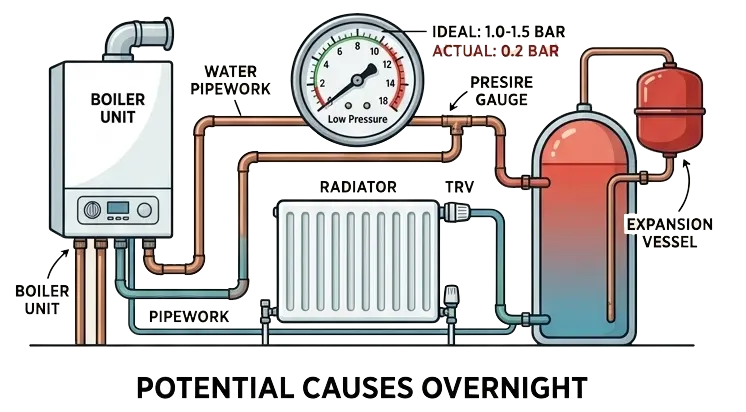
Boiler pressure is one of the clearest indicators of how your heating system is performing. In simple terms, it ensures hot water can circulate properly through your pipes and radiators.
Checking it regularly every few weeks during winter is a quick habit that can catch small problems before they become expensive ones.
Low pressure: When pressure drops too low, water cannot circulate properly. This leads to cold radiators, weak hot water, or the boiler locking out entirely. Most UK boilers shut down below 0.9 bar as a safety measure.
High pressure: Too much pressure stresses internal components seals, valves, and the expansion vessel and can cause leaks or trigger the pressure relief valve to discharge.
If your boiler pressure keeps dropping after you repressurise it, that is the system telling you something is wrong. Do not keep topping it up and hoping for the best get it investigated. For related issues like understanding the best boiler pressure for your home, see our dedicated guide.
2. What Is the Ideal Boiler Pressure for a UK Home?
For virtually all domestic boilers in the UK, the correct pressure when the system is completely cold is between 1.0 and 1.5 bar.
Most heating engineers recommend setting it to around 1.5 bar cold. This gives headroom for the natural rise that happens when the system heats up.
When heating is running, it is perfectly normal for pressure to rise by up to 0.5 bar so a reading of 2 bar with the heating on is fine. What is not fine is pressure sitting above 2 bar when the system is cold, or dropping below 1 bar overnight.
For a full breakdown of pressure ranges, error codes, and what different readings mean for different boiler models, see our guide on what pressure your boiler actually needs.
3. How to Read Your Boiler's Pressure Gauge
Modern boilers use either an analogue dial or a digital display. Both measure pressure in bar.
Always check the pressure when the system is cold ideally first thing in the morning before the heating has come on. Readings taken while the heating is running will naturally be higher.
On an analogue dial, the needle should sit in the green zone usually between 1 and 2 bar. On a digital display, aim for a reading of around 1.5 bar when cold.
If you are also having issues with radiators still cold at the top after bleeding, low pressure is often part of the same underlying problem.
4. Identifying and Fixing Low Boiler Pressure
If your boiler pressure falls below 1 bar, the system may start to struggle. Below 0.9 bar, most boilers will lock out completely.
Common warning signs of low pressure include:
- Radiators heating unevenly or staying cold at the top
- Hot water temperature fluctuating unpredictably
- Boiler entering lockout mode and displaying an error code
- Waking up to find the pressure lower than it was the night before
Low pressure is most commonly caused by:
- Bleeding radiators (normal just needs a top-up)
- A slow leak in pipework, valves, or a radiator
- A failed expansion vessel
- A pressure relief valve weeping water
A one-off drop after bleeding radiators is nothing to worry about. Pressure that keeps dropping after you top it up is a different matter that needs professional attention.
Low water pressure elsewhere in the house can sometimes be confused with boiler pressure issues. If you are also noticing weak flow from taps or showers, our guides on low water pressure upstairs and low shower water pressure may help.
5. Causes and Risks of High Boiler Pressure
Pressure above 2 bar when the system is cold is a clear warning sign. It puts unnecessary strain on seals, valves, and the expansion vessel.
Common causes of high boiler pressure include:
- A faulty filling loop that is allowing water to constantly enter the system
- A failed expansion vessel that can no longer absorb pressure changes
- The system being over-filled during repressurisation
Left unchecked, high pressure can cause the pressure relief valve to activate you may notice water dripping from the discharge pipe outside. It can also damage internal components over time.
If your boiler is showing high pressure and you are also having issues with the boiler not firing, our guide on why your boiler is not firing up covers the full range of related faults.
How to Repressurise Your Boiler Safely
If your boiler pressure has dropped and this is a one-off for example, after bleeding radiators you can usually top it up yourself using the filling loop.
With the boiler switched off and fully cold:
- Locate the filling loop under the boiler a flexible silver hose with a valve at each end
- Open both valves slowly and watch the pressure gauge begin to rise
- Stop as soon as the gauge reaches 1.5 bar
- Close both valves firmly
- Switch the boiler back on and monitor the pressure over the next 24–48 hours
Never leave the valves open and walk away pressure can overshoot quickly. And if you find yourself repressurising more than once a month, stop and call a heating engineer. Topping up repeatedly only masks the real problem.
You will also need a replacement filling loop if the existing one is corroded or leaking.
When to Call a Gas Safe Engineer
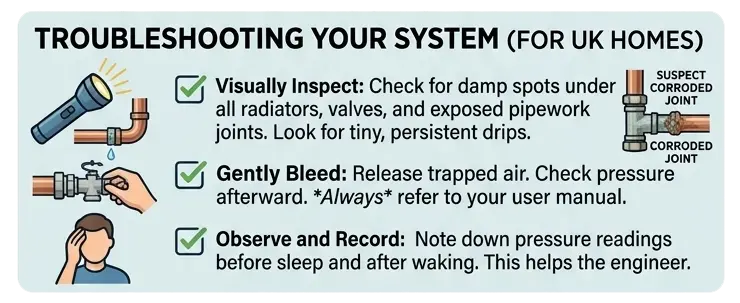
If your boiler pressure keeps dropping after repressurising especially overnight do not keep topping it up. That is the system telling you there is an active fault.
Persistent pressure loss usually points to one of:
- A hidden leak within the pipework or behind a wall
- A failed pressure relief valve releasing water
- An expansion vessel that has lost its charge or failed completely
All three of these require a professional to diagnose and fix safely. Never attempt to open your boiler casing yourself. Only a Gas Safe registered engineer should carry out internal boiler repairs.

If the boiler is also making unusual sounds alongside pressure loss, our guide to boiler vibrating and noise faults may point to an additional underlying issue.
Questions & Answers
Real questions from homeowners — answered by our team.
Community Questions
Frequently Asked Questions
Why does my boiler lose pressure overnight?
As the system cools overnight, water contracts and any small weep or drip becomes more noticeable. The most common causes are a failed expansion vessel, a pressure relief valve releasing water during cooling cycles, or a slow leak at a pipe joint or radiator valve. If it keeps happening, call a Gas Safe engineer.
Is 2 bar too high for a boiler?
Not while the heating is running pressure naturally rises as water heats up. However, if the gauge reads 2 bar or above when the system is completely cold, that is too high and should be looked at.
How often should boiler pressure be checked?
Every few weeks during colder months is enough for most households. If you are topping up more than once a month, there is an underlying fault that needs investigating.
Can low boiler pressure stop the heating?
Yes. Most UK boilers lock out and stop firing when pressure drops below 0.9 bar, leaving you without heating or hot water until the system is repressurised.
What is the ideal boiler pressure for a UK home?
Between 1.0 and 1.5 bar when cold. When heating is running, a rise to around 2 bar is normal and nothing to worry about.
Can I repressurise my boiler myself?
Yes, you can top up the pressure using the filling loop as long as the boiler is switched off and cold. Follow the steps above and stop at 1.5 bar. If the pressure drops again quickly, stop topping it up and call an engineer you are likely masking an active leak.
What causes boiler pressure to keep dropping after repressurising?
Pressure that keeps falling after topping up almost always means water is actively leaving the system through a hidden leak, a weeping pressure relief valve, or a failed expansion vessel. All three require a Gas Safe engineer to diagnose and repair.
Is a boiler losing pressure dangerous?
The boiler itself will shut down before it operates at an unsafe pressure, so there is no immediate danger. However, an undetected hidden leak can cause water damage to your home over time, and a failed expansion vessel or PRV can lead to larger system failures. Always get repeat pressure loss properly investigated.