How to Test Water Pressure at Home: Mains Gauge Guide
A screw-on mains pressure gauge is a simple, affordable tool that measures the exact bar reading of your incoming cold water supply. Testing takes under five minutes and is the first step in diagnosing low pressure throughout your home, overnight pressure drops, or checking whether your water company is meeting the legal minimum. This guide walks you through the test, the ideal bar range, and which gauge size to buy.
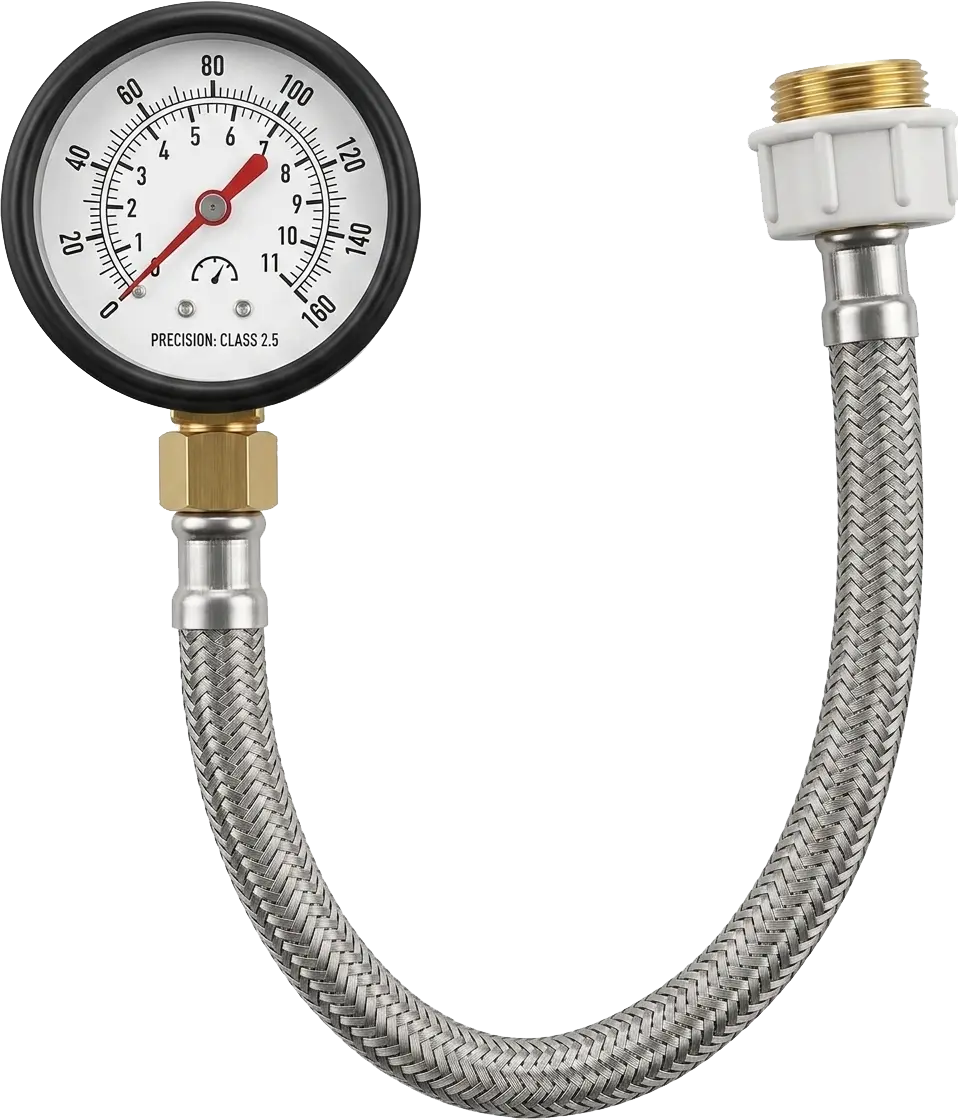
What Does a Mains Pressure Gauge Do?
In a standard UK home, a screw-on pressure gauge lets you:
- Measure static pressure: The pressure in your mains supply with no taps running — typically 1 to 4 bar in the UK.
- Measure dynamic pressure: The pressure under live flow, revealing how much your supply drops when taps or appliances run.
- Provide evidence: A hard number you can quote when reporting a low-pressure fault to your water supplier.
What Is Normal Water Pressure in the UK?
Before you test, it helps to know what you're aiming for. Most UK homes fall in this range:
| Reading | What It Means |
|---|---|
| Below 1 bar | Low — weak, frustrating flow at taps and showers |
| 1 – 4 bar | Normal — most homes sit around 2–3 bar |
| Above 5 bar | High — can stress pipes, joints and appliances over time |
Remember: pressure isn't the whole story. You can have decent pressure but still get poor flow if a pipe is partly blocked or a tap aerator is clogged — see the pressure-vs-flow note below.
Common Reasons to Use One
A pressure gauge is particularly useful if you're experiencing any of the following:
Choosing the Right Size
UK screw-on pressure gauges connect via a standard BSP (British Standard Pipe) thread. The most common connection sizes are:
| Connection Size | Thread Standard | Typical UK Attachment Point |
|---|---|---|
| ½ inch BSP | Male or Female | Washing machine fill valve, kitchen tap tail |
| ¾ inch BSP | Male or Female | Outdoor garden tap, stopcock outlet |
Most general-purpose kits include a ¾ inch BSP adapter as standard, making them compatible with the vast majority of outdoor taps. Check the thread before buying if attaching directly to an internal valve or appliance hose connection.
Where to Buy a Pressure Gauge in the UK
Screw-on pressure gauges are widely stocked and typically cost between £8 and £25. Kits that include multiple BSP adapters offer the best flexibility.
| Retailer | Stock Status | Benefit | Link |
|---|---|---|---|
| Screwfix | In Stock | Click & collect same day | View Range |
| Amazon | Available | Arctic Hayes water pressure gauge | Check Stock |
How to Take a Mains Pressure Reading
Getting an accurate reading takes under five minutes and needs no special skills. The outdoor tap is the easiest connection point for most homes.
Find a Suitable Tap or Valve
The most convenient attachment point is an outdoor garden tap — it's usually one of the first take-offs from the mains, giving a true reading. Alternatively, disconnect the hose from your washing machine's cold fill valve and attach the gauge there. Make sure the tap or valve is fully closed before attaching.
Screw On Hand-Tight
Thread the gauge adaptor onto the tap outlet or valve connection and hand-tighten firmly. Most gauges include a rubber washer in the fitting — don't over-tighten, as this can deform the seal and cause a drip around the connection.
Open the Tap Slowly — Then Close It
Turn the tap on fully, then close it again. The needle settles on your static pressure — the pressure in the pipe when nothing is flowing. In most UK homes this reads between 1.5 and 4 bar. Record this number.
Open the Tap and Read Under Flow
Open the tap fully while the gauge is still connected. The reading will drop — this is your dynamic pressure. A significant drop between static and dynamic readings (more than 1 bar) often indicates a restriction in your supply pipe or a partially closed internal stopcock.
Leave the Gauge Fitted Overnight
If you suspect your pressure drops specifically at night, leave the gauge attached to the outdoor tap with the tap open and check the reading first thing in the morning. A reading below 0.7 bar means your water supplier is potentially falling below the legal minimum set by Ofwat, and you have grounds to file a formal complaint. See our full breakdown of why UK water pressure drops at night for what to do next.
Pressure vs Flow — Don't Confuse Them
A gauge measures pressure (the force pushing water through the pipe). It does not measure flow (the volume that actually comes out). You can have healthy pressure but still get a weak stream if a pipe is partly blocked or a tap aerator is clogged. To check flow, time how long a flow measuring jug takes to fill — a good tap should deliver more than 10 litres per minute. Testing both gives you the full picture.
💡 Pro Tips for an Accurate Reading
- Test at night (11 PM–5 AM): UK water companies often reduce network pressure overnight. Testing then gives you the worst-case reading for your property.
- Turn off all appliances: Dishwashers, washing machines and running toilets all reduce dynamic pressure. For a true static reading, ensure nothing is drawing water inside the property.
- Check the gauge range: Most domestic gauges read 0–10 bar or 0–6 bar. Either is fine for a UK mains test. Avoid industrial gauges scaled to 25 bar — the resolution makes low readings hard to distinguish.
- PTFE tape is not needed: The gauge's internal rubber washer is enough. Adding PTFE to a rubber-seated connection can actually cause a leak by preventing the washer sitting flush.
- Low boiler pressure is separate: If your boiler pressure is dropping overnight on the heating gauge, that's a closed-loop central heating issue — not a mains supply problem this gauge detects. See our boiler pressure guide.
Frequently Asked Questions
What is normal water pressure for a UK home?
Usually between 1 and 4 bar, with most homes around 2–3 bar. Below 1 bar is low and causes weak flow; consistently above 5 bar can stress pipes and appliances.
What is the legal minimum water pressure in the UK?
Under Ofwat's Guaranteed Standards Scheme, suppliers must maintain at least 0.7 bar (7 metres static head) at your property boundary. Consistently below that gives you grounds to complain.
What size water pressure gauge do I need?
UK gauges use a BSP thread. ¾ inch BSP fits most outdoor garden taps (the most common size); ½ inch BSP suits washing machine valves and some tap tails. Many kits include a ¾ inch adapter.
What's the difference between static and dynamic pressure?
Static is the reading with no water flowing; dynamic is the reading while a tap is fully open. A gap of more than about 1 bar points to a restriction in the supply pipe or a partly closed stopcock.
Where is the best place to test mains water pressure?
The outdoor garden tap, since it's often the first take-off from the mains and gives a true reading before internal pipework. Make sure nothing else is drawing water.
Is water pressure the same as flow rate?
No. Pressure is the force; flow rate is the volume that comes out. You can have good pressure but poor flow from a blocked pipe or clogged aerator. A flow measuring jug checks flow separately.