Low Water Pressure Upstairs? UK Causes & DIY Fixes
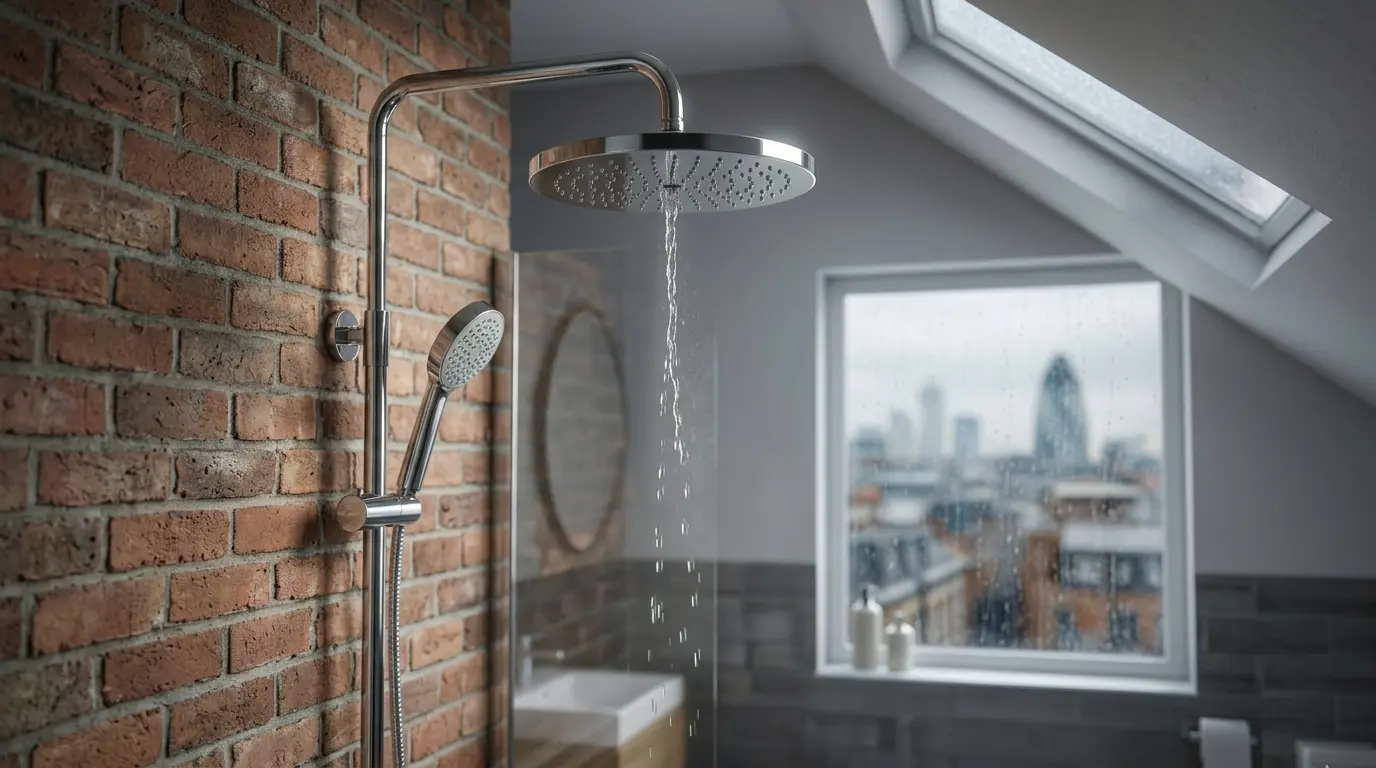
A powerful shower downstairs and a pathetic trickle upstairs is one of the most common plumbing complaints from UK homeowners — and it's almost always fixable. The reason pressure drops on upper floors comes down to one of a small number of root causes: the type of water system your home uses, an airlock or blockage in the pipework, limescale build-up, or a fault in a valve or regulator. Each has a different fix, and some you can sort yourself in under half an hour.
This guide walks through every cause in order, with clear DIY checks before escalating to anything that needs a plumber.
Quick Navigation
1. Why Water Pressure Drops Upstairs in UK Homes
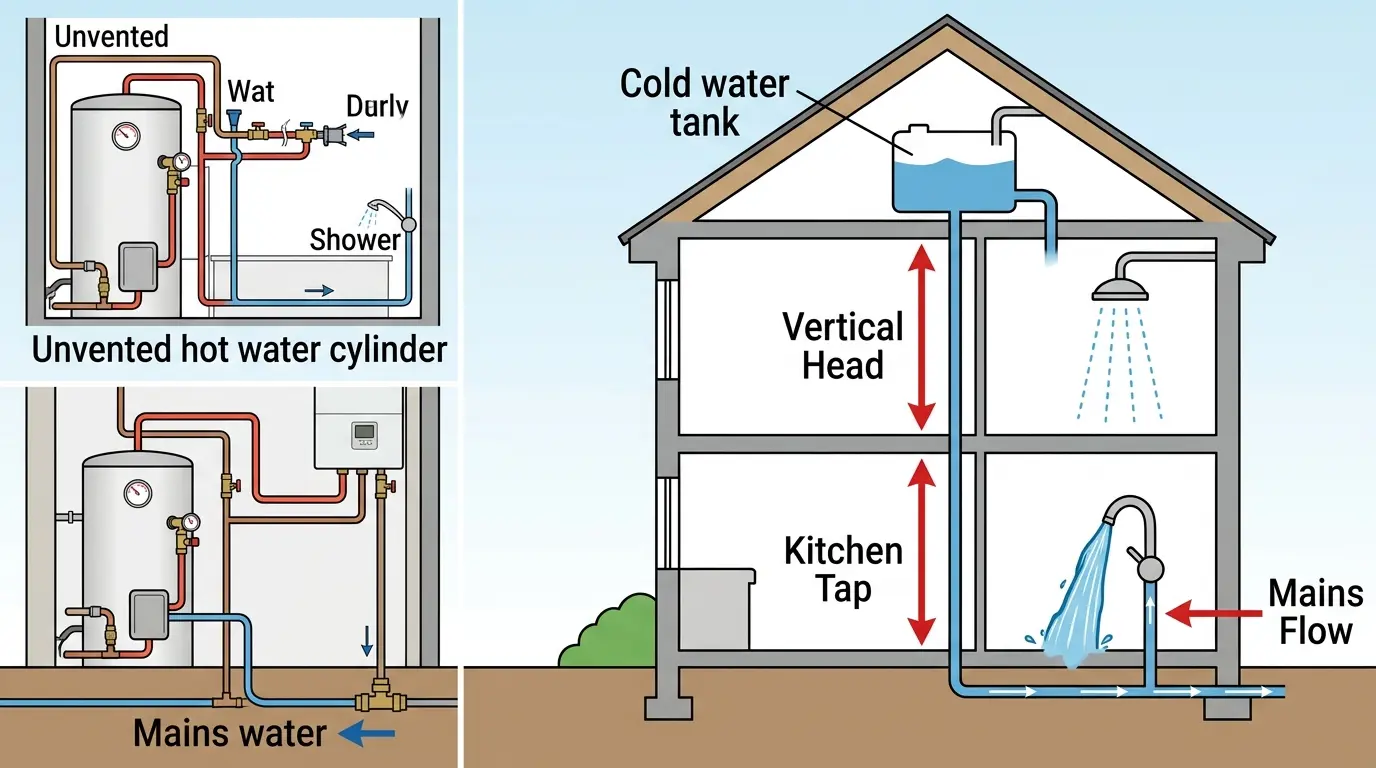
The single biggest factor is your water system type. UK homes use one of three setups, and which one you have determines what's causing the problem and what will fix it.
Gravity-fed systems (cold water tank in the loft) — very common in UK homes built before the 1990s. The cold water tank sits in the loft and feeds the upstairs bathroom by gravity alone. The pressure you get is determined entirely by the head of water — the vertical distance between the tank and the tap. In many UK terraced and semi-detached houses, this distance is only 1 to 2 metres, which produces very low pressure at the tap. Downstairs taps and kitchen cold are usually fed directly from the mains, which is why the kitchen tap is fine while the upstairs shower is weak.
Combi boiler systems — common in homes built or refitted since the mid-1990s. Both hot and cold water are supplied directly from the mains, so there's no loft tank. Upstairs pressure should be comparable to downstairs. If it isn't, the issue is a specific fault rather than the system design.
Unvented cylinder systems (Megaflo-type) — a high-pressure hot water cylinder fed from the mains. These give excellent pressure throughout the house. Very uncommon in older UK properties unless upgraded.
Other structural factors that compound the problem regardless of system type:
- Distance from the mains entry point. Every metre of pipe adds a small amount of frictional resistance. The further the bathroom is from where water enters the house, the lower the flow.
- Pipe diameter. Older UK homes often have 15mm pipework where 22mm is now recommended for higher-flow areas. A narrower pipe simply can't deliver the same volume at the same pressure.
- Simultaneous demand. Running the washing machine, dishwasher, and an upstairs shower at the same time splits the available flow between them. The upstairs bathroom is always last in line on a gravity-fed system.
2. Common Plumbing Faults to Check
If your pressure was fine until recently and has gradually or suddenly got worse, a specific fault is almost certainly to blame rather than the system design.
Airlock in the hot water pipework. This is extremely common in UK gravity-fed systems. Air bubbles get trapped in the hot pipe run after plumbing work, after the system has been drained, or sometimes after a very long period of low usage. The air acts like a physical plug that restricts or completely blocks hot water flow to the upper floors. The telltale sign is hot water pressure specifically being weak while cold remains normal. See the DIY fix in Section 4.
Limescale blocking the shower head or tap aerators. If you live in a hard water area — the South East, East Anglia, the Midlands, and much of central England — limescale builds up rapidly in shower heads and tap aerators. It's responsible for a significant proportion of "low pressure" complaints that are actually just flow restriction at the outlet rather than a pressure problem in the pipes. Always check this first before investigating further.
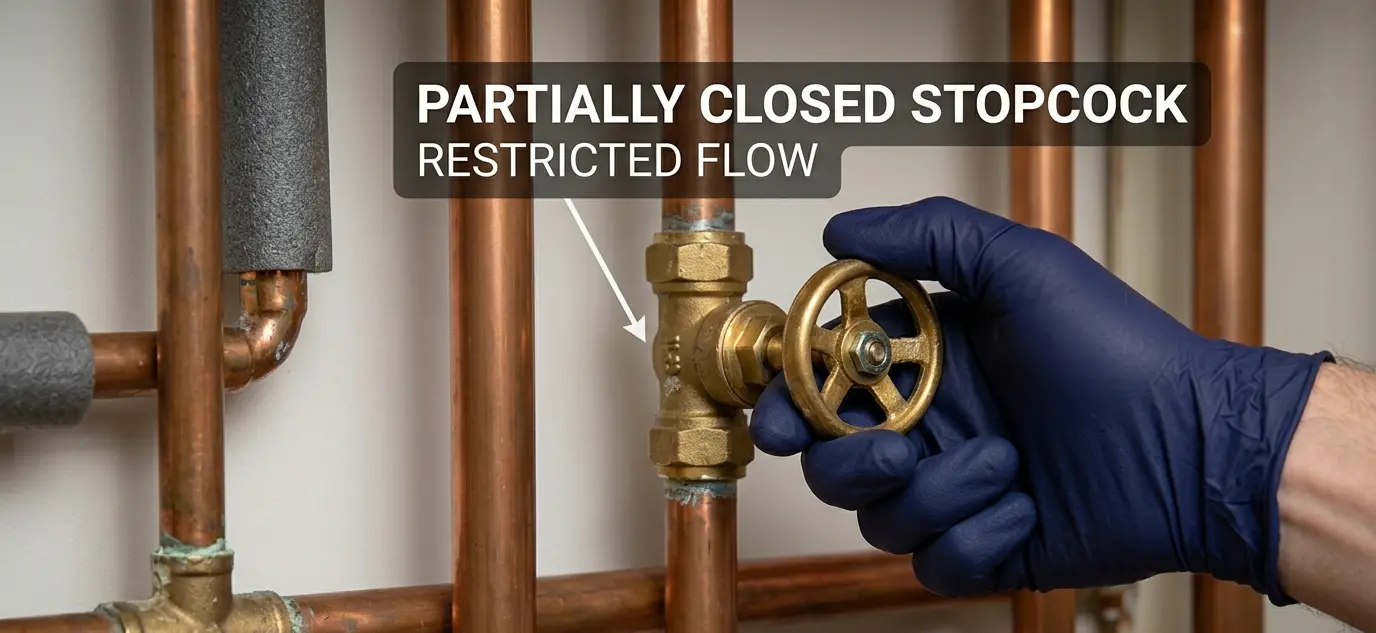
Partially closed stopcock or service valve. The main stopcock — usually under the kitchen sink — should be turned fully anti-clockwise (open). After any plumbing work or leak investigation, it often gets left partially closed. Even a quarter-turn restriction is noticeable throughout the house, but most apparent upstairs where the pressure is already lower. Also check the isolation valves on the upstairs supply pipes if any were recently touched.
Faulty or misset pressure reducing valve (PRV). Many UK homes have a PRV fitted on the incoming supply pipe to limit mains pressure and protect the internal plumbing. Most are set to around 3 bar. If the PRV has failed, seized, or was set too low by a previous plumber, it can restrict supply pressure throughout the property. A plumber can test it with a pressure gauge and adjust or replace it — the part itself is inexpensive.
Corroded or scaled internal pipework. In older UK properties with original iron or galvanised steel pipework, internal rust and mineral deposits narrow the pipe bore progressively over decades. This is harder to fix without re-plumbing, but it's worth knowing if you've already ruled out everything else. Properties built before 1970 are the most likely to have this issue.
Shared supply pipe with neighbouring properties. In terraced houses and converted Victorian properties, it's not uncommon for two or more homes to share a single incoming supply pipe from the street main. When neighbours are using water heavily, your pressure drops. Check with your water supplier if you suspect this — they can confirm the supply arrangement and in some cases fund a separate supply connection.
3. When Low Pressure Upstairs Signals a Serious Problem
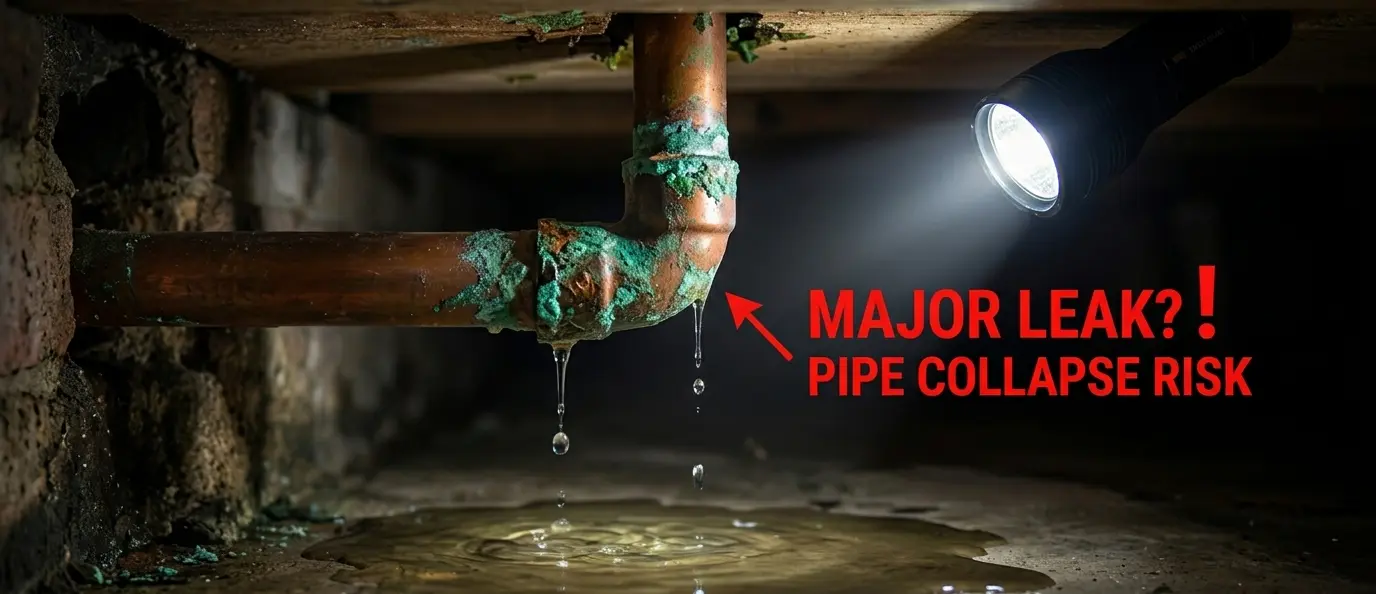
Most low pressure upstairs is a nuisance rather than an emergency. But these specific symptoms suggest something more serious that needs prompt attention:
- Sudden pressure drop across the whole house. If pressure was fine yesterday and is dramatically weaker today — especially if you can hear running water somewhere or see damp — you likely have a hidden burst or leak. Turn off the mains stopcock and call a plumber. Do not wait. A leak inside a wall or under a floor can cause serious structural damage quickly. If you've also lost water completely, see our guide on no water in the house for an emergency checklist.
- Combi boiler dropping below 1 bar and cutting out. Most combi boilers require a minimum of 1 bar of internal pressure to fire. If the gauge on the front panel reads below this and the boiler is locking out, it usually means there's a slow leak in the heating system somewhere — the pressure is bleeding away gradually. Top up with the filling loop as a temporary measure, but if it keeps dropping, a plumber needs to trace and repair the leak in the system.
- Water hammer — banging or knocking pipes. A loud bang when a tap is closed sharply indicates a water hammer issue. It's not directly caused by low pressure, but it does stress pipe joints over time and can eventually cause a fitting to fail. Persistent water hammer should be investigated — a plumber can fit a mini expansion vessel or hammer arrestor on the affected pipe run.
- Brown or discoloured water from upstairs taps. This points to corroded internal pipework. The rust particles are a sign the pipe bore is actively deteriorating. It's worth having the supply pipework inspected and considering partial re-piping in affected sections.
4. DIY Fixes to Try Before Calling Anyone
Work through these in order — most low pressure upstairs complaints are resolved at step one or two.
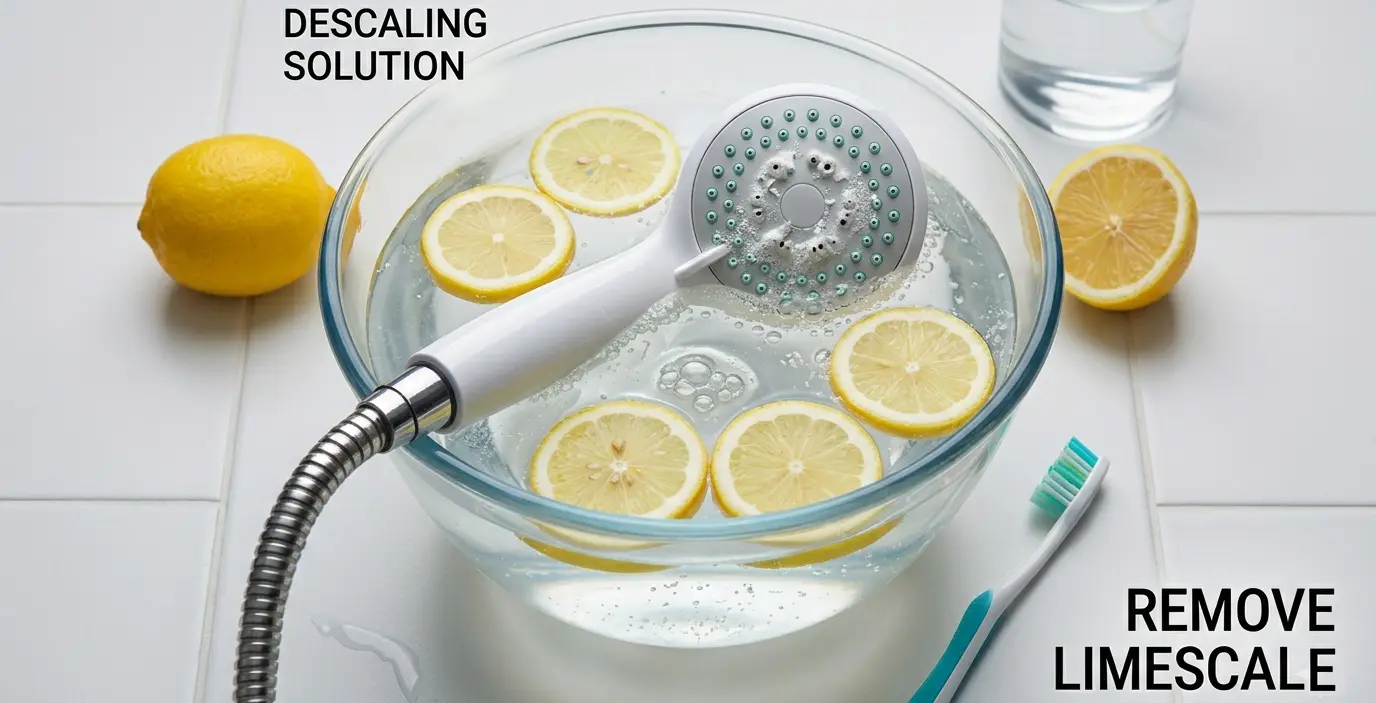
- Descale the shower head. Fill a plastic food bag with undiluted white vinegar, tie it around the shower head so the head is fully submerged, and leave it overnight. In hard water areas this alone can restore full pressure. If the shower head unscrews, remove it and soak it in a bowl instead. Do the same with the aerator tips on upstairs taps — unscrew the small mesh end fitting, clear out the grit and scale, and refit.
- Check and fully open the main stopcock. Under the kitchen sink, find the stopcock and turn it fully anti-clockwise. Then test the upstairs taps again. If pressure immediately improves, the stopcock was the entire problem.
- Clear a hot water airlock. If the problem is specifically weak hot water upstairs while cold is normal, connect a short length of garden hose between the cold mains tap in the kitchen and the hot tap that's affected. Turn the cold tap on first, then the hot — mains pressure will push through and blow the air bubble back up into the loft tank. Run it for 30 seconds. Then turn off the hot tap first, then the cold. Test the hot upstairs again. Only attempt this if you're comfortable making the hose connection without a leak.
- Top up combi boiler pressure. If you have a combi boiler and the pressure gauge reads below 1 bar, find the filling loop — usually a silver braided flexible hose with two valves beneath the boiler. Open both valves slowly until the gauge reads 1.2 bar, then close them both. The boiler should fire normally again. If the pressure drops repeatedly over the following weeks, there is a leak in the heating system that needs professional attention.
- Check peak demand timing. If the pressure is only weak at certain times of day — typically 7–9am and 5–8pm — mains supply pressure is likely dropping during peak neighbourhood usage. This is a supplier issue. Contact your water company and ask them to check supply pressure at your boundary. If it's below 1 bar, they are obligated to fix it.
If the problem is a slow-draining upstairs bathroom as well as low pressure, the two issues can sometimes be related — back pressure from a partially blocked waste can affect how water behaves in the trap and pipes. Our guide on low water pressure specifically in UK showers covers shower-specific causes in more depth.
5. Permanent Fixes & When to Call a Plumber
If the DIY checks haven't resolved it, or if the root cause is the system design rather than a fault, a plumber can offer more permanent solutions.
- Shower pump. The most common permanent fix for a gravity-fed system. A shower pump is fitted on the pipe run feeding the bathroom and boosts both hot and cold flow simultaneously. Twin-impeller pumps (which boost both supplies) are preferable to single-impeller models. They require a minimum amount of gravity flow to prime, so the loft tank still needs to be feeding correctly — a shower pump won't fix an airlock or a failed tank ballcock. Expect to pay £150–£400 for the pump plus installation.
- Whole-house booster pump. Fitted on the incoming mains supply to boost pressure throughout the property. More expensive than a shower pump but solves the problem for every tap and fixture in the house, not just the bathroom. Worth considering if multiple rooms are affected and the mains supply pressure is borderline.
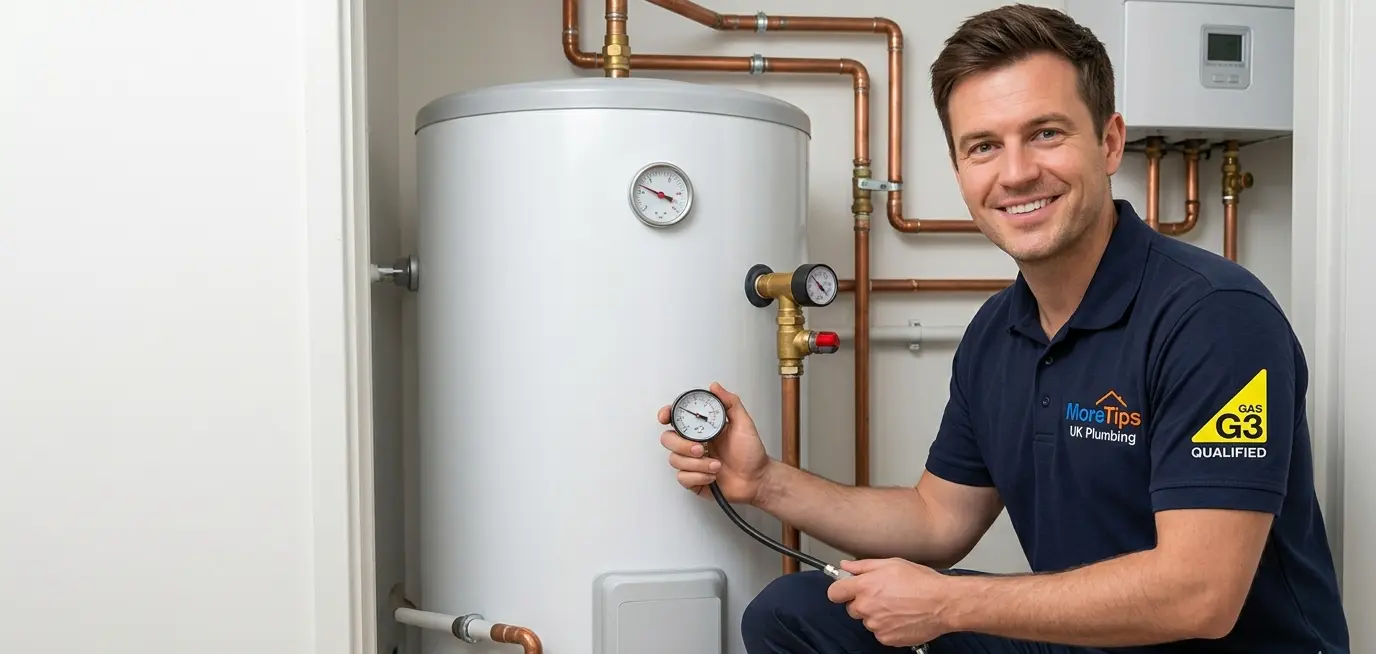
- Unvented hot water cylinder (Megaflo-type). Replacing the old loft tank and gravity-fed cylinder with a pressurised unvented system transforms upstairs pressure permanently — hot and cold run at mains pressure throughout. This is a significant plumbing project requiring a G3-qualified engineer (a legal requirement for unvented hot water systems in the UK) and typically costs £1,500–£3,000 installed. For many older UK homes, it's the single most impactful plumbing upgrade possible.
- Pipe replacement in corroded sections. If the cause is narrowed or corroded old pipework, a plumber can re-run the affected sections in modern 22mm copper or plastic push-fit. Not always cheap depending on access, but a lasting fix.
- Separate incoming supply. If you share a supply pipe with neighbouring properties, your water company may be able to provide a dedicated connection. Contact them first — in some cases, especially in older terraced streets being upgraded, the cost is shared or covered entirely.
Questions & Answers
Real questions from homeowners — answered by our team.
Community Questions
Low Water Pressure Upstairs — FAQs
Why is my cold water pressure fine downstairs but weak upstairs?
If your upstairs cold water comes from a gravity-fed tank in the loft rather than directly from the mains, the pressure is determined entirely by the height difference between the tank and the tap — typically only 1 to 2 metres in most UK homes. Downstairs taps are usually fed from the mains at much higher pressure. The solution is either a shower pump to boost the gravity-fed supply or an upgrade to an unvented pressurised cylinder.
Why is my hot water pressure weak upstairs but the cold is fine?
This is the classic sign of an airlock in the hot water pipework. Air becomes trapped in the hot pipe run and acts like a physical blockage. The standard DIY fix is to connect a hose between a downstairs cold mains tap and the affected upstairs hot tap and use mains pressure to blow the air back out. If this doesn't work, a plumber can isolate and bleed the affected section.
What is the minimum water pressure a UK supplier must provide?
UK water companies are legally required to supply a minimum of 1 bar of static pressure at your property boundary. If your pressure is consistently below this at the mains entry point, you can report it to your water supplier — they are obligated to investigate and fix it at no cost to you. Pressure above 1 bar but still feeling weak is your responsibility to address internally.
Will a combi boiler fix my low water pressure upstairs?
In most cases, yes. Combi boilers supply hot water directly from the mains rather than from a loft tank, so hot and cold pressure upstairs should match downstairs. However, the boiler itself needs to maintain 1 to 1.5 bar of internal pressure to work correctly. If the gauge on the front drops below 1 bar, repressurise using the filling loop underneath the boiler.
Can a new shower head fix weak pressure upstairs?
A low-pressure shower head mixes air with water to make the flow feel stronger, but it doesn't increase the actual volume of water coming through the pipe. It can be a useful short-term measure if the pressure is only slightly low, but if the root cause is a gravity-fed system with poor head height or a limescale-blocked pipe, a specialised head will only partially mask the problem.
What is water hammer and is it related to low pressure?
Water hammer is the banging or knocking noise pipes make when a tap is closed sharply and the water flow is abruptly stopped. It is not directly caused by low pressure — it tends to occur more in higher-pressure systems. However, it can indicate loose pipework or air in the system. Persistent water hammer should be looked at by a plumber as it stresses joints over time and can cause a fitting to fail.
What is a pressure reducing valve and could mine be causing low pressure?
A pressure reducing valve (PRV) is fitted on the incoming supply pipe to limit mains pressure and protect your internal plumbing — usually set to around 3 bar. If the PRV has failed or was set too low by a previous plumber, it can restrict supply pressure throughout the property, most noticeably upstairs. A plumber can test it with a pressure gauge and adjust or replace it. The part itself is inexpensive; the cost is mainly the callout.