Water Pressure Drops at Night UK: Causes, Tests & Fixes
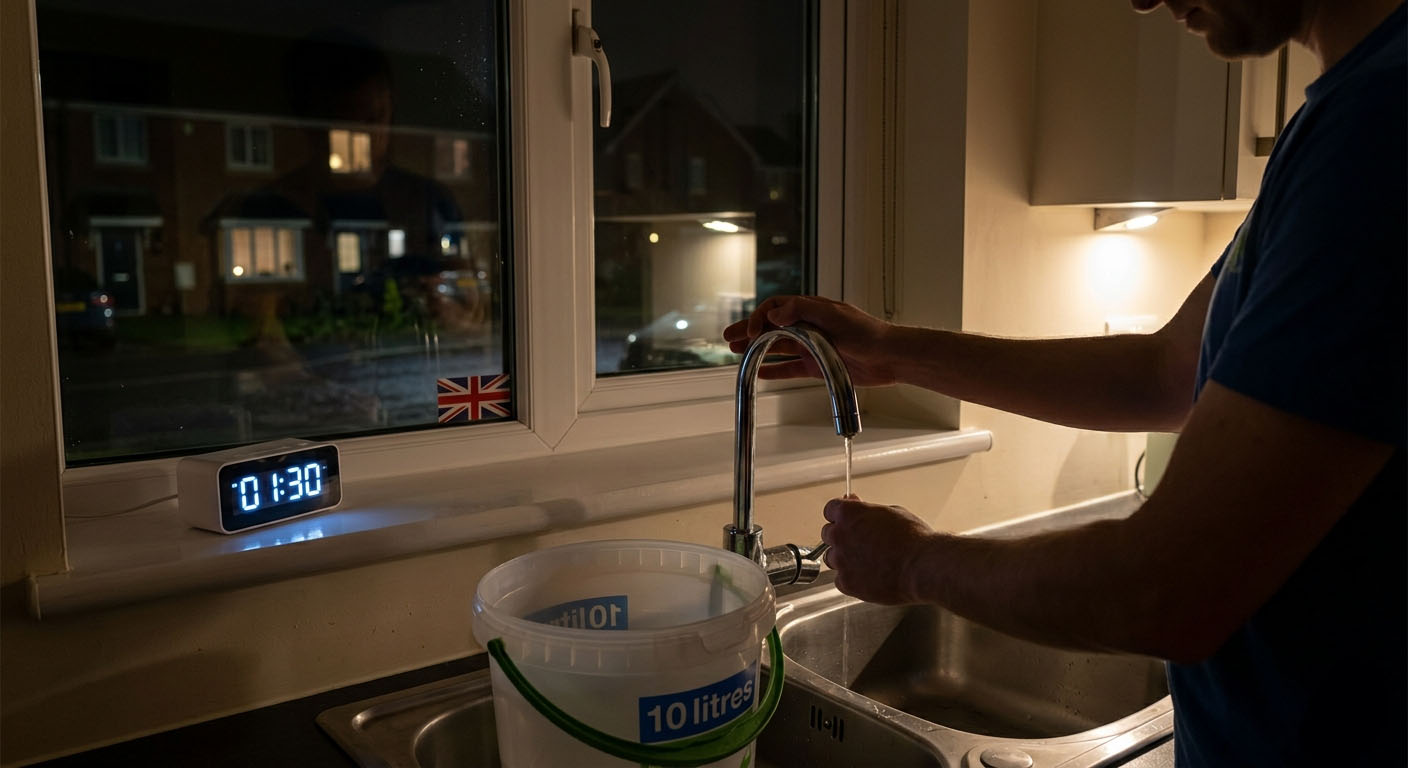
You step into the shower late at night or turn on the kitchen tap to fill a glass of water, only to find the flow has dropped to a weak trickle. While daytime pressure issues are usually linked to peak demand, a noticeable drop in water pressure exclusively at night can be baffling.
In the UK, a sudden dip in overnight water flow typically points to a specific set of operational measures managed by your local water supplier, structural property characteristics, or hidden plumbing leaks. This guide walks you through every cause and fix before you need to call an emergency plumber. If you're also seeing low pressure upstairs during the day, the two issues often share the same root cause.
Quick Navigation
1. District Pressure Management: The Number One Overnight Cause
The most common reason for a sudden drop in water pressure between 11:00 PM and 5:00 AM across the UK is a water company strategy known as Pressure Management, or the implementation of PMAs (Pressure Management Areas).
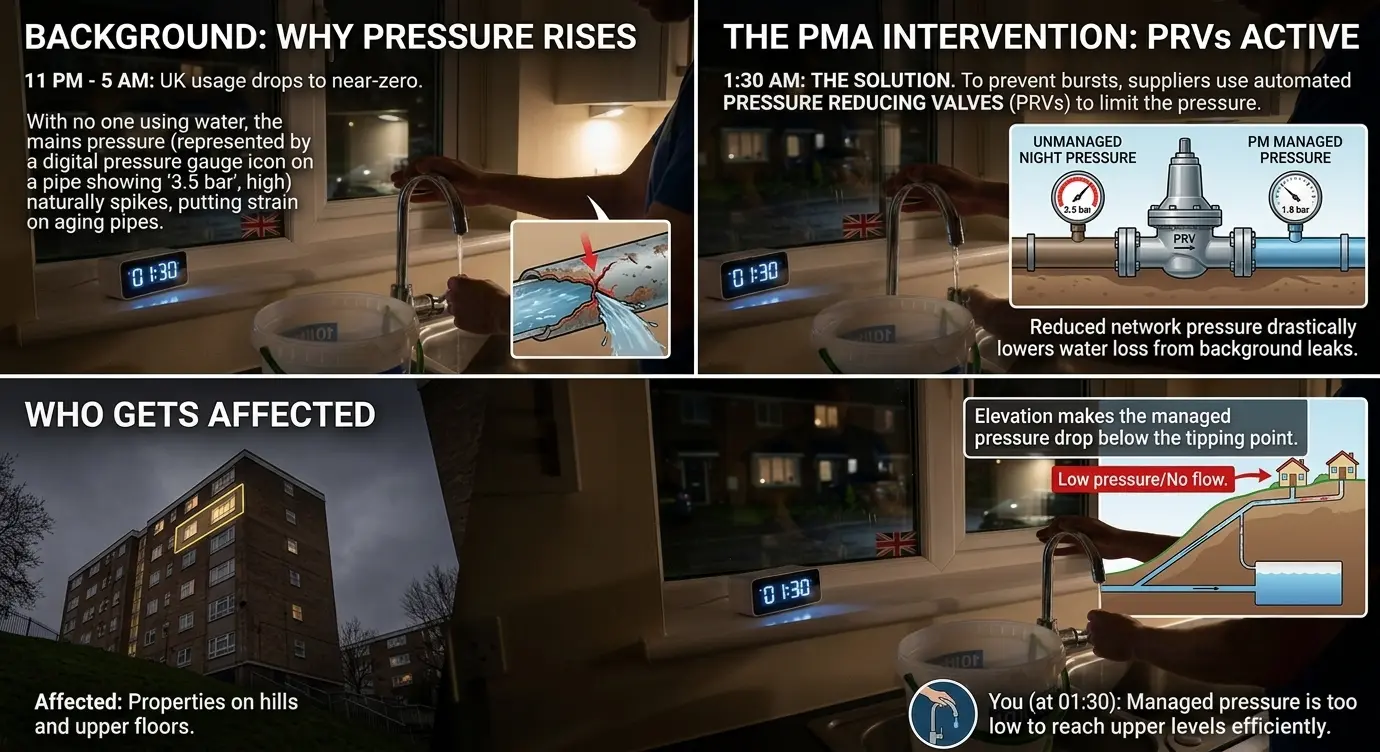
- Why water companies do this: Overnight, consumer demand plummets. When demand drops, pressure inside the underground water mains naturally spikes. To prevent this excess pressure from bursting ageing pipes, water companies use automated Pressure Reducing Valves (PRVs) to lower the pressure across the network during low-use hours.
- The leak-reduction goal: By lowering network pressure at night, suppliers significantly reduce the volume of water lost through existing background leaks. This helps them meet strict environmental sustainability targets set by the regulator, Ofwat.
- Who is affected most: If you live on a hill, at the high point of a local network grid, or on the upper floors of a block of flats, this intentional overnight reduction can push your pressure past the tipping point. This turns a normal daytime flow into an evening crawl, which is especially noticeable if you're already dealing with low water pressure upstairs.
2. Hidden Internal Leaks & Combi Boiler Risks
If your neighbours aren't experiencing any night-time drops, the fault likely lies within your own boundary. A progressive leak that worsens as network pressure fluctuates is a common culprit. In severe cases, it can lead to having no water in the house at all if left unchecked.
The Water Meter "Creep" Test
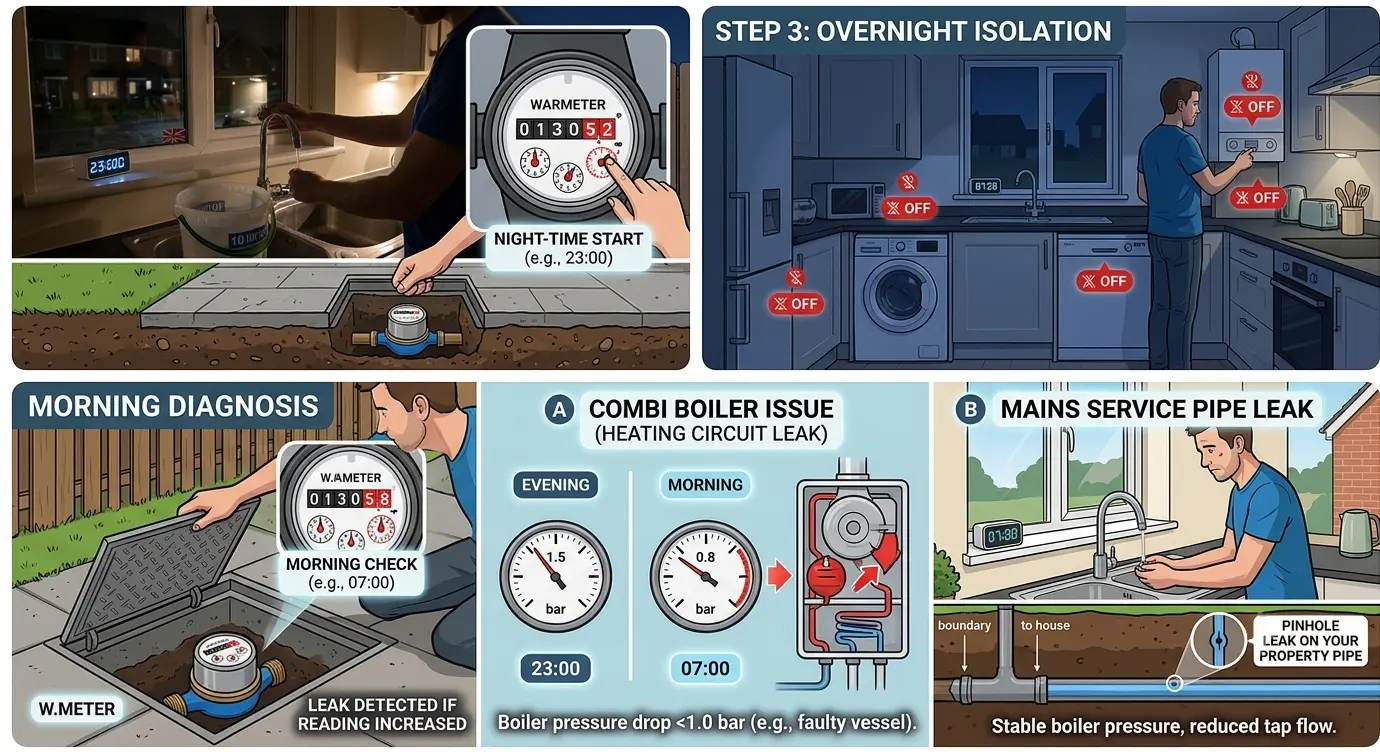
If you have a water meter fitted (usually located in an external boundary box under a small cover on the pavement or in your garden), run this definitive test before going to sleep:
- Isolate all appliances: Turn off your washing machine, dishwasher, and central heating. Do not flush the toilet or use any taps overnight.
- Take a reading: Record the exact numeric reading right before bed, paying close attention to the small red digits indicating individual litres.
- Verify in the morning: Check the meter first thing. If the numbers have advanced despite zero usage, you have an active internal leak or a leaking service pipe between the boundary and your inside stopcock.
The Central Heating Link
Combi boiler issues: If your central heating system is also losing pressure overnight (dropping below 1.0 bar on your boiler gauge), this indicates an issue with your heating circuit, not your cold-water mains.
A faulty boiler expansion vessel or a leaking pressure relief valve (PRV) will cause systemic pressure drops as the system cools overnight. See our dedicated guide on troubleshooting boiler faults to fix this, and check what the correct boiler pressure should be.
Mains Service Pipe Failure
The verdict: If your boiler pressure is stable but your domestic taps are failing, you may have a pinhole leak in your underground supply pipe.
As the water supplier dials down the pressure at night, a damaged pipe can suffer from reduced volume delivery. This means very little flow makes it up to your bathroom taps or unvented cylinder, which is often first noticed as a weak shower pressure in the morning.
4. How to Test Your Flow Rate & Pressure at Home
Before contacting your water provider (such as Thames Water, Severn Trent, or United Utilities), gather hard data. You can measure your dynamic flow rate using two methods:
Method A: The Bucket Test
Take a standard 10-litre bucket and place it under your cold kitchen tap, which is directly fed by the mains supply. Turn the tap on fully and time how long it takes to fill to the 10-litre mark.
- Under 40 seconds: Your flow rate is roughly 15 litres per minute; this is excellent by UK standards.
- 40 to 60 seconds: Your flow rate is around 10–14 litres per minute. This is acceptable, but it may cause drops if multiple taps are open simultaneously.
- Over 60 seconds: Your flow rate is under 10 litres per minute, indicating a pressure delivery failure that requires investigation.
Method B: Weir Cup / Flow Meter Jug
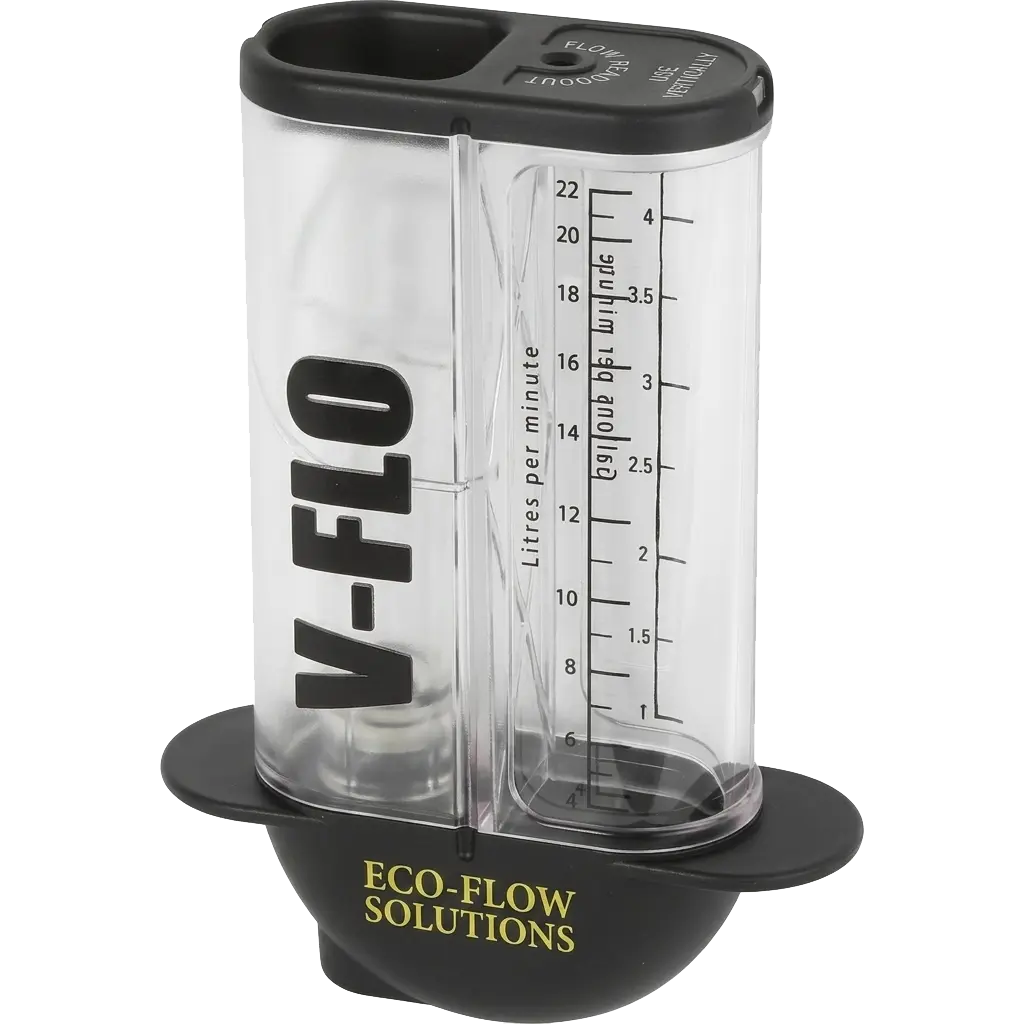
For a more accurate reading, a calibrated flow meter jug gives you an instant litres-per-minute figure without any mental arithmetic. Simply hold it under the tap for 6 seconds and read the scale directly. This is especially useful for testing your shower's flow rate against the manufacturer's minimum requirement.
5. Recommended Pressure Diagnostic Tools
| Product Image | Essential Tool | Why You Need It | Action |
|---|---|---|---|
|
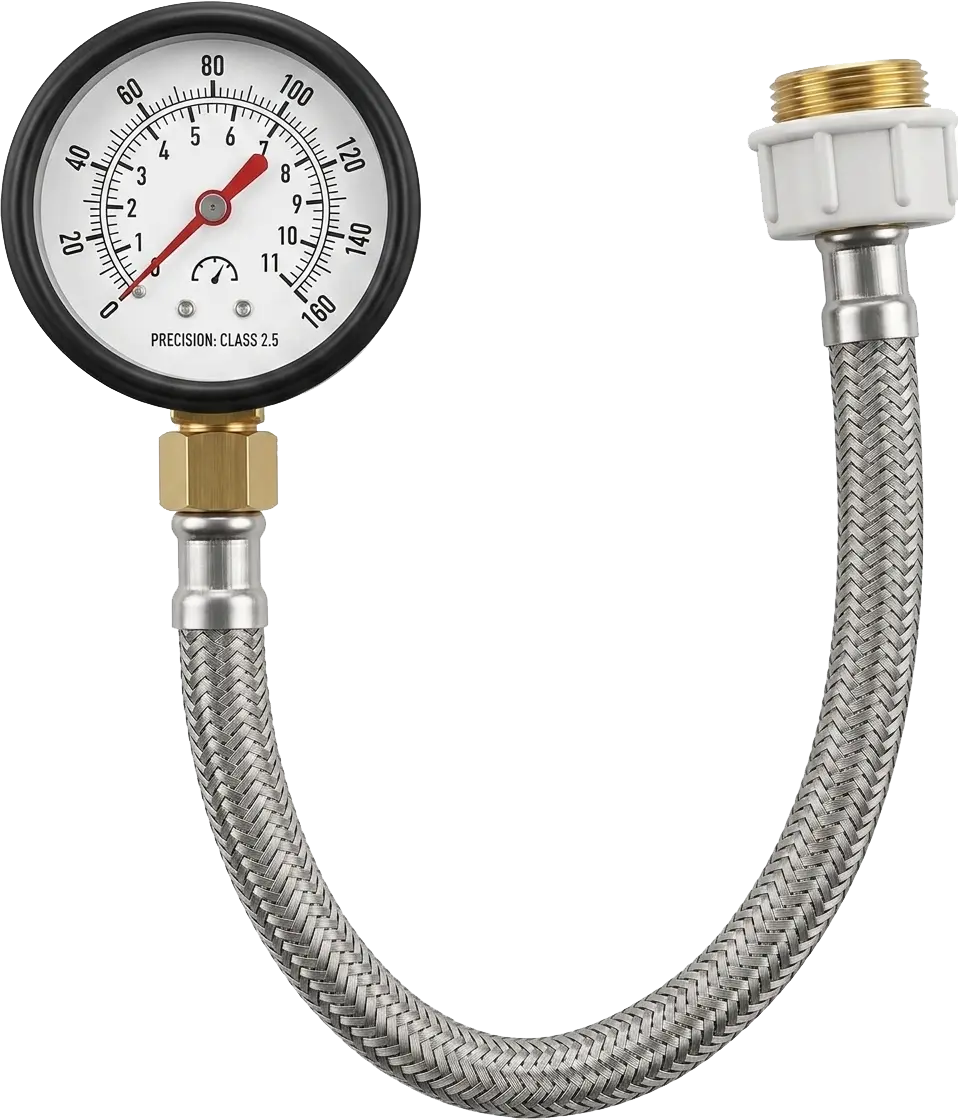
Mains Pressure Gauge (Screw-On) | Attaches to an outdoor tap or washing machine valve to give an exact bar reading overnight. This is the only definitive way to prove a pressure drop to your water company. | Check Price |
|
Weir Cup / Flow Meter Jug | Provides an instant, calibrated readout of litres per minute from any indoor tap. No calculations are needed, making it ideal for testing before and after a fix. | View Tool |
6. Actionable Fixes for Overnight Low Water Pressure
Depending on what your diagnostics reveal, you can resolve night-time low water pressure via several standard pathways:
- Contact your water supplier: If your pressure gauge shows overnight pressure consistently below 1.0 bar at the internal stopcock, call your water provider. They are legally bound to investigate. If they are running aggressive pressure management routines in your area, they can often adjust the regional PRV settings to restore your baseline service.
- Install a mains booster pump: If your water supplier is operating within legal limits but your flow is inadequate, you can install a home water booster pump. Units like the Grundfos SCALA2 sit directly on your incoming mains pipe and safely boost your flow up to the legal maximum. These are particularly effective if you have consistently weak pressure on upper floors.
- Check your internal stopcock: Ensure your main internal stopcock (usually located under the kitchen sink or in an entrance hallway) is fully open by turning it anti-clockwise, then backing it off a quarter-turn. A partially closed or seized stopcock will heavily choke water volume when mains pressure drops overnight.
- Inspect your boiler pressure: If hot water is affected but cold is not, the issue is your heating circuit rather than the mains. Read our guide on the correct boiler pressure for UK homes and check whether your system needs re-pressurising via the filling loop.
Who pays for pipe repair? You are legally responsible for all plumbing maintenance inside your home, as well as the underground supply pipe up to your property boundary. The water utility is responsible for the communication pipe up to the external stopcock. Always consult a verified professional via WaterSafe before undertaking major pipe modifications.
Questions & Answers
Real questions from homeowners — answered by our team.
Community Questions
Water Pressure Drops at Night — FAQ
Why does my water pressure drop at the same time every single night?
This is almost always due to the local water company turning down grid pressure using automated Pressure Reducing Valves (PRVs). This typically happens between 11 PM and 5 AM to reduce network stress and minimise leakage. If the drop is severe, read our full guide on fixing low water pressure to rule out an internal cause.
Can a faulty stopcock cause overnight low pressure?
Yes. A partially blocked or older internal stopcock will restrict water volume. High daytime mains pressure can push past the restriction reasonably well, but the lower pressure delivered by the network at night will reduce flow to a weak trickle.
What is the legal minimum water pressure in the UK?
UK water suppliers are required by Ofwat to maintain a minimum statutory pressure of 1.0 bar (10 metres of head) at the communication pipe serving your property boundary. If your pressure gauge consistently reads below this, contact your supplier.
Why is only my hot water pressure low at night while the cold tap is fine?
If you have a combi boiler, this indicates a domestic hot water heat exchanger blockage or a faulty internal flow sensor. See our guide on boiler faults for a step-by-step diagnosis. If you use an unvented cylinder, the issue may be a miscalibrated pressure reducing valve on your safety inlet control group.
Will a booster pump fix overnight low pressure?
Yes, in most cases. A mains-fed booster pump like the Grundfos SCALA2 compensates for overnight network drops by maintaining consistent pressure at your outlets regardless of what the street main is doing, without exceeding legal flow limits.