Product Guide
What Is a 40mm Appliance Waste Trap with a Spigot?
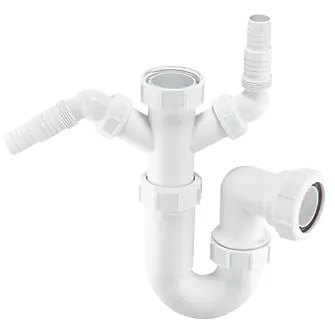
A 40mm appliance waste trap with spigot is a specialist under-sink plumbing component that combines two functions in one unit: a standard kitchen sink trap (the water-seal bend that blocks sewer odours) with a dedicated side-entry nozzle for your washing machine or dishwasher drain hose. It replaces the need for a separate P-trap plus an inline T-piece connector.
- All-in-one drainage: Handles sink wastewater and appliance discharge simultaneously.
- Blocks sewer smells: The built-in water seal stops odours rising back into your kitchen.
- No extra T-pieces needed: All appliance connections are managed in a single plastic housing.
Appliance Trap Types: Which One Do You Need?
Before buying, understand the three main configurations available at UK plumbing merchants:
| Trap Type | Appliances | Best For | See Also |
|---|---|---|---|
| Single Spigot (this guide) | 1 — washer or dishwasher | Kitchen with one appliance | — |
| Twin / Double Spigot | 2 simultaneously | Both washer & dishwasher | — |
| Standpipe / Floor-Standing | 1 via standpipe | Utility rooms, no under-sink access | Standpipe Trap → |
| Standard P-Trap | None | Sink or basin only | P-Trap Guide → |
Signs You Need to Replace Your Appliance Trap
Under-sink pipework degrades over time due to thermal stress and chemical exposure. Look out for these failure signs:
Where to Buy in the UK
A new 40mm white plastic appliance waste trap with integrated spigot typically retails between £6 and £18. Stick to brands such as McAlpine, Floplast, or Viva Sanitary for correct compression tolerances.
| Retailer | Status | Top Pick | Link |
|---|---|---|---|
| Screwfix | In Stock | McAlpine 40mm Spigot Trap | View Range → |
| Toolstation | Available | Viva Sink Trap Twin 135° | Check Stock → |
| Amazon UK | Available | 40mm Appliance Waste Trap | Check Stock → |
Step-by-Step Fitting Guide
Before starting, confirm you're working with a standard UK 40mm (1½ inch) sink outlet. Place a bowl under the existing trap — residual water will drain when you loosen fittings.
Step 1 — Clear Under the Sink & Prepare
Turn off the appliance at its supply point. Place a bowl under the existing trap before loosening any fittings. A sink plunger can help clear any blockage before you begin.
Step 2 — Remove the Internal Spigot Blanking Disc
New appliance traps ship with a solid plastic blanking disc inside the spigot nozzle. You must remove this plug before connecting your appliance hose. Use a craft knife to cut around the disc, then push it out. Use PTFE tape on any threaded connections.
Step 3 — Fit the New Trap to the Sink Waste Outlet
Slide the compression nut and rubber washer onto the sink waste tail. Hand-tighten only — never use a spanner on plastic trap threads. Check the trap outlet aligns cleanly with your existing 40mm waste pipe run.
Step 4 — Connect the Appliance Drain Hose
Route your drain hose in a high loop — it should rise above the spigot entry point before dropping down to connect. Secure firmly with a metal jubilee clip or the supplied retaining nut.
Step 5 — Test for Leaks
Run the kitchen tap for 30 seconds and inspect all joints. Then run a short wash cycle to test under pump pressure. If any joint weeps, re-check rubber washer position before re-tightening by hand.
Installation Tips
- Hand-tighten only: Metal pliers on plastic threads will crack the fitting body.
- Check the spigot first: Forgotten blanking discs are the most common post-installation fault call.
- Weekly hot water flush: Kitchen appliance traps accumulate grease and fabric softener residue quickly.
- Use PTFE on threaded nozzles: Wrap two layers of PTFE tape clockwise around the spigot thread before attaching a retaining nut.
- Conical washers for older pipework: Conical washers provide a more forgiving seal on worn or slightly oval pipe runs.
Frequently Asked Questions
The standard UK kitchen sink waste trap diameter is 40mm (1½ inches). This connects directly to 40mm waste pipe runs leading to your external drain or soil stack. Basin (bathroom sink) traps are usually 32mm — don't confuse the two.
A single-spigot trap handles one appliance at a time. For both machines, you need a twin-spigot appliance trap or a separate standpipe trap. Don't try to T-split a single spigot — combined pump pressure from two machines can blow the connection.
Yes — this is the most common installation mistake. New traps are shipped with an internal plastic blanking disc inside the spigot nozzle. You must cut or push out this seal before sliding your drain hose on. If left in place, your appliance pump will trigger a drain fault error.
A P-trap is the basic U-shaped water-seal trap used under sinks and basins. An appliance waste trap is a modified P-trap with an additional side-entry spigot nozzle for a washing machine or dishwasher drain hose — doing both jobs in one component.
Hand-tight only. The rubber O-ring compresses adequately under hand pressure. Using a spanner on plastic threads risks cracking the fitting or stripping the threads. If a hand-tight joint leaks, check the rubber washer is correctly seated before adding any further force.