Boiler Filling Loop: How to Repressurise a Boiler (UK Guide)
If your boiler pressure is too low, a filling loop is what you use to top it back up. Most UK combi and system boilers lose pressure at some point — after bleeding radiators, following a cold snap, or as it slowly creeps down over winter. This guide shows you how to repressurise your boiler safely to 1.2 bar without calling a plumber.
Quick Answer
To repressurise a boiler using a filling loop: switch the boiler off and let it cool, attach the braided hose to the two 15mm valves beneath the boiler, open both valves slowly until the pressure gauge reaches 1.2 bar, then close both valves and disconnect the hose completely. UK water regulations require the hose to be removed after every use.
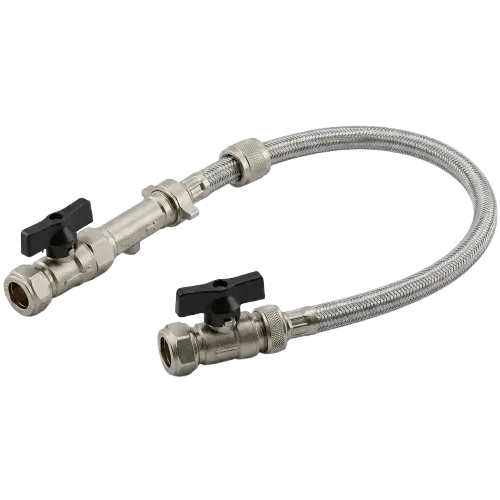
What is a Boiler Filling Loop?
A filling loop is a short flexible braided hose with a valve at each end. It temporarily connects your mains cold water supply to your sealed central heating circuit so you can top up the system pressure. Once you're done, the hose is removed and the valves are capped — it is not a permanent fitting.
Standard UK kits use 15mm compression fittings and include a double check valve to stop heating water from contaminating your mains supply. Look for WRAS approval on the packaging to confirm it meets UK water safety regulations.
How to Repressurise a Boiler with a Filling Loop — Step by Step
This applies to external filling loops, which are the most common type found in UK homes with Worcester Bosch, Vaillant, Ideal, and Baxi boilers. If your boiler has an internal (keyless) loop, refer to your boiler manual — the principle is the same but there's no hose to attach. Not sure what your gauge should read first? Check what pressure your boiler needs before you start.
Step 1 — Switch the boiler off and let it cool
Turn the boiler off at the programmer or room thermostat. Wait at least 20 minutes. Repressurising a hot system gives an inaccurate reading because water expands under heat — you'll think you've hit 1.2 bar but it'll actually be lower when cold.
Step 2 — Locate the filling loop connection points
Look under the boiler for two capped 15mm valves on the pipework, usually positioned close together on the cold feed. On some older installations the caps may be plastic screw-on covers; on newer ones they may be blanked-off lever valves.
Step 3 — Check the washers and attach the hose
Before connecting anything, look inside both end nuts on the braided hose. You should see a small black rubber washer in each. Without these the connection will spray water immediately. Screw one end onto the mains side valve and the other onto the boiler side valve — hand tight first, then a quarter turn with an adjustable spanner.
Step 4 — Open the valves and watch the gauge
Open one valve fully. Then use the second lever to throttle the flow — this gives you fine control over how fast the pressure climbs. Keep your eyes on the boiler pressure gauge. You'll hear a distinct hissing sound as water enters the system.
Step 5 — Stop at 1.2 bar and close both valves
The moment the needle hits 1.2 bar, close both levers firmly. Don't overshoot — if you go past 2.5–3 bar the pressure relief valve (PRV) will open and discharge water outside. If that happens, you'll need to bleed a radiator slightly to bring the pressure back down.
Step 6 — Disconnect the hose and restart the boiler
Unscrew the hose from both valves and replace the caps. Under UK water regulations the hose must not be left connected. Store it somewhere dry. Switch the boiler back on — the pressure will rise slightly to around 1.8–2.0 bar once the system reaches operating temperature. This is completely normal. For more on the ideal range, see our guide to recommended boiler pressure for UK homes. If the boiler won't restart afterwards, see boiler not firing up.
Where to Buy a Boiler Filling Loop in the UK
A universal kit costs between £12 and £20 and fits most boilers. Always buy WRAS-approved — avoid unbranded kits with plastic-only fittings. Standard 15mm compression kits are available same day from Screwfix and Toolstation.
| Retailer | Stock | Product | Link |
|---|---|---|---|
| Screwfix | In Stock | Essentials Combi Straight Filling Loop 15mm | View Product |
| Toolstation | Available | Straight Braided Filling Loop Universal Kit | Check Price |
| Amazon UK | Available | Universal Boiler Filling Loop 15mm WRAS Approved | Search Amazon |
Technical Specifications
15mm Compression Fittings
UK boiler pipework is almost exclusively 15mm copper. Compression fittings use a brass olive that crushes onto the pipe as you tighten the nut — no soldering or heat required. If your pipes are plastic (Hep2O or Speedfit), fit a stainless steel insert (stiffener) inside the pipe end before attaching the valve to prevent it collapsing under the olive.
WRAS Approval
The Water Supply (Water Fittings) Regulations require any component connected to the UK mains to be WRAS approved. This confirms the braided hose and internal rubber seals won't degrade or leach chemicals into drinking water. Always check the packaging for the WRAS logo before buying.
Double Check Valve (Non-Return)
One end of the filling loop features a double check valve that only allows water to flow in one direction — from the mains into the boiler. This prevents contaminated heating water (which typically contains corrosion inhibitor) from being siphoned back into your kitchen tap if mains pressure suddenly drops.
Temporary Connection — UK Regulations
In the UK a filling loop is classified as a temporary connection. The hose must be removed once you've finished and the valves capped. Leaving it permanently attached risks slow over-filling if either valve develops a weep, which will eventually cause the pressure relief valve to discharge.
Pro Tips
- Bleed radiators first. Bleeding removes air but drops pressure. Fill the system after bleeding — not before. A brass radiator key makes the job quick.
- Use the two-lever technique. Open one valve fully, then use the second to throttle the flow. You get much finer control over the pressure needle.
- Listen for the hiss. No hissing sound means water isn't flowing. Check both valves are open, or check your mains stopcock isn't closed.
- Target 1.2 bar cold. The pressure will rise naturally to around 1.8–2.0 bar once the heating is on and the water expands.
- Losing pressure repeatedly? If you're topping up more than once or twice a year, there's a fault. See our guide on why boiler pressure drops overnight to diagnose the cause before it becomes a bigger problem.
Related Guides
Frequently Asked Questions
What pressure should I fill my boiler to?
Fill to 1.2 bar when the system is cold. The pressure will naturally rise to around 1.8–2.0 bar once the heating is running and the water expands. Do not exceed 3 bar. See our full guide to what pressure your boiler needs.
Can I leave the filling loop connected permanently?
No. UK water regulations require the filling loop to be disconnected after every use. Leaving it attached risks contaminated heating water being siphoned back into your mains supply if pressure drops sharply.
Why does my boiler keep losing pressure?
If you're topping up more than once every few months, there is likely a fault — a weeping radiator valve, a leaking compression joint, a failed expansion vessel, or a faulty pressure relief valve. Our guide on why boiler pressure drops overnight helps you narrow it down, but persistent loss needs a Gas Safe engineer to investigate properly.
What size is a UK boiler filling loop?
The standard size for UK domestic boiler filling loops is 15mm compression. This fits the copper pipework used on the vast majority of UK boiler installations.
Do I need a WRAS approved filling loop?
Yes. Under the Water Supply (Water Fittings) Regulations, any component connected to the UK mains must be WRAS approved to ensure the hose and seals won't degrade or contaminate your drinking water.
What is the difference between an internal and external filling loop?
An external filling loop is a removable braided hose you attach when needed. An internal (keyless) filling loop is built into the boiler and operated via a small lever or key beneath the casing. Both do the same job — the internal type is simply more convenient as there's no hose to store.