How to Unblock a Slow Draining Sink in the UK
Quick Answer
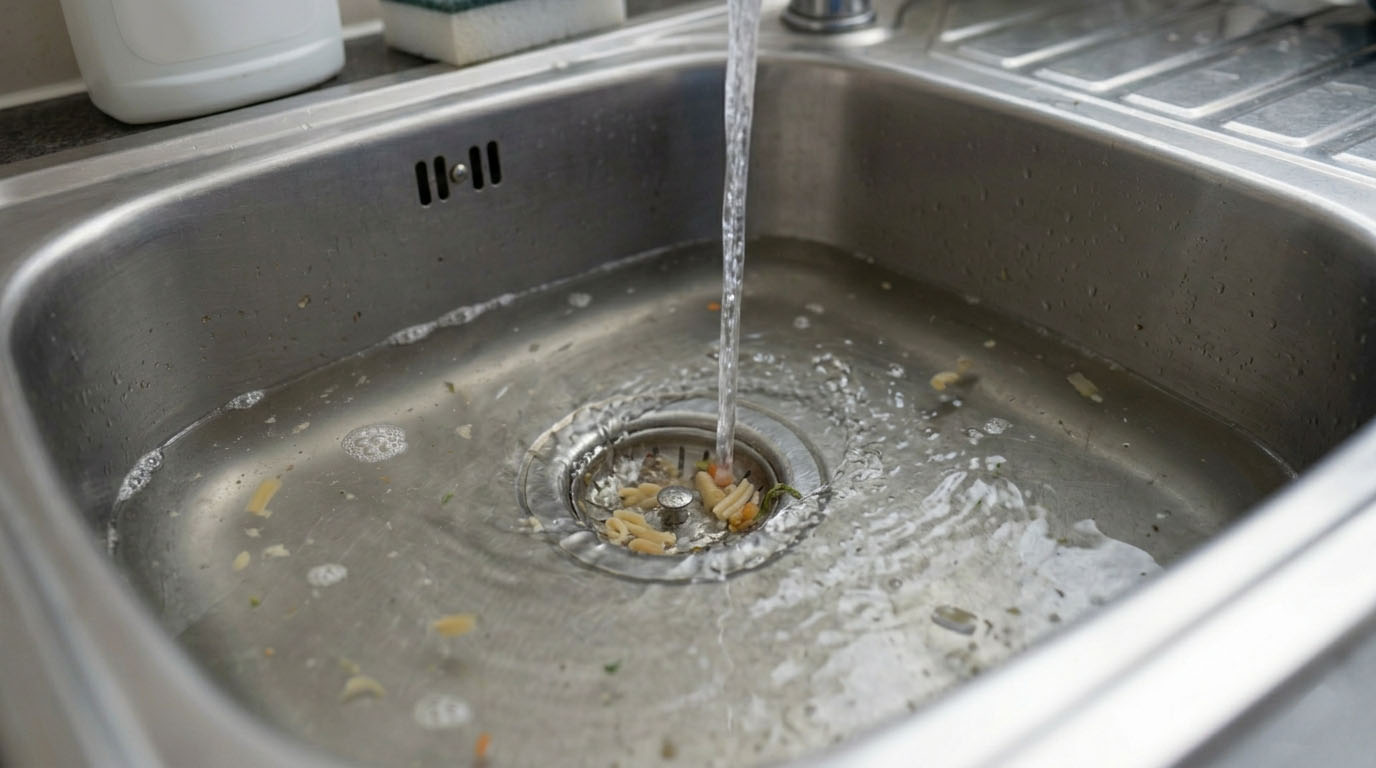
A slow draining sink in the UK is almost always caused by grease, hair, or soap scum partially blocking the waste pipe or U-bend. Start with the bicarb and vinegar fizz method, then try a plunger (always block the overflow first), and if that fails, remove and clean the U-bend by hand. Most blockages clear within 30 minutes without a plumber.
Is your sink draining slowly? It is one of the most common plumbing frustrations in UK homes. Whether it's a kitchen sink sitting full of greasy water or a bathroom basin that takes an age to clear, a slow drain is a sign of a partial blockage that will only get worse if left alone.
In most cases, you don't need to call out an emergency plumber. The methods below use basic household items or simple tools available from any UK DIY store.
Quick Navigation
Why Your Sink is Draining Slowly
The cause usually depends on which room the sink is in:
- Kitchen sinks: The main culprit is FOG cooking fat, oil, and grease that solidifies inside the waste pipe and catches food debris. These partial blockages are sometimes called "fatbergs".
- Bathroom sinks: Usually a combination of hair, soap scum, and toothpaste residue matted together just inside the plughole or in the U-bend. A blocked tap aerator can also reduce flow if you're confusing reduced pressure with a slow drain.
- Limescale: In UK hard water areas the South East, Midlands, and East Anglia limescale narrows the inside of waste pipes over time, making it easier for grease and debris to catch.
- Soil vent pipe issue: If multiple drains in the house are slow at the same time, the problem may be further down in the soil stack rather than the individual sink. This usually needs a plumber.
Method 1: The Bicarb & Vinegar Fizz
If you prefer to avoid chemicals which can be harsh on older UK lead pipework or modern plastic seals start with this natural method. It is often enough to shift minor grease and soap blockages.
- Pour a full kettle of boiling water directly down the drain.
- Add half a cup of bicarbonate of soda into the plug hole.
- Pour in half a cup of white vinegar and immediately cover the drain with a plug or damp cloth.
- Leave it to fizz for 15–20 minutes to break down soap scum and organic matter.
- Flush with a final kettle of boiling water.
Note: This method works well on sinks and basins. If you also have a slow toilet, that requires a different approach see our guide on unblocking a toilet without chemicals.
Method 2: Using a Plunger (The Right Way)
If the bicarb method doesn't shift it, you need physical pressure. The step most UK homeowners skip is dealing with the overflow if you don't block it, air just escapes up through there instead of pushing the blockage down.
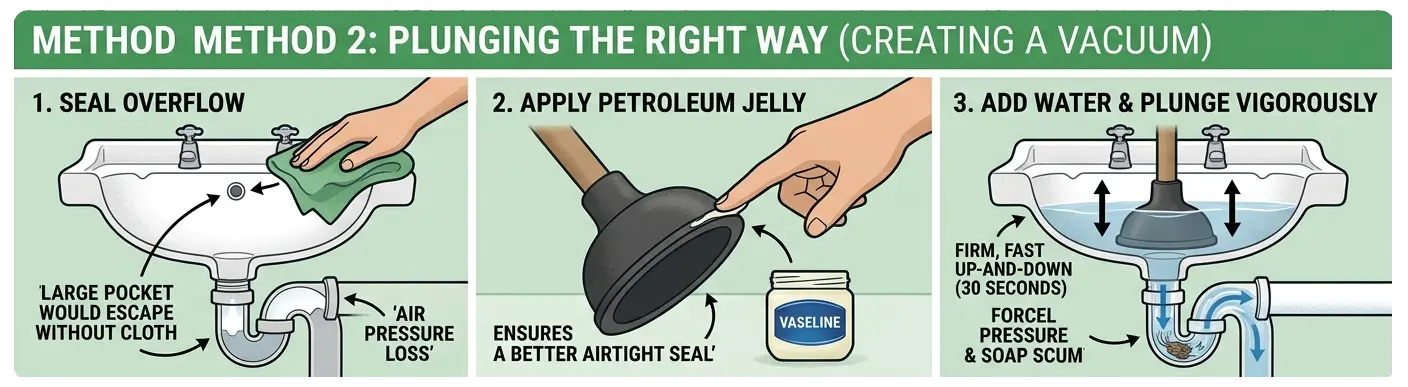
- Block the overflow: Press a damp cloth firmly over the overflow hole.
- Apply petroleum jelly: Smear a little Vaseline around the rim of the plunger for a better airtight seal.
- Add water: Make sure there is enough water in the sink to cover the plunger head.
- Plunge vigorously: Firm, fast up-and-down strokes for about 30 seconds. You should feel resistance if the seal is good.
Method 3: Cleaning the U-Bend (P-Trap)
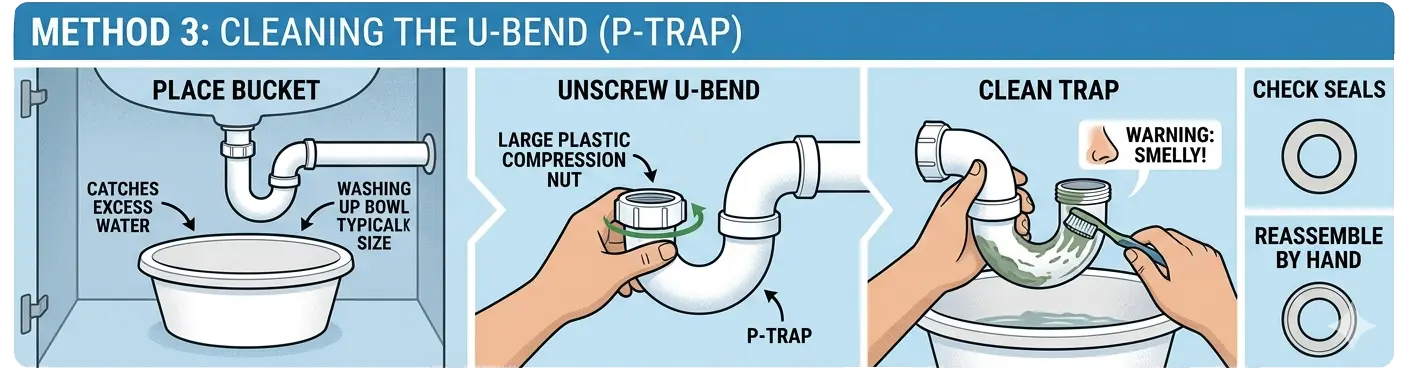
If the blockage is stubborn, it is almost certainly sitting in the U-bend known in the trade as a P-trap. Removing and cleaning it is the most effective DIY fix for a sink that simply won't clear.
- Place a washing-up bowl under the pipes to catch the stagnant water.
- Unscrew the two plastic slip-nuts by hand standard UK sizes are 32mm for bathroom basins or 40mm for kitchen sinks.
- Tip the contents of the trap into the bowl. It will likely be unpleasant.
- Clean the trap with an old toothbrush and warm soapy water.
- Check the rubber washers are in good condition before screwing it back on. If you spot a drip after reassembling, see our guide on fixing a leaking pipe under a sink.
Tools You'll Need
| Product Image | Part Name | Best For | Action |
|---|---|---|---|
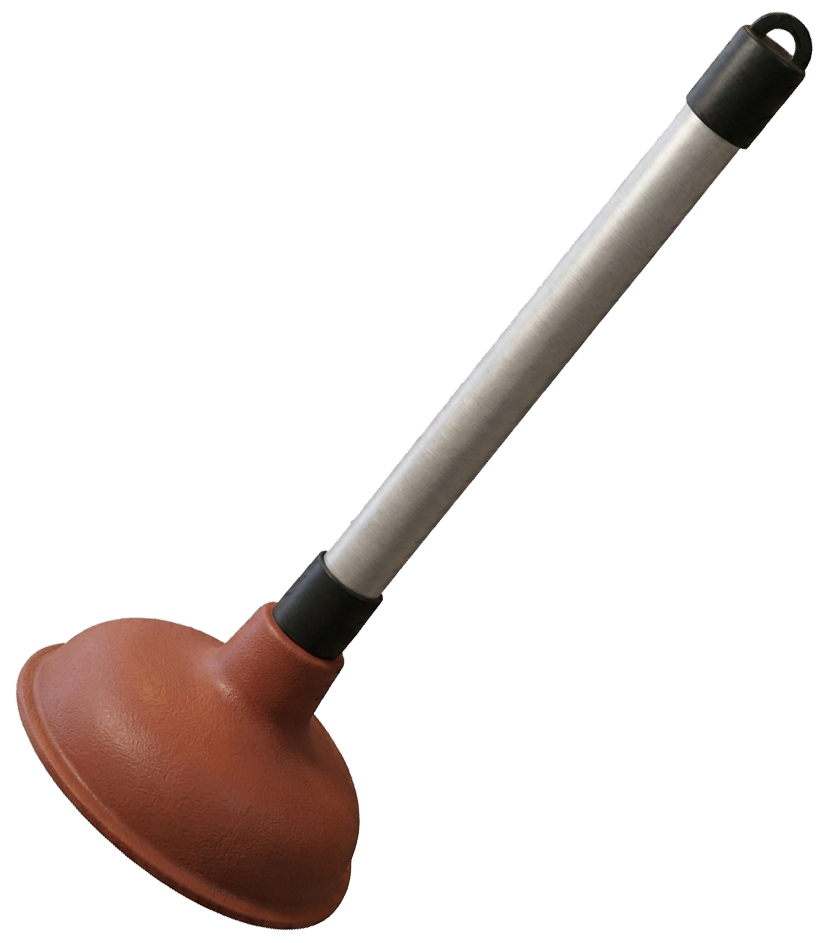 |
Standard Sink Plunger | Simple soft blockages | View Info |
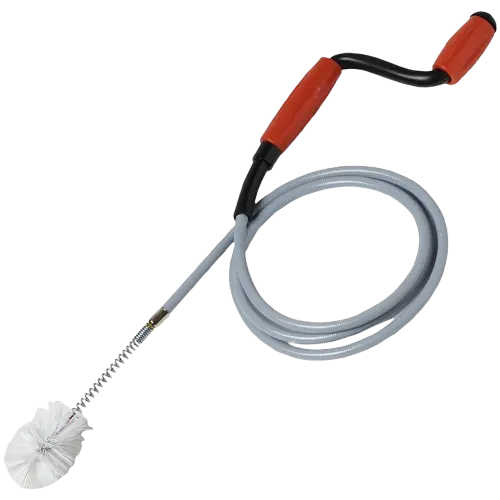 |
Drain Auger (Snake) | Hair and deep clogs | View Info |
Pro Tip: For bathroom sinks, use a flexible plastic drain snake to avoid scratching ceramic or chrome finishes. For kitchen sinks, a metal coiled auger handles grease blockages much better and reaches further down the waste pipe.
Prevention: Keep it Flowing
To avoid a slow sink in future:
- Fit a sink strainer: A £2 mesh strainer from Screwfix or B&Q catches hair and food scraps before they enter the waste pipe.
- Never pour oil down the sink: Wipe greasy pans with a paper towel first. Dispose of used cooking oil in a sealed container in your household bin.
- Weekly boiling water flush: Pour a full kettle down each drain once a week it melts away minor grease before it sets.
- Check other waste fittings too: A slow sink can sometimes be the first sign of a wider drainage issue. If your washing machine drain is also slow or your toilet is running constantly, it is worth checking the whole system.
When to Call a Plumber
Most slow draining sinks clear with a plunger or a clean U-bend. Act quickly and you prevent a full blockage that can lead to leaks or water damage. If you have tried all three methods and the water still won't shift or if multiple drains in the house are slow at the same time it points to a deeper obstruction in the main soil stack. At that point, contact a CIPHE-registered plumber or one listed on WaterSafe.org.uk. For any low water pressure issues in the shower that appeared around the same time, check those pipes too as the problems may be linked.
Questions & Answers
Real questions from homeowners — answered by our team.
Community Questions
Frequently Asked Questions
Why does my sink gurgle when it drains?
Gurgling is a sign that air is struggling to pass through the pipes. It usually indicates a partial blockage or an issue with the air admittance valve (AAV) in your UK home's plumbing.
Is chemical drain unblocker safe for UK pipes?
Occasional use of products like Mr Muscle is generally safe for modern plastic waste pipes, but frequent use can generate heat that weakens push-fit joints over time. Never use chemical unblockers if you have completely standing water the chemicals can sit on the pipe walls and cause damage.
My double kitchen sink is draining slowly on both sides why?
Both sides slow at once means the blockage is downstream, where the two waste pipes join into a single run. You will need to either clean the shared trap or run a drain snake further along the pipe to reach it.
What should I do if my sink smells like rotten eggs?
The smell is caused by bacteria feeding on trapped organic matter in the U-bend. Remove and clean the trap thoroughly, then flush with a diluted disinfectant or bicarbonate of soda. The smell should clear within a few hours of reassembly.
Can limescale cause a slow draining sink in the UK?
Yes, particularly in hard water areas like the South East, Midlands, and parts of East Anglia. Limescale gradually coats the inside of waste pipes and narrows the bore, making it much easier for grease and debris to stick. A weekly boiling water flush is the simplest way to slow limescale build-up in waste pipes.
When should I call a plumber for a slow draining sink?
If the bicarb method, plunger, and U-bend clean have all failed to clear it or if several drains across the house are slow at the same time the blockage is likely in the main soil stack or underground drain. At that point it is beyond DIY. Find a registered plumber through WaterSafe.org.uk.