Replacement P-Trap: Sizes, Types & How to Fit One
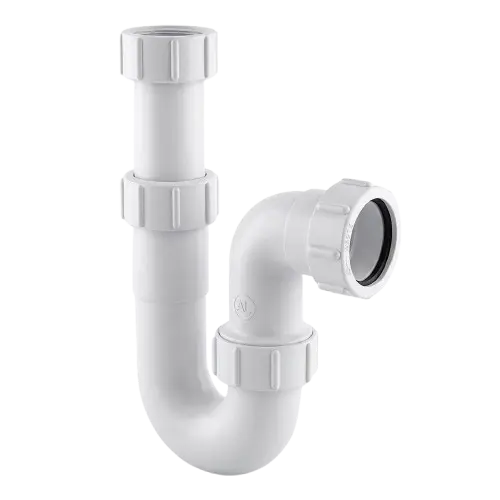
A P-trap is the curved pipe section under your sink that holds a plug of water to stop sewer gases entering your home. If you've spotted a leak, a smell, or cracked plastic, it's time for a replacement. This guide covers the one thing most people get wrong — choosing the right size and type (P-trap vs bottle trap, 32mm vs 40mm) — then walks you through a leak-free fit.
What Does a P-Trap Actually Do?
In UK plumbing, the P-trap is a simple but vital component that:
- Creates a water seal: Blocks foul drainage odours from entering the room.
- Connects the waste: Securely joins the sink waste to the main drainage pipe.
- Catches debris: Unscrews easily to clear hair or grease blockages.
What Size P-Trap Do You Need? (32mm vs 40mm)
Getting the size wrong is the single most common cause of a leaking trap. The rule of thumb: match the trap to your existing waste pipe.
| Waste Size | Imperial | Typical Use |
|---|---|---|
| 32mm | 1¼ inch | Bathroom basins, cloakroom sinks |
| 40mm | 1½ inch | Kitchen sinks, utility sinks, baths |
Mixing 32mm and 40mm parts without a proper reducer deforms the washer and causes leaks. If in doubt, take the old trap with you when buying, and always fit a fresh conical washer rather than reusing the old one.
P-Trap vs Bottle Trap: Which Should You Fit?
The two most common UK traps look different and suit different jobs:
- P-trap — the curved U-bend shape. Better water flow and less prone to blocking, so it's the go-to for kitchen sinks dealing with grease and food waste.
- Bottle trap — a compact, neat cylinder. Takes up less room and looks tidier, so it's popular on bathroom basins where space or appearance matters — but it blocks more easily.
Choose a P-trap for flow, a bottle trap for tight or visible spaces. You'll also see adjustable (telescopic) P-traps, which let you slide the inlet to meet an awkward waste height — handy for retrofits.
Common Signs You Need a Replacement
P-traps are common sources of under-sink leaks. Look out for these red flags:
If the leak is coming from a joint rather than the trap body, you may just need a new conical washer. For a full diagnosis, see our guide to fixing a leaking pipe under a sink.
Where to Buy Replacement P-Traps in the UK
Pricing typically ranges from £3 to £15 depending on type and brand. We recommend established UK trade merchants so the fittings meet British Standards for waste drainage.
| Retailer | Stock Status | Benefit | Link |
|---|---|---|---|
| Screwfix | In Stock | Huge McAlpine & Floplast range | View Range |
| Toolstation | Available | Great value on 32mm & 40mm traps | Check Stock |
| City Plumbing | In Stock | Trade-grade parts | View Prices |
How to Install a New P-Trap
Replacing a trap is a straightforward DIY task that usually needs no tools other than your hands.
Clear the Area
Place a bucket or towel directly under the old trap. There will be standing water inside the U-bend that spills out once you unscrew it.
Unscrew the Old Unit
Unscrew the large plastic nuts at both ends by hand. If they're stuck, use an adjustable wrench gently. Slide the old unit out and clean the pipe ends.
Fit New Washers & Tighten
Slide the new nuts and washers onto the pipes. Align the new P-trap and tighten the nuts by hand only. Over-tightening cracks the plastic or deforms the seal.
Check for Leaks
Run the tap at full pressure and watch the joints closely. If a drip appears, give the nut a tiny extra turn or check the washer is sitting flat.
💡 Pro Tips for a Leak-Free Finish
- Hand-tighten only: You rarely need tools for plastic waste fittings.
- New washers every time: Never reuse old, compressed washers; use the ones supplied with the new trap.
- Keep pipes straight: If the pipes enter the trap at an angle, the seal will eventually fail.
- Adding an appliance? Use a trap with a spigot (or a 40mm appliance waste trap) to connect a washing machine or dishwasher hose.
Frequently Asked Questions
What size P-trap do I need, 32mm or 40mm?
Match the trap to your existing waste pipe. Basins usually use 32mm (1¼"); kitchen sinks use 40mm (1½"). Mixing sizes without a reducer is the top cause of leaks, so measure the pipe or take the old trap with you.
What's the difference between a P-trap and a bottle trap?
A P-trap has a curved U-bend, flows better and blocks less — ideal for kitchens. A bottle trap is compact and neat for basins where space or looks matter, but blocks more easily.
How much does a replacement P-trap cost?
Around £3–£15 depending on type and brand. Adjustable and appliance-spigot traps sit at the higher end. Fitting it yourself usually needs no tools.
Do I need a P-trap with a spigot for a washing machine?
Yes, if you want to connect an appliance waste to the same pipe. A trap with a spigot (the small nozzle) takes the hose. An unused spigot can be capped with a blanking plug.
Why is my P-trap still leaking after replacement?
Usually an over-tightened nut has deformed the washer, the pipes enter at an angle, an old washer was reused, or 32mm and 40mm parts are mixed. Fit a fresh washer, keep the pipes straight, and hand-tighten only.
Do I need a wrench to fit a plastic P-trap?
No. Hand-tighten only. A wrench tends to over-tighten and crack the plastic or crush the washer, causing leaks rather than curing them.