Toilet Keeps Running After Flush UK: How to Fix It
Quick Answer
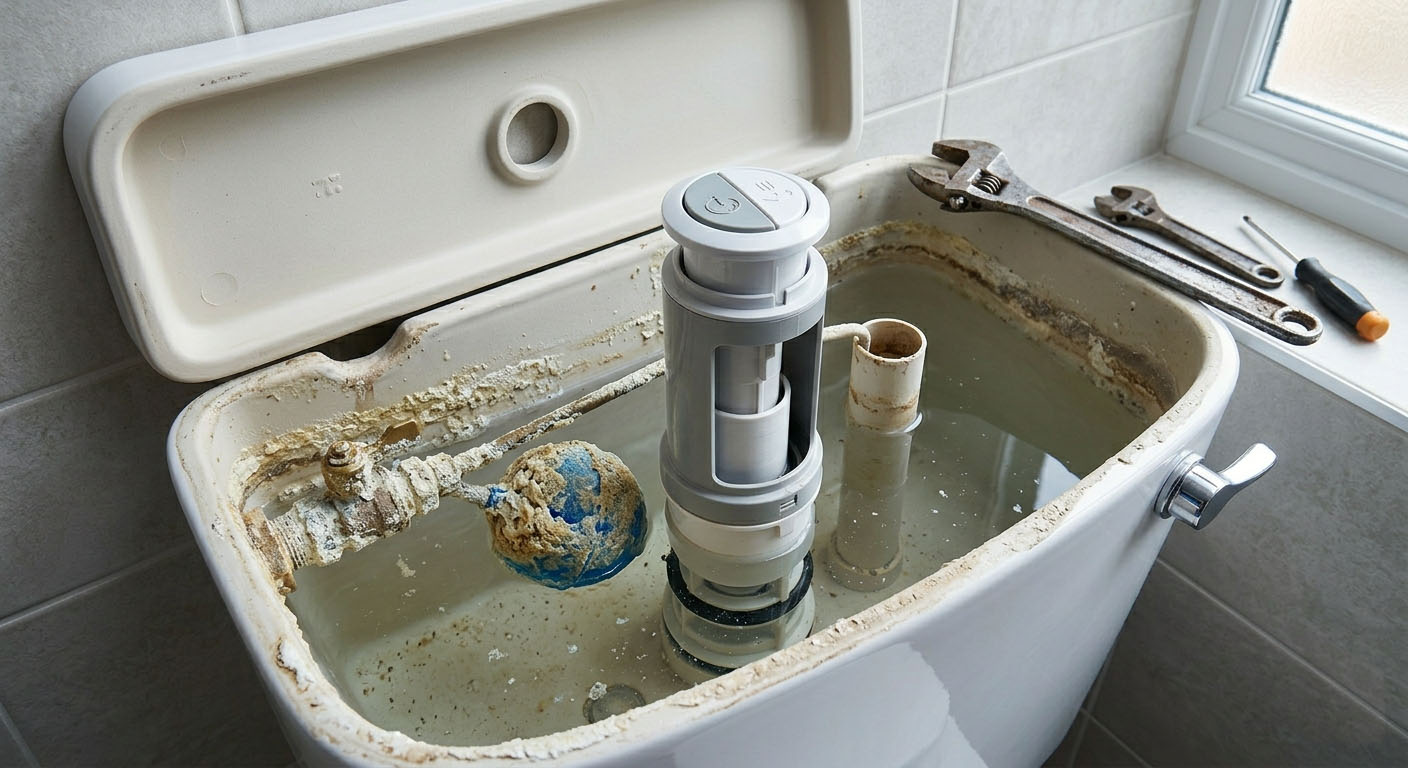
A toilet that keeps running after flushing is almost always caused by one of three things: a worn flush valve seal letting water trickle into the bowl, a float set too high causing water to spill into the overflow pipe, or a faulty fill valve that won't shut off. All three are DIY fixes costing £0–£25. A running cistern can waste 200–400 litres of water a day, so it is worth sorting quickly.
That constant trickling sound from the bathroom is one of the most common plumbing problems in UK homes. A toilet that keeps running after flushing is not just annoying on a water meter it can add £100–£300 a year to your bills if left alone.
The good news is that most running toilet faults are straightforward DIY fixes. You don't need to be a plumber to sort this. Lift the cistern lid and in most cases you can see exactly what is wrong within a minute.
Quick Navigation
Diagnose the Fault Before You Buy Anything
Lift the cistern lid and use this table to identify the problem. It takes about 60 seconds and tells you exactly what needs fixing.
Running Toilet Fault Finder
| What You See or Hear | Likely Fault | Fix |
|---|---|---|
| Water flowing into the overflow pipe | Float set too high | Adjust float screw see Step 1 below |
| Cistern fills normally but water trickles into bowl constantly | Worn flush valve seal | Clean or replace the seal see Step 2 |
| Hissing sound, cistern never fully stops filling | Faulty fill valve | Replace the fill valve see Step 3 |
| Cistern refills every few minutes without anyone flushing | Ghost flushing slow flush valve leak | Replace flush valve seal |
| Runs only at night, fine during the day | High overnight mains pressure forcing past a marginal seal | Replace flush valve seal or fill valve |
Common Causes of a Running Toilet in the UK
- Worn flush valve seal: The rubber seal at the base of the flush mechanism perishes over time or gets coated in grit. Water trickles past it continuously into the bowl.
- Float set too high: If the float is set above the overflow pipe, water spills down the overflow constantly. You will hear it running even when the cistern appears full.
- Faulty fill valve: The valve that lets water into the cistern may be worn and refuse to shut off fully. Often makes a hissing noise.
- Limescale: In UK hard water areas London, the South East, and the Midlands limescale coats seals and float mechanisms, causing them to stick or fail to seat properly. The same hard water that causes low shower pressure from blocked aerators also attacks toilet components.
- Dual-flush button rods too long: On modern UK push-button cisterns, the rods connecting the flush buttons to the valve can be slightly too long, holding the valve partially open after every flush.
DIY Fixes: Step by Step
Work through these in order. Most faults clear at Step 1 or Step 2 with no parts needed.
Step 1 — Adjust the Float Height
On modern UK fill valves, there is a small plastic adjustment screw on top of the valve body. Turn it clockwise to lower the water level. The water should stop approximately 25mm below the top of the overflow pipe. Flush once and watch the fill cycle the valve should shut off cleanly before water reaches the overflow.
If your cistern still has an old ball float on an arm, gently bend the arm downward slightly to lower the shutoff point.
Step 2 — Clean the Flush Valve Seal
The water in a toilet cistern is clean mains water, so do not be put off reaching in. Lift or twist out the flush mechanism and inspect the rubber seal at the base. Limescale and grit often wedge under it, holding it off its seat. Wipe the seal and its seating surface with a damp cloth. Refit and test. This fixes a large proportion of running toilets for free.
Step 3 — Replace the Fill Valve
If adjusting the float makes no difference and the cistern hisses constantly, the fill valve itself is worn. Turn off the isolation valve (quarter turn), flush to empty the cistern, then disconnect the supply pipe below. Unscrew the locknut holding the valve to the bottom of the cistern and lift it out. Take it to Screwfix or Toolstation to match the thread size most UK close-coupled toilets use a bottom-entry or side-entry fill valve.
Step 4 — Check the Dual-Flush Button Rods
On push-button cisterns, remove the lid and check whether the plastic rods connecting the buttons to the flush tower are too long. If they are pushing down on the valve even when the button is not pressed, shorten them slightly by twisting. No tools required.
How to Stop a Running Toilet Immediately
If the cistern is wasting water rapidly, cut the supply before you investigate. Here is how:
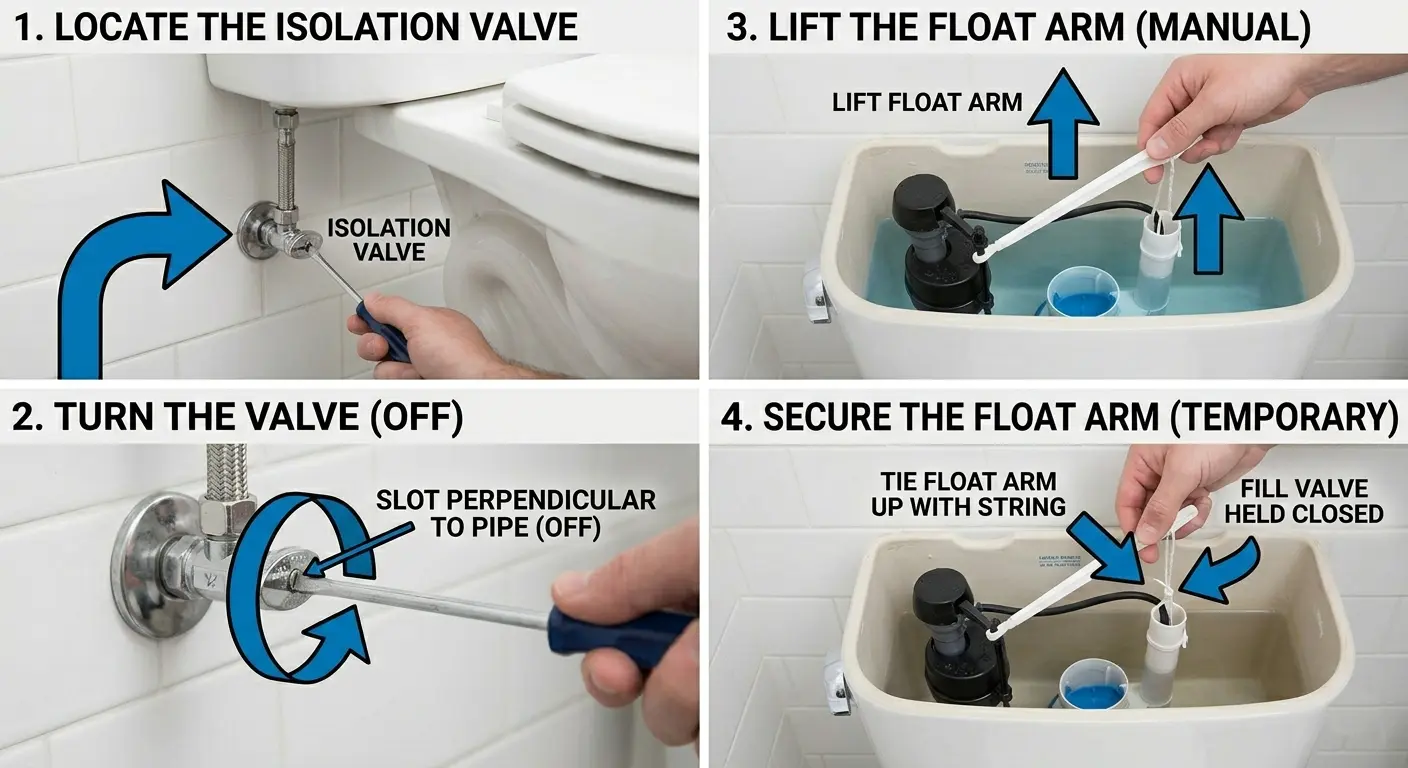
- Find the isolation valve: Look at the water supply pipe running into the side or bottom of the cistern. There should be a small chrome valve with a screwdriver slot.
- Turn it 90 degrees: One quarter-turn with a flat-head screwdriver shuts the water off. When the slot is perpendicular to the pipe, the valve is closed.
- No isolation valve? Lift the cistern lid, raise the float arm by hand, and hold it in the up position with a piece of string tied to the overflow pipe. This keeps the fill valve closed while you get parts.
Pro Tip: If you cannot find an isolation valve and the string trick won't hold, turn off the main stopcock usually found under the kitchen sink. You will lose water to the whole house, but it stops the waste immediately.
When to Replace Parts
If cleaning the seal and adjusting the float have not fixed it, the parts need replacing. Look for these signs:
- The rubber seal feels slimy, is cracked, or has visible distortion.
- The fill valve makes a high-pitched whistle even after the float is lowered.
- The float has taken on water and sunk tap it and if it sounds hollow it is fine, if it sloshes it is failed.
Common UK Replacement Parts
| Product Image | Part Name | Typical Use | Action |
|---|---|---|---|
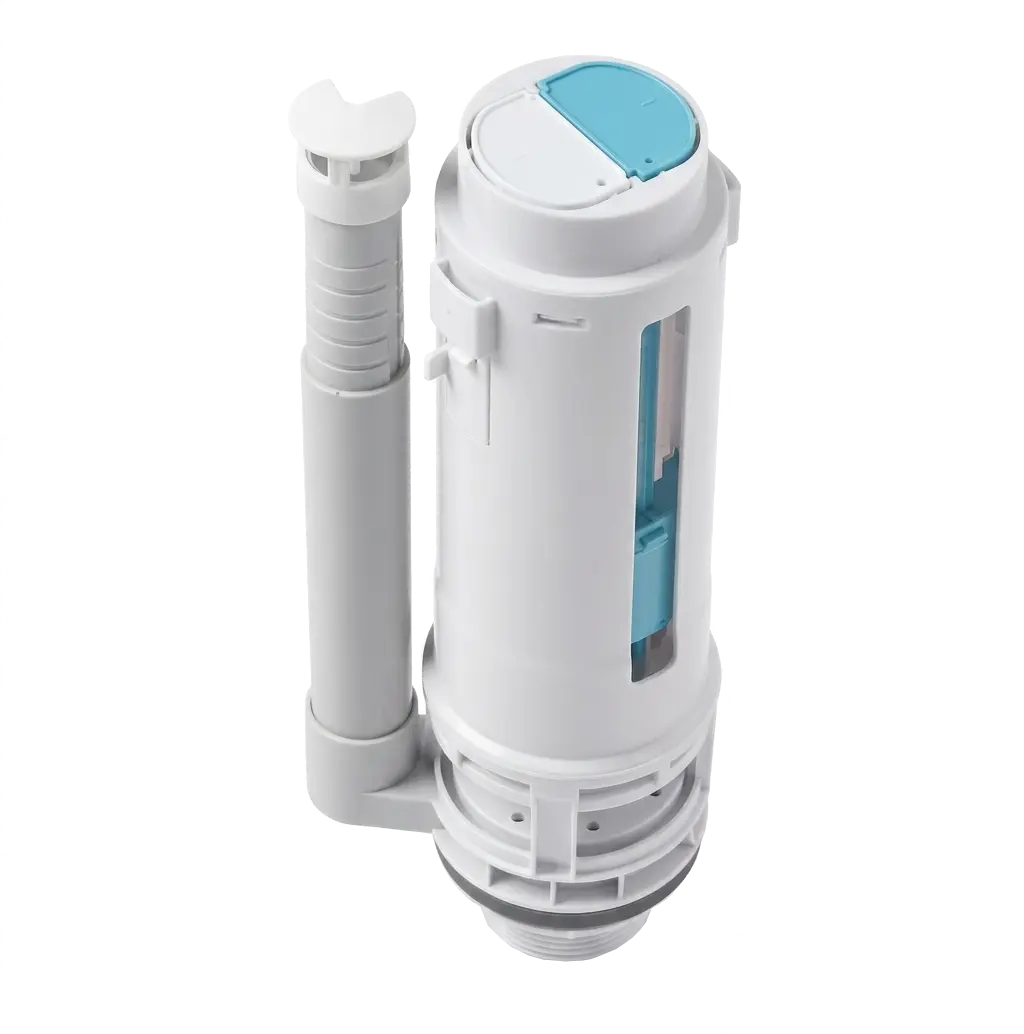 |
Bottom/Side Entry Fill Valve | Universal UK fitment | View Info |
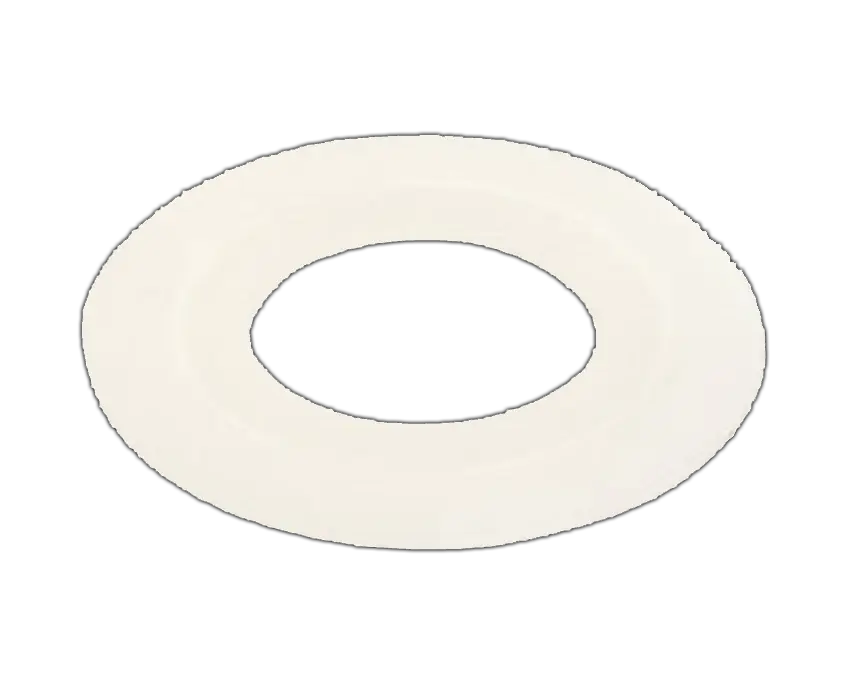 |
Flush Valve Seal | Fixes leaky seals / ghost flushing | View Info |
Important: Toilet parts are not universal. Before buying, confirm whether your cistern takes a bottom-entry or side-entry fill valve. Flush valve seals also vary by brand — Fluidmaster, Siamp, and Geberit all use different sizes. Take the old part to the shop to match it.
Cost to Fix a Running Toilet in the UK
- DIY adjustment or clean: £0. Float adjustment and seal cleaning need no parts.
- DIY replacement parts: £10–£25. Fill valves and flush valve seals are stocked at Screwfix, Toolstation, B&Q, and Wickes.
- Hiring a plumber: £60–£120 including call-out and parts, depending on location across the UK.
Bear in mind that on a metered supply, a constantly running toilet can add £100–£300 to your annual water bill. Even paying a plumber usually pays for itself within a few months.
When to Call a Plumber
Most running toilet faults are safe DIY. Call a professional if:
- Water is on the floor around the toilet base this points to a failed pan seal or cracked cistern, not just a valve fault.
- The isolation valve is stuck or dripping at the connection.
- You have a concealed cistern built into the wall the access panel is often fiddly and the internals vary significantly.
- You are not comfortable working with live water connections.
If you are also noticing other water issues around the house such as a drop in water pressure at night or a slow draining sink it is worth having a plumber look at the system as a whole. Find a WaterSafe-approved plumber for peace of mind on any water connection work.
Questions & Answers
Real questions from homeowners — answered by our team.
Community Questions
Frequently Asked Questions
Will a running toilet increase my water bill?
Yes. A running cistern can waste 200–400 litres per day. On a water meter, that can add £100–£300 a year. Fix it promptly and you will usually recover the cost of parts within a couple of months.
Why does my toilet run only at night?
Mains water pressure is higher at night when fewer homes are drawing from the supply. That extra pressure pushes past a marginal flush valve seal or fill valve that appears to hold during the day. Replacing the seal usually solves it permanently.
Can I use bleach tablets in my cistern?
Best avoided. The concentrated bleach degrades the rubber seals and plastic components inside the cistern, which causes more leaks over time. Clean the bowl with bleach in the normal way just don't drop tablets into the tank.
What is ghost flushing and why does it happen?
Ghost flushing is when the cistern refills for a few seconds as if someone just used the loo but nobody did. It happens because the flush valve seal is leaking water slowly into the bowl. Once the cistern level drops far enough, the float triggers the fill valve to top it up. Replacing the seal fixes it.
My toilet has a push-button is the fix different?
Modern UK push-button toilets use a central flush valve tower rather than a traditional siphon. The most common fix is to twist and lift the tower out and replace the large circular rubber washer at the base. It is a standard part at most UK DIY stores. Also check the button rods are not too long and holding the valve partially open.
Can I still get parts for an old-fashioned high-level cistern?
Yes. Most old UK high-level and low-level cisterns use standard half-inch BSP threaded fill valves and siphons. Modern, water-saving equivalents are widely available and will fit the original holes in your ceramic cistern.
How much does it cost to fix a running toilet in the UK?
If it only needs the float adjusted or the seal cleaned, the cost is £0. Replacement parts cost £10–£25 from Screwfix, B&Q, or Wickes. A plumber typically charges £60–£120 including call-out and parts, depending on your location.