How to Fix a Leaking Pipe Under a Sink in UK Homes
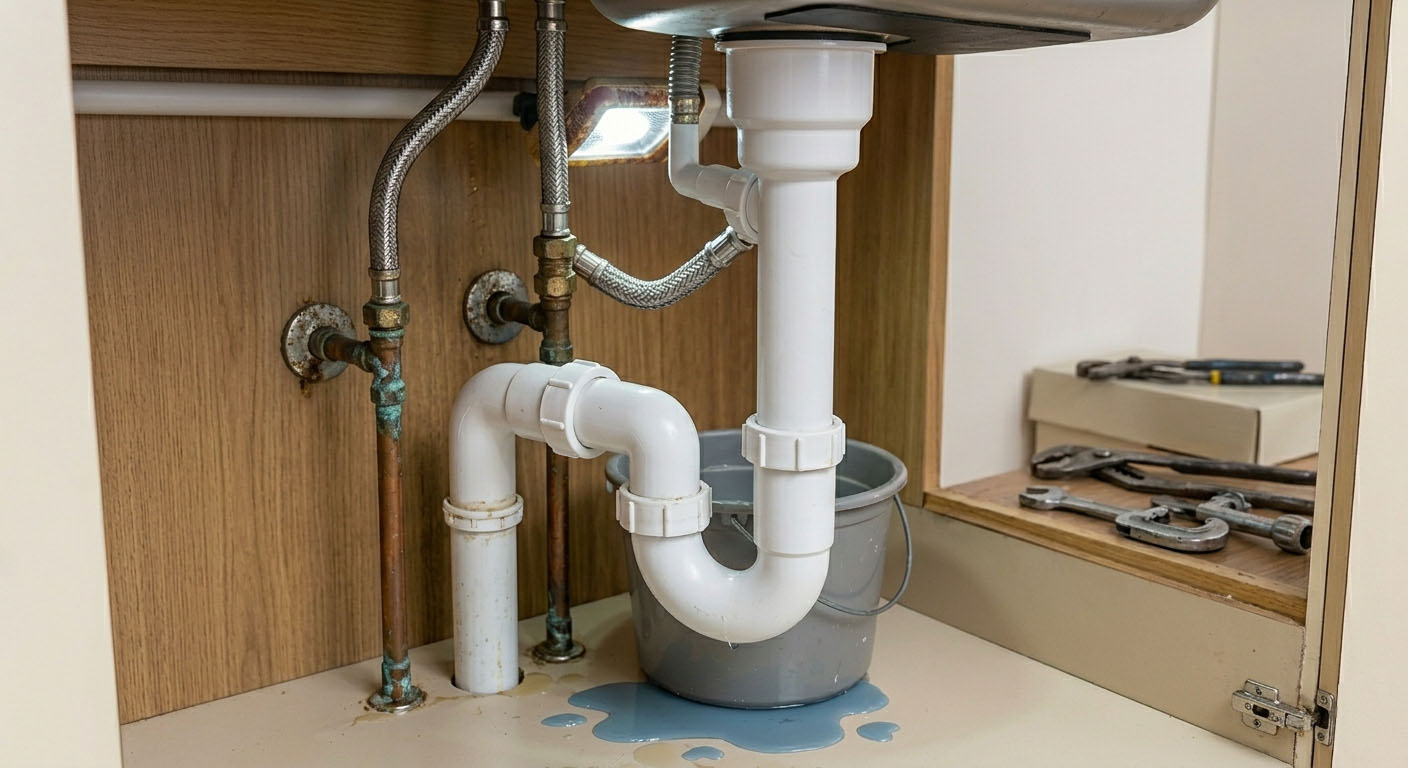
Finding a puddle inside your kitchen or bathroom cupboard is one of those household problems that needs sorting out the same day. Leave it even a week and you're looking at swollen chipboard cabinet bases, damp floorboards, and potentially mould behind the unit. The good news is that most under-sink leaks in UK homes come down to one of four easily fixed causes: a loose compression joint, a worn washer in the U-bend, a failed seal at the sink waste outlet, or a deteriorating flexi-tail supply hose.
None of these require a plumber. With an adjustable spanner, some PTFE tape, and a replacement washer or two from B&Q or Screwfix, most repairs take under 20 minutes. This guide walks you through each fix in order from simplest to most involved.
Quick Navigation
1. Identifying the Leak Source
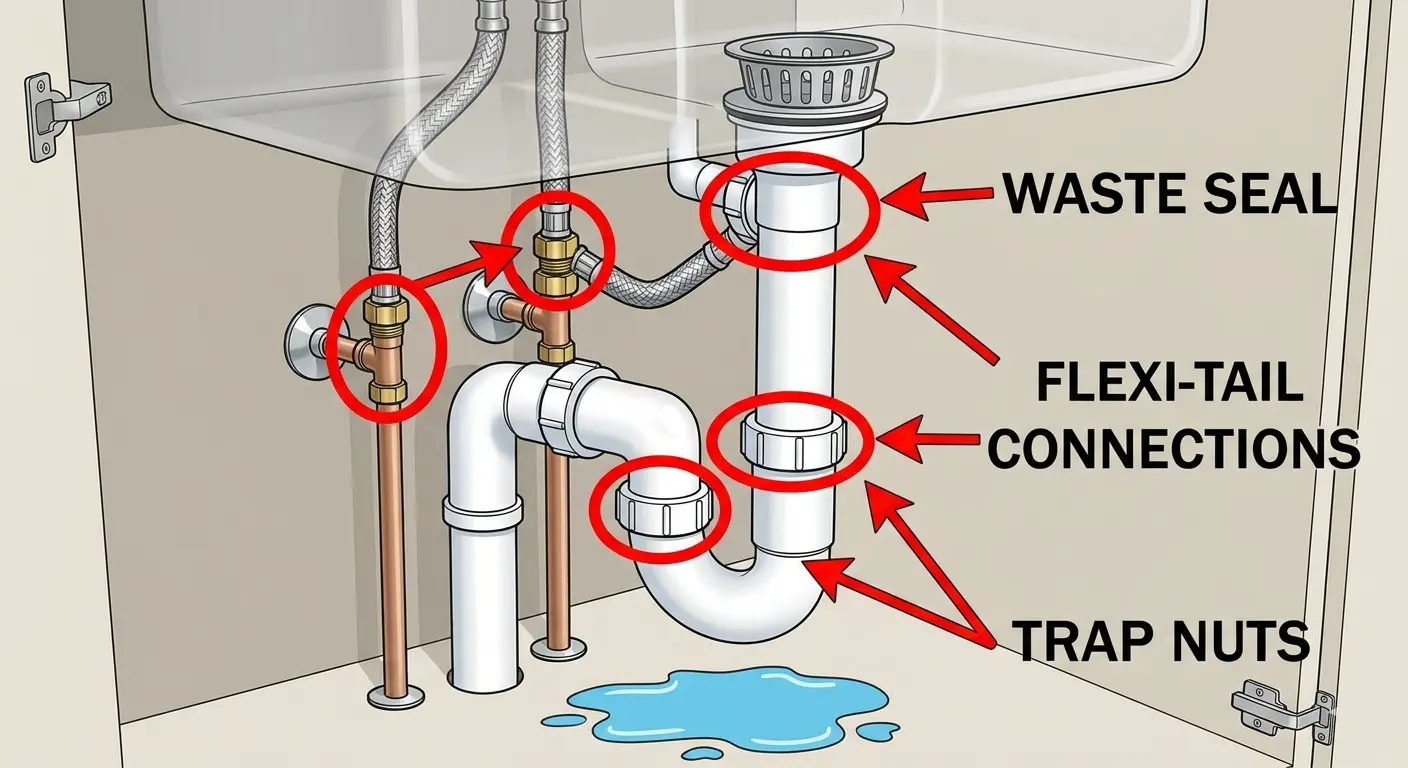
Before reaching for any tools, turn off the isolation valves on the supply pipes (the slot-head screws inline on the pipework — turn them 90 degrees to close). Then dry everything under the sink with a cloth and run the tap to observe exactly where water appears. This is the most important step — guessing the source wastes time and often leads to unnecessary part replacements.
The four most common under-sink leak points in UK homes are:
- Compression nuts on the waste pipework. The plastic nuts connecting the U-bend to the waste pipes loosen gradually from vibration and thermal expansion. Water drips from the joint, usually only when the tap is running.
- The U-bend trap itself. The rubber washer inside the top of the trap perishes over time, especially if it's been exposed to boiling water from pasta or cleaning chemicals. The whole trap can also crack on cheap plastic units.
- The sink waste tail. The large rubber washer between the waste outlet and the underside of the sink bowl deteriorates and allows water past it, particularly in older UK homes with original plastic fittings.
- Flexi-tail supply hoses. The braided stainless hoses that bring hot and cold water to the taps can rust, kink, or develop pin-hole leaks in the inner rubber lining — and when they go, they can discharge a significant amount of water very quickly.
If water appears only when you run the tap, the leak is in the waste system. If water drips even when the tap is off, the leak is in the supply side — a flexi-tail or an isolation valve.
2. Tools & Parts You'll Need
For the vast majority of under-sink leaks, you won't need to buy anything expensive. The parts are cheap and all available at Screwfix, Toolstation, B&Q, or any local plumbers' merchant.
- Adjustable spanner — for metal supply nuts and flexi-tail connections.
- Waterpump pliers (Stilsons) — for stubborn plastic compression nuts and the sink waste backnut.
- PTFE tape (plumber's tape) — 12mm white roll, for sealing metal threaded connections.
- Replacement conical washers — a multi-pack from B&Q covers most UK sink waste sizes.
- Replacement flat or lip-seal washers — for the U-bend and sink waste outlet.
- Bucket and old towels — residual water will come out of the trap when you unscrew it.
Under-Sink Repair: Parts to Buy
Identify your leak type below to find the correct UK-standard parts.
| Product Image | Essential Part | Size Guide | Action |
|---|---|---|---|
|
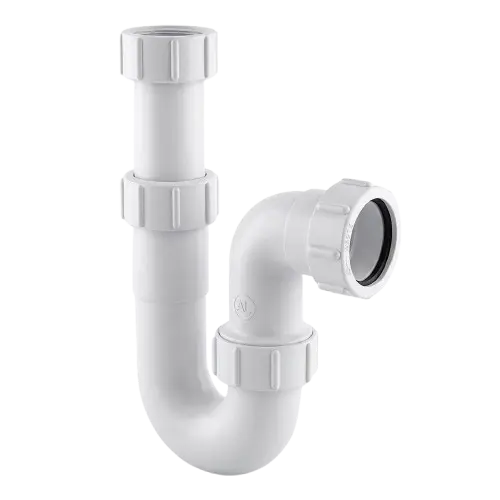
Replacement P-Trap (U-bend) Kitchen or bathroom sink waste |
40mm kitchen / 32mm basin | View Info |
|
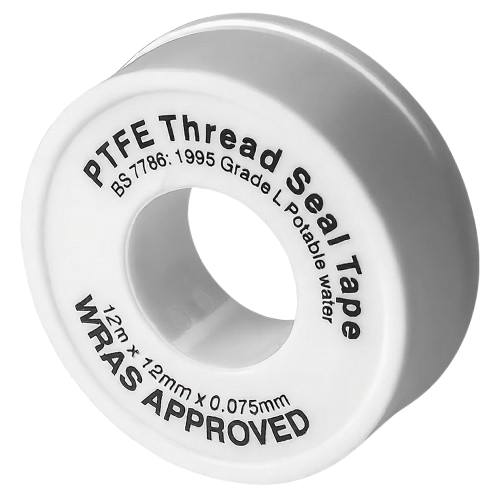
PTFE Tape For metal threaded supply connections |
Standard 12mm roll | View Info |
|
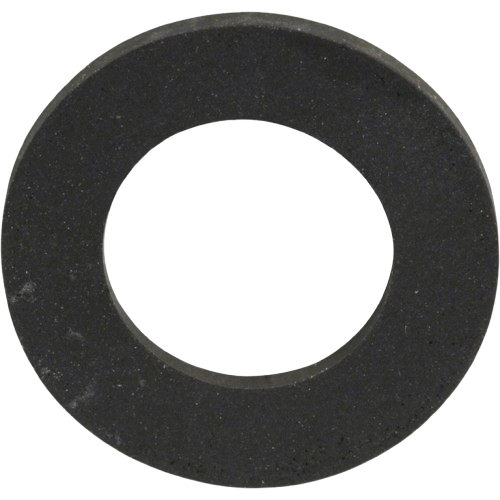
Conical Washers (Assorted Pack) Compression joint seals |
Assorted pack covers most UK sizes | View Info |
3. Fixing Loose Compression Joints
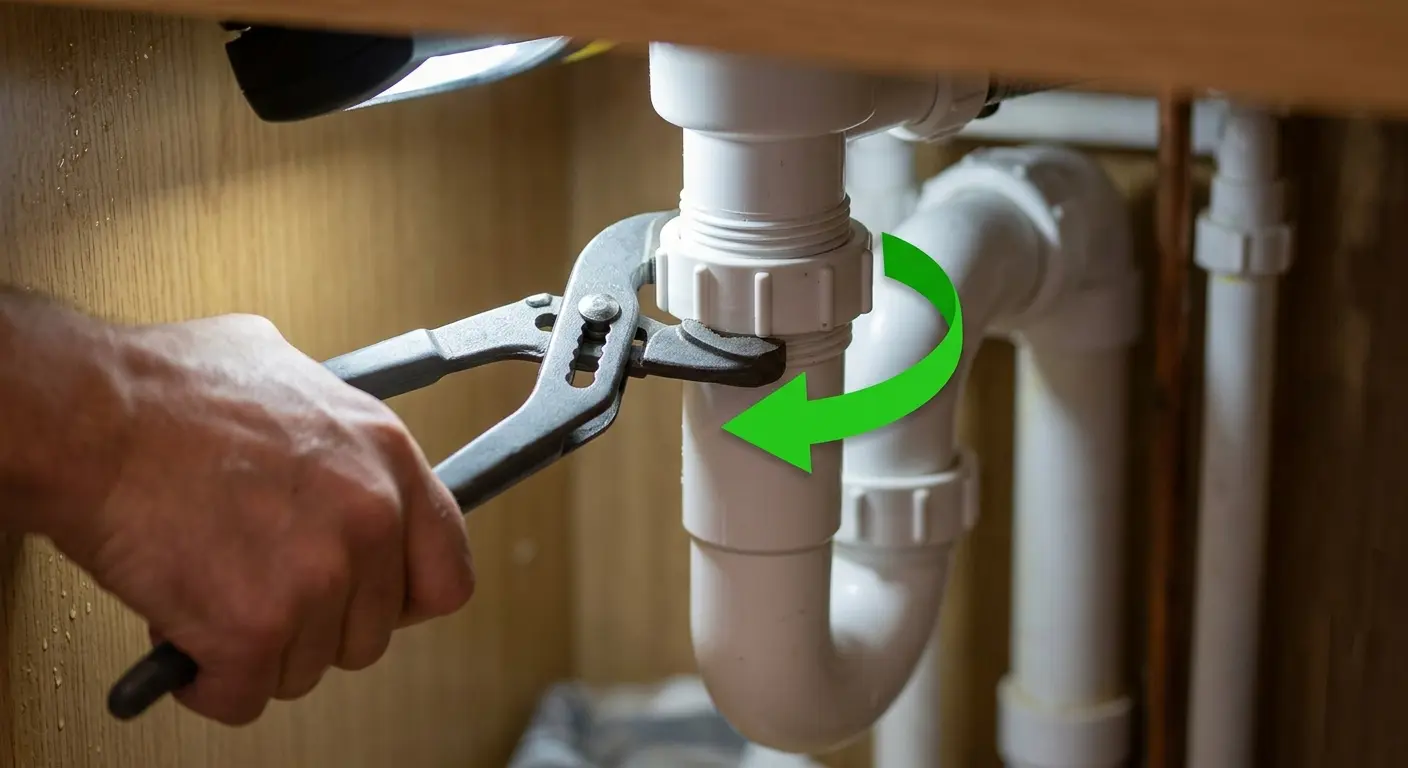
Most modern UK waste pipes use push-fit or compression plastic fittings. If water is dripping from a joint between pipe sections:
- Try hand-tightening first. The nut may simply have loosened from vibration. Give it a firm clockwise turn by hand. Never reach for a wrench on plastic straight away overtightening cracks the nut or distorts the seat, making things worse.
- If still dripping, unscrew the nut completely. Inside you'll find a conical washer. This small rubber seal does all the work. Check which way it's sitting the thin tapered end must point towards the joint (into the fitting), not away from it. A reversed washer will never seal properly.
- Replace the washer if flattened, cracked, or deformed. They cost pennies individually and are included in assorted washer packs. Refit the nut by hand, finger-tight, and then a quarter turn more with pliers.
- Check the pipe end is cut square. If you can see the pipe is sitting at a slight angle inside the fitting, the washer can't make full contact around the whole circumference. The pipe needs to be cut square and pushed in straight.
4. Repairing the U-Bend (P-Trap)
The U-bend or P-trap sits directly beneath the sink waste outlet and holds a water seal to block sewer gases. It's a common leak point because the rubber washers inside perish, particularly in kitchens where boiling water and strong cleaning chemicals go down the drain regularly.
Place a bucket underneath before you start the trap holds a cupful of water that will fall out when you remove it.
- Unscrew the two large compression nuts holding the trap to the waste pipes above and below it. These should be hand-tight; if they won't shift by hand, use waterpump pliers but be gentle on plastic.
- Pull the trap down and empty it into the bucket. Clear out any accumulated debris inside this is often the cause of a slow drain as well as a leak.
- Inspect the large flat rubber washer at the top of the trap where it seats against the sink waste outlet. If it's flattened, cracked, or has taken on a set shape, replace it. These washers are standard sizes take the old one to the merchant to match it.
- Check the trap body itself for hairline cracks. Hold it up to the light any crack will show as a fine line. A cracked trap must be replaced entirely; cracks never seal with putty or silicone permanently.
- Refit by hand, tighten the compression nuts snugly, and run the tap to test before closing the cupboard.
If the U-bend is old, yellowed, or brittle, it's worth replacing the whole trap rather than just the washer a new white 40mm P-trap costs under £5 from any plumbing merchant. For a full guide to choosing the right trap type, see our page on 40mm standpipe appliance traps if you're also plumbing a washing machine into the same waste run.
5. Using PTFE Tape on Metal Threaded Connections
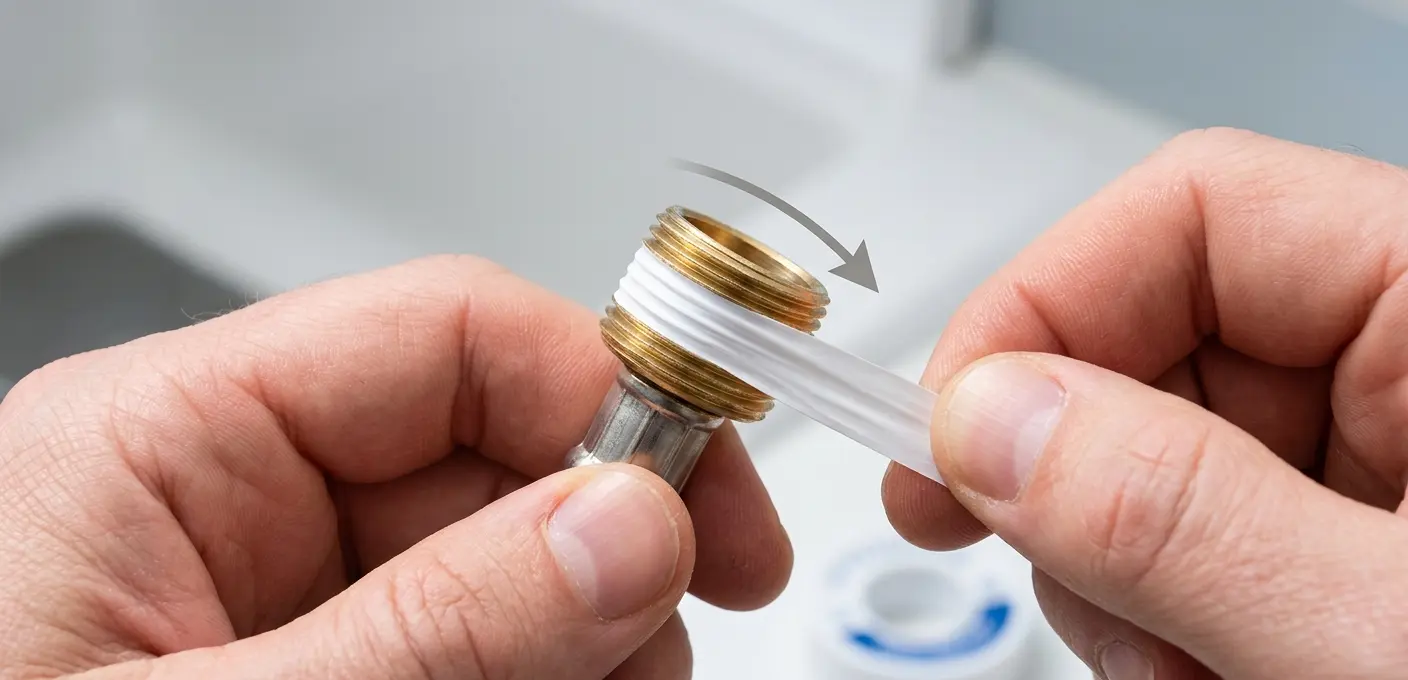
PTFE tape (also called plumber's tape or thread seal tape) is the correct solution for metal-to-metal threaded connections specifically the supply connections at the tap tails and isolation valves. It fills the microscopic gaps between threads that allow water to weep through even when a fitting appears tight.
- Dry the male thread completely PTFE won't adhere to a wet surface.
- Wrap the tape clockwise around the male thread as you look at it end-on. Wrap 5 to 8 times, stretching the tape slightly as you go so it beds into the thread grooves.
- Screw the fitting back together. The tape compresses as you tighten and forms a watertight seal within the threads.
6. Inspecting & Replacing Flexi-Tail Supply Hoses
Flexi-tails are the short braided stainless steel hoses that connect the tap tails to the isolation valves or supply pipes below the sink. They're a frequent source of under-sink flooding in UK homes, particularly in properties where the hoses were fitted 10 or more years ago and have never been replaced.
Pull everything out of the cupboard and inspect both hoses carefully:
- Rust or brown pitting on the braided outer casing replace immediately. The braid is corroding and the inner rubber lining is likely deteriorating too.
- Kinks or sharp bends these stress the inner lining. Straighten if possible, but if the kink is sharp, replace the hose.
- Bulging at either end the rubber lining is failing. Replace before it splits.
- Age if the hoses are original to a kitchen fitted over 10 years ago and you don't know when they were last changed, replace them as preventative maintenance. They cost around £5–£8 a pair.
To replace: close the isolation valve, unscrew both ends of the hose with an adjustable spanner (the connections are standard 15mm or ½" BSP in most UK kitchens), and fit the new hose with PTFE tape on the male threads. Open the isolation valve slowly and check for drips.
A flexi-tail failure that isn't caught quickly can cause the same level of floor damage as a burst pipe. If you're already dealing with water damage affecting the cabinet base or floor, our guide on emergency water loss and household plumbing issues covers what to check when a property has suffered significant water ingress.
7. Leaking Sink Waste Outlet (Where the Plughole Meets the Sink)
If water appears at the very top of the waste assembly pooling on the floor of the cupboard directly below the plughole rather than at a pipe joint the seal between the sink waste outlet and the underside of the sink bowl has failed.
This seal is a large rubber washer (sometimes called a top hat washer) that sits between the waste fitting and the underside of the sink. In UK homes with older sinks, these are frequently degraded by boiling water and descaler chemicals. The fix is straightforward:
- Remove the trap and waste pipework so you have clear access to the waste backnut from below.
- Use waterpump pliers or a specialist waste backnut wrench to unscrew the large plastic backnut under the sink. Hold the waste outlet from above (through the plughole) to stop it spinning.
- Drop the waste outlet down and out of the sink. The old rubber washer will come away with it or be sitting on the sink underside.
- Clean off any old plumber's putty or silicone residue from both surfaces.
- Apply a thin rope of plumber's putty around the underside of the waste flange (the top part that sits in the plughole), or use a new rubber washer if supplied with a replacement waste kit.
- Refit from above, tighten the backnut firmly from below, and wipe away any excess putty that squeezes out around the top flange.
8. Testing the Repair
Once you've refitted everything, dry the area under the sink completely with a cloth this is important, because if there's residual moisture from before the repair you won't be able to tell if there's still a drip. Then:
- Turn the water back on slowly at the isolation valves.
- Run the tap for a full minute at normal flow.
- Check every joint and connection point you've touched look, don't just feel, because a very slow drip won't be obvious to the touch immediately.
- Fill the sink fully and let it drain rapidly this tests the waste joints under maximum flow, which is when most compression joint leaks appear.
If everything is dry after the full test, the repair is complete. Leave the cupboard door open for a couple of hours afterwards to let any residual moisture evaporate, and check again the following day.
When to Call a Professional Plumber
The jobs above are all realistic DIY tasks. But there are specific circumstances where calling a qualified plumber is the right call:
- Pinhole leaks or cracks in copper supply pipes. These can't be permanently fixed with tape or putty. A section of pipe needs to be cut out and replaced with a compression fitting or soldered joint. If you're not confident with soldering or push-fit copper fittings, get a plumber in.
- The leak is from inside the tap body. If water is weeping from the tap itself rather than from the pipework connections, you likely have a worn ceramic disc cartridge. This is repairable but varies significantly between tap makes and models.
- Water has spread behind units or into the floor. If the cupboard base is soft and swollen or water has tracked under adjacent units, the damage assessment and drying-out process is worth having a professional look at to avoid mould issues.
- Slow drain alongside the leak. If the sink is also draining slowly, you may have a partial blockage further along the waste run causing back pressure that's stressing the trap seals. Our guide on why a UK sink drains slowly covers this in full before you need to escalate to a tradesperson.
- Find a registered plumber. For any work that requires new pipework or modifications to the supply system, use a plumber on the WaterSafe register to ensure compliance with UK Water Fittings Regulations.
Questions & Answers
Real questions from homeowners — answered by our team.
Community Questions
Leaking Pipe Under Sink FAQs
Should I use silicone sealant to fix a leaking pipe under a sink?
No. Silicone is a temporary fix at best and will fail again within months. It also makes a proper repair harder later because you have to clean it off the fittings before they'll seal correctly. Replace the washer or tighten the compression fitting properly for a permanent repair.
Why is my new plastic waste pipe still leaking after I fitted it?
The most common reason is that the pipe wasn't cut square, so the end sits at a slight angle and the rubber seal can't make full contact around the whole circumference. Check the cut end is perfectly straight. Also confirm the pipe is pushed fully into the fitting past the depth mark, and that the compression nut is hand-tight overtightening can actually distort the seal and make a leak worse, not better.
What size waste pipe do UK kitchen sinks use?
Most UK kitchen sinks use 40mm (1.5 inch) waste pipe. Bathroom basins typically use 32mm (1.25 inch). Buy the correct size washers and trap for your specific room a 40mm washer in a 32mm trap won't seat properly.
Can I use chemical drain unblockers on plastic waste pipes?
Occasionally, yes but regular use isn't a good idea. Strong caustic chemicals generate heat when they react with blockages, and that heat can soften plastic pipe joints or degrade rubber seals over time. For recurring blockages, removing and clearing the U-bend by hand is safer and usually quicker. See our guide on slow sink drainage in the UK for a step-by-step approach.
How do I know if my flexi-tail hose needs replacing?
Check the braided stainless outer casing for rust spots or pitting, and look at the rubber ends for cracks or bulging. Any of these signs mean the hose should be replaced immediately. A failed flexi-tail can discharge a significant volume of water very quickly and cause serious damage to the cabinet and floor below.
How do I stop the water supply under my sink while I make the repair?
Look for a small isolation valve on each supply pipe it looks like a slot-head screw fitted inline on the pipe. Turn the slot to horizontal (90 degrees to the pipe direction) to close it. If there are no isolation valves fitted, turn off at the mains stopcock, usually located under the kitchen sink or in a downstairs cupboard where the supply pipe enters the house.
My sink waste is leaking where the plughole meets the sink. What's the fix?
The large rubber washer between the waste outlet and the underside of the sink has perished. Remove the trap and waste pipework, unscrew the waste backnut from below using waterpump pliers (hold the outlet from above to stop it spinning), drop the waste out, replace the rubber washer, and refit with a thin bead of plumber's putty around the top flange. This is common in UK homes where boiling water and cleaning chemicals have degraded the original rubber over the years.