Surge Protected Extension Leads: UK Buying Guide
A surge protected extension lead is one of the cheapest ways to protect a TV, PC, router or games console from a sudden voltage spike. This guide covers how surge protection actually works, what joule rating to look for, and where to buy a reliable one in the UK.
Quick answer: A surge protected extension lead absorbs sudden voltage spikes — from lightning strikes, the grid switching, or large appliances cycling on and off — before they reach your electronics. Look for a joule rating of at least 1500J for TVs and computers, a UK-fused 13A plug, and an indicator light that confirms protection is active. Prices start around £10–£15 from Screwfix, Toolstation and Amazon.
Contents — jump to section
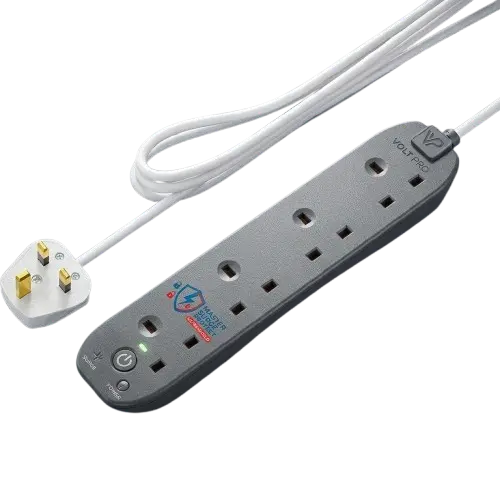
What is a surge protected extension?
A surge protected extension lead looks like a standard multi-socket extension, but it contains a metal oxide varistor (MOV) that diverts excess voltage away from your equipment during a power spike. Ordinary extension leads offer no protection at all — they simply distribute mains power as-is, spike included.
Power spikes are more common than most homeowners realise. They can be caused by lightning strikes near overhead lines, the National Grid switching load, or large appliances such as fridges and washing machines cycling their motors on and off. A single spike can shorten the lifespan of sensitive electronics or destroy them outright — it's one of several common electrical faults found in UK homes that often gets overlooked.
Signs you need a surge protected extension
Consider upgrading from a standard extension lead if any of the following apply:
If any of these sound familiar, the cost of a surge protected extension — typically under £20 — is small compared with the cost of replacing a damaged television or laptop charger. Worth noting: a spike that damages equipment can sometimes leave a socket dead afterwards, so if a socket stops working right after a power event, check our guide on a socket not working before assuming the extension itself is faulty. Some homeowners also notice lights flickering around the same time as a spike, which is worth investigating separately.
Choosing the right rating
Not all surge protected extensions offer the same level of protection. The two figures that matter most are the joule rating and the number of sockets, so match these to what you are plugging in.
⚠️ Check the joule rating before buying. A higher joule rating means the unit can absorb a larger spike before it needs replacing. Cheap extensions with no stated joule rating usually offer minimal real protection — look for the figure printed on the packaging or spec sheet. If you're already dealing with a fuse box that trips regularly, sort that out first, since an unstable supply puts extra strain on any surge protector.
| Use case | Recommended joule rating | Notes |
|---|---|---|
| Phone and laptop chargers | 500–1000J | Entry-level protection, fine for low-value accessories. |
| TV and games console | 1500–2500J | Covers most living-room setups with several devices. |
| Home office / PC setup | 2500J+ | Look for models with USB ports and coaxial or Ethernet protection. |
| Home entertainment rack | 3000J+ | Multiple high-value devices on one circuit benefit from the highest rating available. |
Where to buy surge protected extensions in the UK
Surge protected extension leads typically cost between £10 and £35 depending on the joule rating, socket count, and cable length. All UK models should carry a BS 1363 fused plug.
| Retailer | Stock | Good for | Link |
|---|---|---|---|
| Screwfix | In stock | Trade-grade extensions with high joule ratings; click & collect same day | View range |
| Toolstation | Available | Budget-friendly multi-socket options; competitive pricing | Check stock |
How to set up a surge protected extension safely
Setting one up takes only a few minutes, but positioning it correctly is what determines how well it protects your equipment.
What you need: a surge protected extension lead rated for your equipment, a free wall socket, no adapters or additional extensions stacked on top.
Check the joule rating
Match the extension's joule rating to the value of the equipment you are protecting. Higher-value electronics such as TVs and PCs need a higher joule rating, typically 1500J or above.
Plug it directly into the wall
Plug the extension lead directly into a wall socket, never into another extension lead. Keep it away from water sources and avoid coiling the cable tightly, which can cause it to overheat under load.
Confirm the total load
Add up the wattage of everything you plan to plug in and confirm it is below the extension's maximum rated load, usually printed on the body of the unit or in the manual. Overloading a single extension is also one of the most common reasons circuit breakers keep tripping, so spreading heavier devices across sockets is worth doing even with a surge protected unit.
Check the indicator light
Most surge protected extensions have a small LED that confirms protection is active. Check it lights up when plugged in, and replace the unit if the light fails to come on or goes out after a power event.
💡 Pro tips for getting the most from your surge protection
- Never daisy-chain extensions. Plugging a surge protected extension into another extension lead overloads the circuit and can bypass the protection entirely.
- Replace after a major spike. A surge protected extension usually absorbs one significant spike before its protection degrades — even if it still powers your devices, the MOV inside may be spent. A severe spike is sometimes the same event behind a partial power outage elsewhere in the house, so it's worth checking other rooms too.
- Match the rating to the room. A home office or entertainment rack with several expensive devices deserves the highest joule rating you can find, not the cheapest option on the shelf.
- Look for extra protection. Some models also protect Ethernet, coaxial, or phone lines — worth it if your router or set-top box shares the same circuit as the rest of your kit.
- Check for a British Standard fused plug. A genuine BS 1363 plug with the correct fuse rating is essential for safe use in a UK home.