Common Electrical Faults in UK Homes: How to Spot and Solve Them
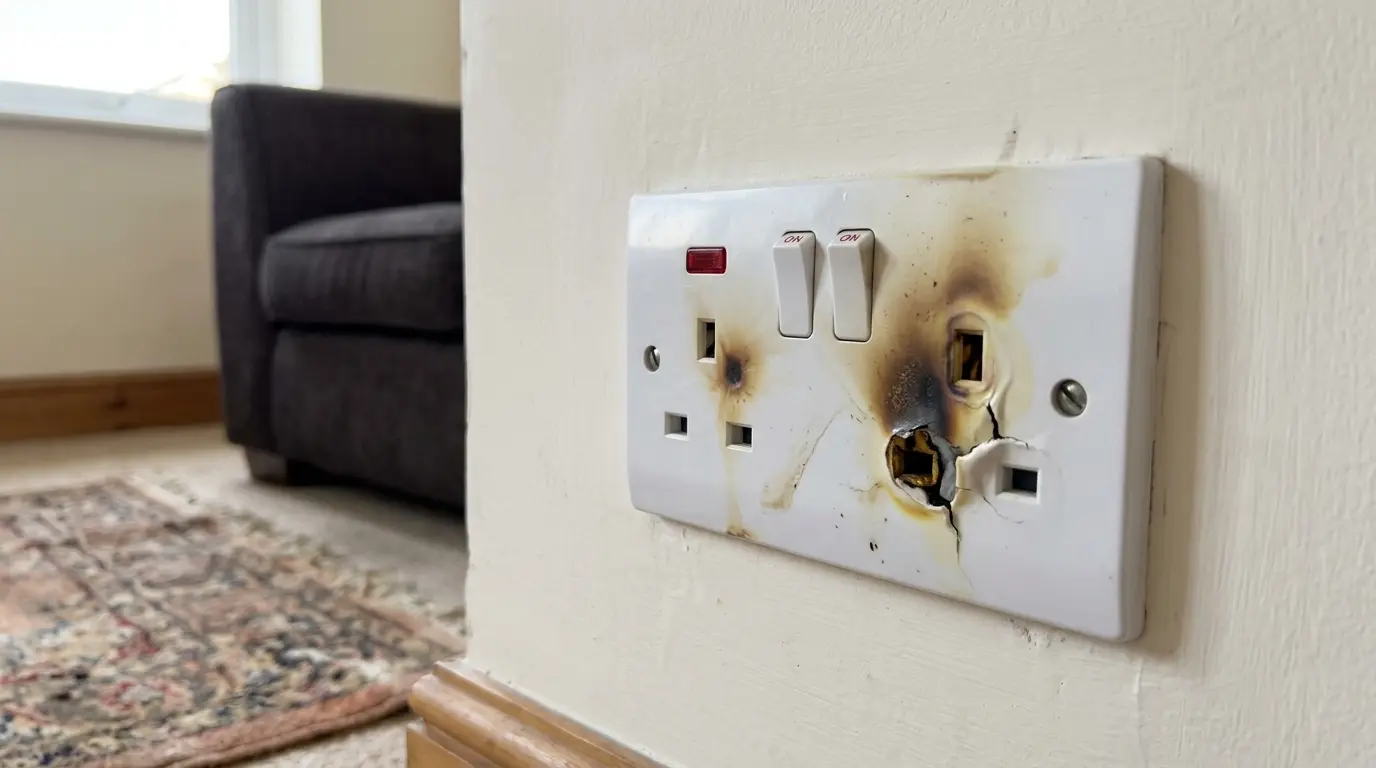
Electricity is the invisible heartbeat of our homes. We don't think about it until the toaster stops working, the lights start flickering, or we catch a strange whiff of "burning fish" in the hallway.
In the UK, our 230V system is powerful and demands respect. While many minor faults are just annoyances, some are early warning signs of a potential fire or shock hazard. This guide covers the most common electrical faults found in British homes and explains exactly what to do when they occur.
Quick Navigation
1. Flickering or Dimming Lights in UK Homes
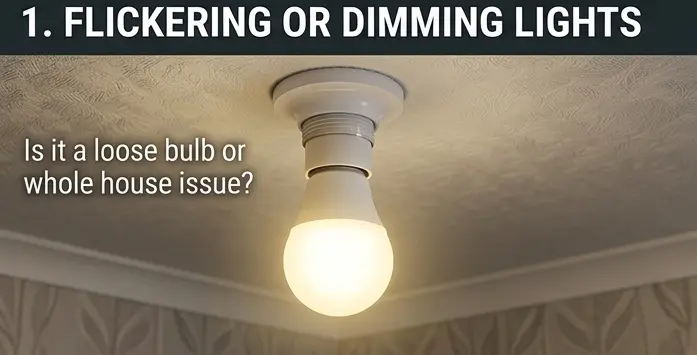
Flickering lights are the most commonly reported electrical fault in UK homes, particularly since the widespread switch to LED bulbs.
- Most Likely Cause: A loose bulb, or an LED bulb that isn't compatible with your dimmer switch. Many older dimmers are designed for incandescent bulbs and will cause LEDs to flicker.
- Danger Level: Low in isolation. However, if flickering occurs across all rooms simultaneously, it can indicate a loose Neutral wire in your consumer unit — a genuine fire risk that requires an electrician immediately.
- The Fix: Tighten or replace the bulb. If using LEDs on a dimmer, ensure the switch is labelled "Trailing Edge" or "LED-compatible." Whole-house flickering? Call a registered electrician without delay.
2. A Fishy or Burning Smell from Sockets or Switches
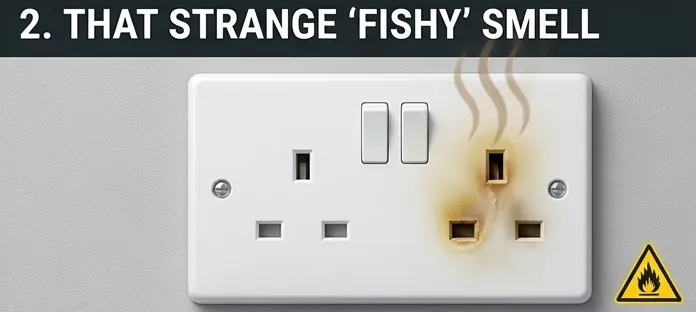
If you notice a pungent, fishy odour in a specific room and there's nothing on the hob, check your sockets — not the kitchen.
Why it happens: Electrical components such as socket faceplates and wiring insulation are made from thermoplastic or Bakelite. When they overheat due to a loose connection or an overloaded circuit arcing (electricity jumping through air gaps), they release a distinct, acrid smell often described as fishy or like burning plastic.
What to do: This is a critical warning sign. Switch off the power to that circuit at the consumer unit and carefully feel the nearby sockets and switches — but do not touch any that feel hot. A hot or discoloured faceplate must be replaced by a qualified electrician before the circuit is used again.
3. RCD Keeps Tripping and Won't Reset
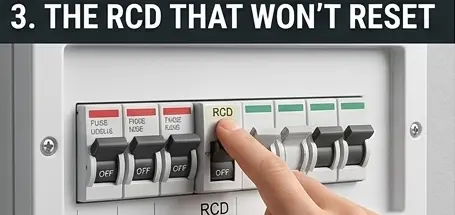
You flip the RCD switch back up, but it snaps straight back down. This is the RCD (Residual Current Device) doing exactly its job — detecting a dangerous "leak" of electricity and cutting power to protect you.
- Common Causes: A faulty appliance with a heating element (kettles, irons, washing machines, tumble dryers) or moisture inside outdoor lighting or garden sockets.
- The DIY Isolation Test: Unplug everything on that circuit — not just switching off at the wall, but physically pulling every plug out. If the RCD now stays up, plug appliances back in one at a time. The item that causes the RCD to trip again is your faulty appliance.
- When to call a pro: If the RCD trips even with nothing plugged in, there is a fault in the fixed wiring itself and you need a Part P registered electrician.
4. Buzzing, Crackling, or Warm Sockets
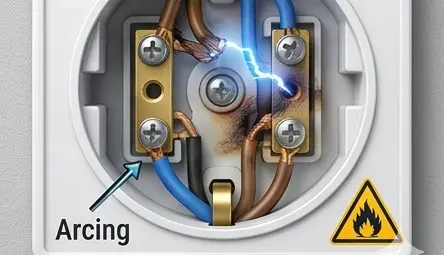
A sizzling, buzzing, or crackling sound from a socket is called arcing — electricity literally jumping across air gaps between loose or corroded internal terminals.
- Visual Warning Sign: Brown or yellow discolouration around the pin holes of the socket face. Any scorch mark, however small, means arcing has already occurred.
- Danger Level: Extremely high. Electrical arcing is one of the leading causes of house fires in the UK, according to fire service data.
- The Fix: Stop using that socket immediately. Do not attempt to open the faceplate yourself. The socket must be replaced by a professional electrician, who will also inspect the back-box and wiring behind it.
5. Getting an Electric Shock or Tingle from Appliances
A small "zip" or tingle when you touch a metal toaster, kitchen sink, radiator, or laptop casing is not something to dismiss — it indicates a serious earthing fault.
In UK homes, the Earth wire exists to safely carry stray electricity away from metal surfaces and into the ground. If you are feeling a shock, electricity is taking the path of least resistance — through your body — because the earthing system is faulty, incomplete, or has become disconnected.
What to do: Do not touch the appliance or any connected metalwork again. This is classified as a Class 1 fault. An electrician must check your main protective bonding — the thick green-and-yellow cables typically found near your gas meter, water stopcock, and consumer unit — before the property is safe to use normally.
How Dangerous Is Each Electrical Fault? Quick Reference
| Fault | Urgency | Recommended Action |
|---|---|---|
| Flickering Bulbs (one room) | Low | Check bulb seating and dimmer compatibility. |
| Flickering Lights (whole house) | High | Call an electrician — possible loose Neutral wire. |
| Fishy or Burning Smell | Critical | Isolate circuit at consumer unit; call electrician immediately. |
| Tripping RCD (appliance found) | Medium | Discard or repair the faulty appliance. |
| Tripping RCD (nothing plugged in) | High | Wiring fault — call a Part P electrician. |
| Buzzing or Warm Socket | Critical | Stop using socket; replace professionally. |
| Shocks or Tingles from Appliances | High | Avoid appliance; have main bonding inspected. |
When to Call a Part P Registered Electrician
Most electrical faults in UK homes are predictable — stemming from ageing appliances, DIY shortcuts, or loose connections in the consumer unit. The rule of thumb is simple: if it smells, sounds wrong, or feels warm, turn it off.
Never tape over a tripping RCD switch or ignore a burning smell. These safety devices exist to protect lives. If unplugging everything and resetting doesn't clear the fault permanently, it's time to bring in a Part P registered electrician, verifiable through the NICEIC contractor search or NAPIT member directory.
Questions & Answers
Real questions from homeowners — answered by our team.
Community Questions
Electrical Faults: Frequently Asked Questions
Why does my socket pop when I plug something in?
A small blue spark when plugging in a switched-on appliance can be normal — it's the contacts making connection under load. However, a loud pop or black soot marks around the pin holes indicate the socket contacts are worn and arcing. Stop using it and have it replaced.
Can I change a socket faceplate myself in the UK?
Yes. Under UK Part P Building Regulations, replacing a like-for-like socket or light switch on an existing circuit is generally permitted for a competent homeowner without notifying Building Control. However, any work that adds a new circuit — for example, installing a socket in a new location — must be carried out or certified by a registered electrician.
Why is my electric bill suddenly high with no change in usage?
An unexplained jump in your electricity bill can point to a fault. An earth leak or a degraded immersion heater element can draw current continuously, running your meter even when appliances appear to be off. An electrician can test for this with a simple insulation resistance test.
Why do my light bulbs keep blowing frequently?
Frequent bulb failures are often caused by over-voltage from the grid (the UK supply can legally reach 253V) or cheap bulbs. If it's confined to a single room, a loose connection in the ceiling rose or excessive heat build-up in a recessed downlight fitting is the most likely culprit. Switching to high-quality, rated LEDs and ensuring the fitting is correctly ventilated usually solves the problem.
What does it mean if my lights dim when I switch on the kettle?
This is a classic symptom of a voltage drop — your wiring is struggling to deliver enough current to high-demand appliances at the same time. It can be caused by old or undersized cables, or by a loose connection at the main fuseway in the consumer unit. While sometimes cosmetic, it is worth having a registered electrician investigate, as repeated voltage drops can shorten appliance lifespans.