Socket Not Working? How to Safely Troubleshoot UK Plug Sockets
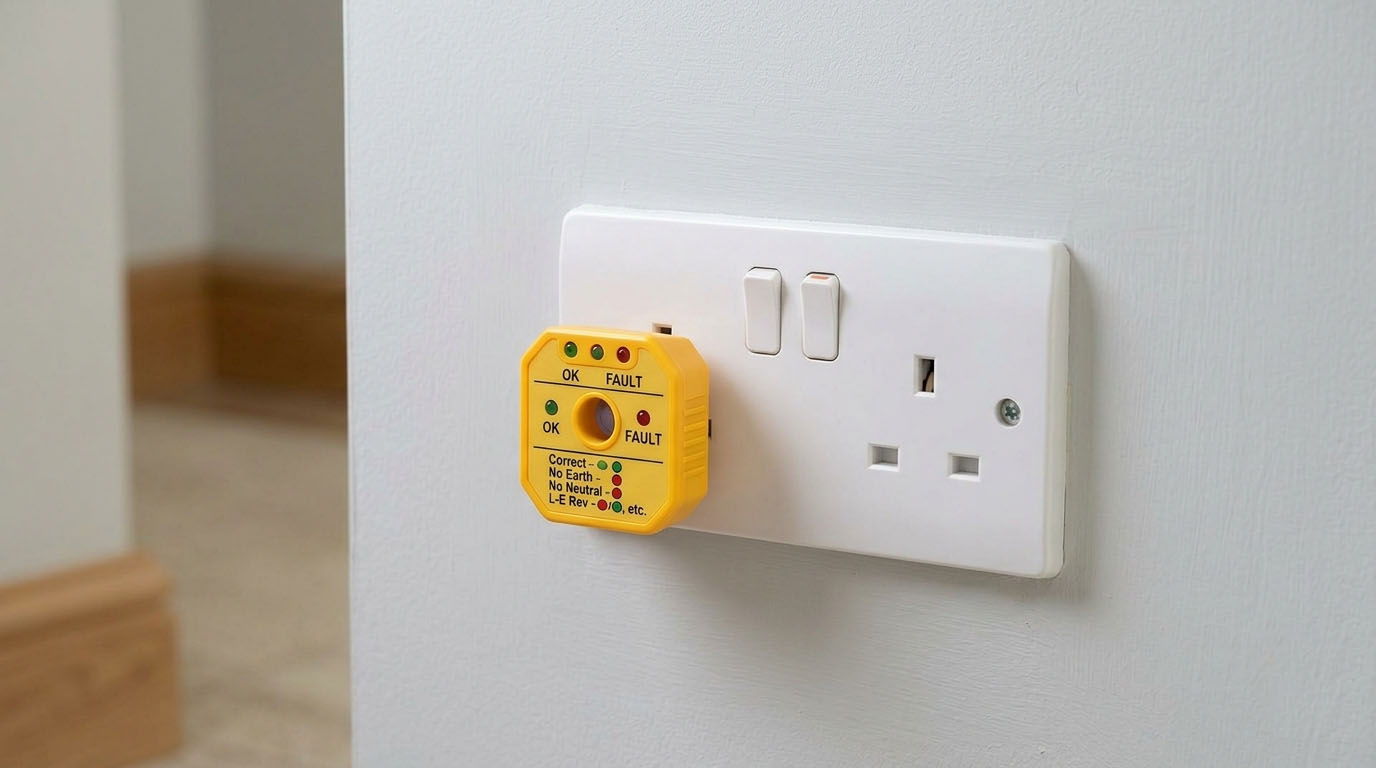
A dead plug socket is more than a minor inconvenience — it can be a symptom of a deeper fault in your home's ring main. UK electrical systems are generally robust, but issues like a tripped MCB, a blown plug fuse, or a loose terminal connection can cause a socket to stop working without warning.
This guide walks UK homeowners and renters through a safe, logical troubleshooting process. We cover the quick checks you can do yourself, and explain clearly when you must stop and call a Part P registered electrician. If your fuse box is regularly causing problems beyond a single socket, our companion guide on common electrical faults in UK homes is a useful place to start.
Quick Navigation
1. Check the Consumer Unit (Fuse Box)
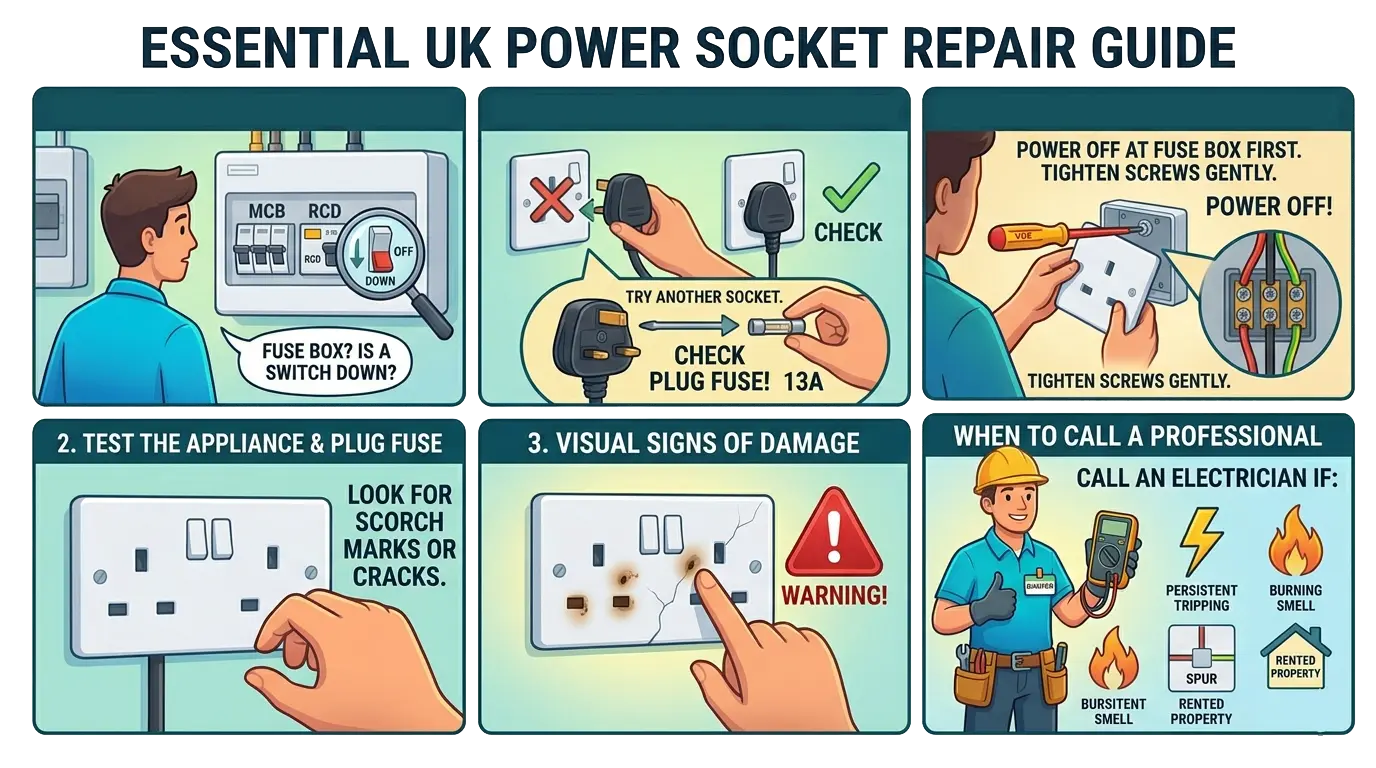
The single most common reason a UK socket stops working is a tripped MCB (Miniature Circuit Breaker) or RCD (Residual Current Device) in the consumer unit. Before assuming the socket itself is faulty, head to your fuse box first.
- Locate your consumer unit — usually found under the stairs, in the hallway, or in a utility cupboard.
- Look for any breaker switches that have flipped to the "OFF" position (typically pointing downward).
- If the circuit labelled "Sockets" or "Ring Main" has tripped, try resetting it by pushing the switch firmly upward.
- If it trips again straight away, do not keep resetting it — a persistent trip means a fault exists on that circuit.
If your breaker won't stay on, our in-depth guide on why circuit breakers keep tripping in the UK covers the most common causes, from appliance faults to overloaded circuits. For issues affecting the entire fuse box rather than a single breaker, see our guide on a fuse box that keeps tripping.
2. Test the Appliance and Check the Plug Fuse
Quite often, the socket itself is perfectly fine — the fault lies with the appliance or its plug. UK plugs are unique worldwide in that they each contain their own individual fuse, which can blow without warning.
- Try the device in another socket that you know is working. If it still doesn't power on, the problem is with the device or its plug, not the socket.
- Check the fuse inside the plug. Unscrew the plug, remove the fuse (usually 3A or 13A), and test it with a multimeter, or simply swap it for a new fuse of the same rating.
- Test the original socket with a different device — such as a lamp or phone charger. If the lamp works, your socket is fine and the original appliance is to blame.
This elimination method takes two minutes and solves a surprising number of "broken socket" calls. Only proceed to further investigation if a confirmed working device fails to operate in the socket.
3. Visual Signs of Damage or Danger
With the power still on at the consumer unit, visually inspect the outside of the socket faceplate. You are looking for warning signs that indicate a more serious fault:
- Brown or black scorch marks: Discolouration around the pin apertures or the faceplate surface indicates arcing or sustained overheating.
- Cracks or physical damage: A cracked faceplate can expose live parts inside the socket.
- Buzzing or crackling sounds: Audible noise from a socket when a plug is inserted suggests a loose or corroded connection inside. Turn off the circuit at the consumer unit immediately.
- A warm or hot faceplate: The faceplate should always be cool to the touch. Warmth points to a loose terminal generating heat through electrical resistance.
Safety warning: If you notice any burn marks or smell burning plastic, do not use the socket under any circumstances. Isolate the circuit and treat this as an urgent electrical fault. A burning or fishy smell near a socket is particularly serious — see our FAQ below for what this indicates.
Persistent electrical faults across multiple sockets or rooms can sometimes point to a broader wiring issue. Our guide to common electrical faults in UK homes explains the most frequently encountered problems and how to identify their root causes.
4. Checking for Loose Terminal Connections
If all the above checks come back clear, a loose wire behind the faceplate is the next most likely cause. This is a DIY-accessible task, but safety is non-negotiable: you must isolate the socket circuit at the consumer unit and confirm the power is off before removing the faceplate.
- Switch off the relevant MCB at the consumer unit. Use a non-contact voltage tester or socket tester to confirm no power is present at the socket before proceeding.
- Unscrew the two screws (typically 3.5mm) holding the faceplate to the back box, and gently draw the faceplate away from the wall.
- Inspect the three terminal connections — Live (Brown), Neutral (Blue), and Earth (Green/Yellow). Each copper wire should be clamped firmly with no exposed copper visible outside the terminal.
- If a wire has pulled loose from its terminal, loosen the terminal screw, re-insert the wire so that all bare copper is inside the terminal, then tighten the screw firmly.
- Reassemble the faceplate and restore the circuit power before testing.
If you find that the back box wiring includes older Red and Black wires (pre-2004 colour coding), your property may have ageing wiring that warrants a professional inspection. Very old wiring can be a contributing factor to problems like flickering lights and intermittent power loss elsewhere in the home.
Essential Electrical Troubleshooting Tools
Having the right tools makes diagnosis faster and, more importantly, safer. Here are the UK-standard items worth having to hand before opening any socket.
| Product Image | Essential Tool | Use Case | Action |
|---|---|---|---|
|
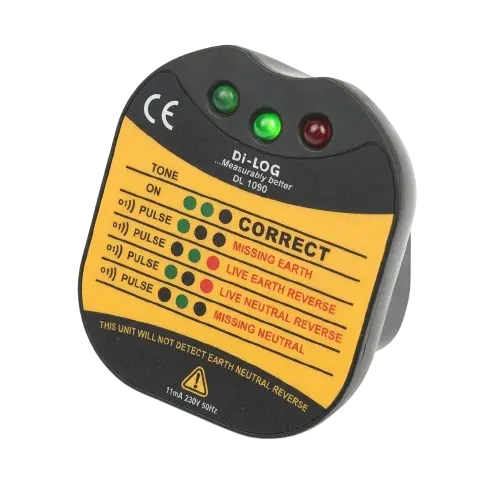
Socket Tester 13A plug-in type |
Instantly checks for correct wiring, missing earth, or reversed polarity | View Info |
|
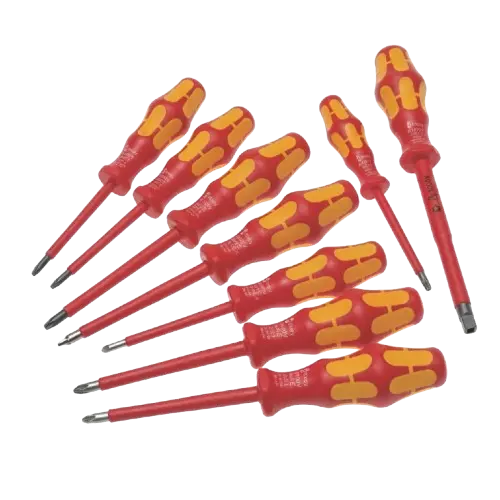
VDE Screwdriver Set Insulated to 1,000V |
Safe removal and refitting of socket faceplates and terminal screws | View Info |
|
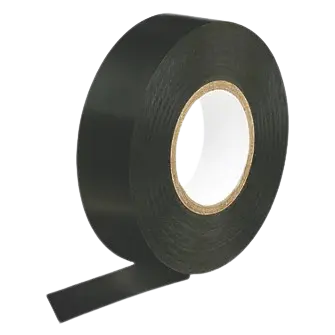
Electrical Tape Flame-retardant PVC |
Insulating exposed wire ends and colour-coding conductors | View Info |
When to Stop DIY and Call a Registered Electrician
Electrical work in the UK is governed by BS 7671 (18th Edition Wiring Regulations). While simple checks are safe for a competent homeowner, there are clear situations where you must engage a professional. Call a NICEIC or NAPIT registered electrician if:
- The circuit breaker trips again every time you reset it — a recurring trip always indicates a fault that needs diagnosing professionally.
- You can smell burning plastic, or a fishy or acrid odour near any socket or fitting (a sign of overheating components).
- You have identified a scorched or blackened faceplate.
- The socket is on a spur rather than the ring main and you are unsure how it is wired.
- The problem is part of a wider pattern — for example, if you are also experiencing flickering lights or a partial power outage affecting part of your house.
- You are a tenant in a rented property — repairs to electrical fittings are the landlord's legal responsibility under the Electrical Safety Standards in the Private Rented Sector (England) Regulations 2020.
Never attempt to work inside your consumer unit yourself. The main incoming supply cables are live at all times, even with every MCB switched off.
Summary
The vast majority of dead UK plug sockets can be traced back to three causes: a tripped circuit breaker, a blown fuse inside the plug, or a loose terminal wire behind the faceplate. Work through each possibility in order, always isolating the power before opening any socket.
If the problem persists after these checks, or if you see any signs of heat damage, stop and call a registered electrician. For wider electrical issues in your home — from shower problems to partial power loss — our complete guide to common electrical faults in UK properties is a comprehensive next step.
Questions & Answers
Real questions from homeowners — answered by our team.
Community Questions
Frequently Asked Questions
Can I replace a socket faceplate myself in the UK?
Yes. Replacing a damaged faceplate on a like-for-like basis is generally permitted as non-notifiable work under Part P of the Building Regulations, provided you are competent to do so and isolate the power at the consumer unit first. Changing the location of a socket, or adding a brand-new socket, may be notifiable depending on the room.
Why does only one half of my double socket work?
This typically indicates an internal mechanical failure of the switch contacts or the socket's internal busbar. Because UK socket outlets are sealed units, the entire double socket faceplate must be replaced — you cannot repair just one half.
What causes a fishy or burning smell near a plug socket?
A fishy or acrid smell near a socket is a serious warning sign. It is caused by older plastic compounds — particularly urea-formaldehyde used in some socket faceplates — overheating and off-gassing. Switch off the affected circuit at the consumer unit immediately and do not use the socket again until a NAPIT or NICEIC registered electrician has inspected and replaced it.
Do I need to notify Building Control to move a socket?
In the UK, socket work in a "special location" — such as a bathroom or specific kitchen zones — is typically notifiable work that requires sign-off from a Part P registered contractor or Building Control. Adding a socket to an existing ring circuit in an ordinary dry room (e.g. a bedroom) is usually non-notifiable, but must still comply with BS 7671.
Is it safe to use a socket that feels warm to the touch?
No. A warm socket faceplate indicates a loose connection generating heat through electrical resistance — a leading cause of house fires. Stop using the socket immediately, unplug all devices, and have the wiring inspected. This kind of fault can also cause flickering or dimming lights on the same circuit.
Can I change a single socket to a double socket myself?
Yes, this is one of the most common like-for-like DIY electrical jobs. You will need a surface-mounted or flush back box of sufficient depth (25mm or 35mm is typical) and a double gang faceplate. Check you are not on a spur that is already at its maximum load. Power must be isolated before starting.
What colour wires should be inside a UK socket?
Post-2004 UK wiring uses Brown (Live), Blue (Neutral), and Green/Yellow stripe (Earth). If you find Red and Black wires, these are pre-harmonisation colours, indicating the installation is at least 20 years old. Older wiring is not necessarily dangerous, but it warrants assessment by a qualified electrician — especially if you are experiencing recurring faults or are planning renovation work.
Could a faulty socket cause an electric shower to stop working?
Electric showers run on a dedicated high-current circuit rather than the ring main, so a dead socket in another room is unlikely to be the direct cause. However, if the fault traces back to a tripped RCD that covers multiple circuits, other devices may also be affected. See our guide on electric showers not working for shower-specific troubleshooting.