Circuit Breaker Keeps Tripping in Your UK Home? Here's Why — and How to Fix It
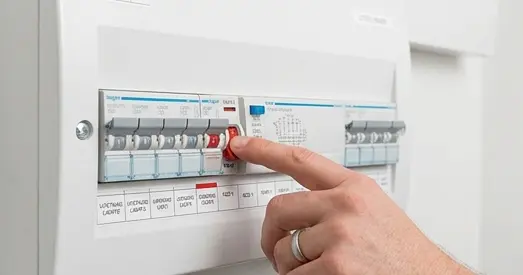
You're right in the middle of making a cup of tea when — click — the power cuts out. You head to the consumer unit (commonly called the fuse box), flip the switch back up, and it snaps straight back down again.
In the UK, our electrical systems are among the safest in the world, but that safety depends on circuit breakers and RCDs doing their job. When a breaker trips, it isn't just an annoyance — it is a safety mechanism actively preventing a fire or electric shock. Understanding why your circuit breaker keeps tripping is the first step to resolving it safely.
Quick Navigation
1. How a UK Circuit Breaker Works: MCB vs RCD Explained
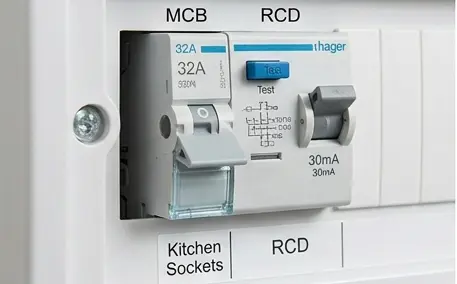
Modern UK consumer units contain two different types of protection device, and knowing which one has tripped tells you a lot about the cause:
- MCB (Miniature Circuit Breaker): Protects a specific circuit — such as kitchen sockets or upstairs lighting — from overcurrent. If you draw too much power at once, the MCB trips to prevent the circuit wiring from overheating.
- RCD (Residual Current Device): A life-saving device that monitors the balance of electricity flowing in and out of a circuit. If it detects even a tiny "leak" of current — such as electricity passing through a person or a damp cable — it cuts power in under 40 milliseconds.
If the large main RCD switch has tripped, it can cut power to half your home at once. If only one smaller MCB has gone, the fault is usually limited to a single room or appliance.
2. Why Does a Circuit Breaker Keep Tripping? The 3 Root Causes
Almost every case of a circuit breaker tripping in a UK home comes down to one of three underlying causes:
1. Circuit Overload (Most Common)
Running a toaster, kettle, and dishwasher simultaneously on the same ring circuit can exceed the 32-amp limit. The MCB trips because the combined load generates more heat than the wiring can safely carry. The fix is simple: spread high-wattage appliances across different circuits or use them at different times.
2. Earth Leakage (RCD Trip)
Often caused by moisture. Water entering an outdoor socket, a garden light, or a perished washing machine heating element creates an unintended path for electricity to flow to earth. The RCD detects this imbalance and trips instantly. This type of fault is common in older UK homes after heavy rain.
3. Short Circuit (Hard Fault)
Occurs when a live wire makes direct contact with a neutral wire, usually due to a damaged appliance cable, a loose socket terminal, or — in older UK properties — rodent damage to wiring hidden in walls. Short circuits cause an almost instantaneous trip and often produce a burning smell or visible scorch mark.
3. Appliances Most Likely to Trip Your UK Circuit Breaker
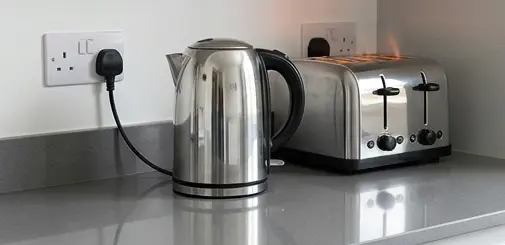
If the power trips at the moment you switch something on, that appliance is almost certainly the fault. These are the most common offenders in UK homes:
- Kettles: High wattage (typically 2,400–3,000W) combined with steam makes these a prime candidate for short circuits, particularly in older models.
- Electric Showers: One of the highest-current appliances in any home. A cracked heating element will leak electricity directly to earth and trip the RCD immediately. See our guide on electric shower faults and fixes for more detail.
- Tumble Dryers and Washing Machines: Both involve heat and water in close proximity. A failed door seal or perished drum bearing can allow moisture onto electrical components, causing an earth fault.
- Immersion Heaters: A common feature in older UK airing cupboards, immersion heater elements can develop pinhole corrosion over time, causing intermittent RCD trips that are difficult to trace.
4. How to Find Which Appliance Is Tripping Your Breaker
If your RCD or MCB trips and you suspect an appliance is the cause, follow this isolation process before calling anyone out:
- Unplug everything on the affected circuit. Physically remove each plug from the wall — do not rely on wall switches alone. For hardwired appliances (cooker, shower), turn them off at the fused spur.
- Reset the circuit breaker or RCD. Flip the tripped switch back to ON. If it stays up with nothing connected, the fault is in an appliance. If it immediately trips again with nothing connected, the fault is in the fixed wiring — stop here and call a registered electrician.
- Reconnect appliances one at a time, leaving around 30 seconds between each. Watch the consumer unit after each connection.
- The appliance that causes the trip is the faulty one. Do not use it again until it has been PAT tested, repaired by a qualified person, or replaced.
5. Warning Signs of a Dangerous Wiring Fault (Not Just a Tripped Breaker)
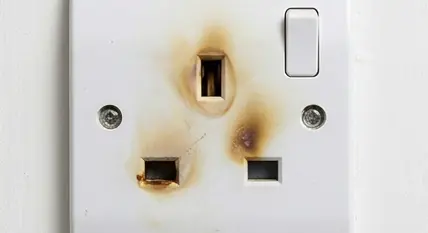
A tripping breaker is a safety feature working correctly. But some associated signs indicate that damage has already occurred and the situation is urgent:
- Burning or Fishy Smell: An acrid or fishy plastic smell near the consumer unit or a socket indicates melting insulation. This is a critical warning. Turn off the main switch and call an electrician immediately. For more on this symptom, see our guide on common UK electrical faults.
- Buzzing or Crackling: The sound of electrical arcing — electricity jumping across a gap in a loose connection. This generates intense localised heat and is a direct fire risk.
- Discoloured or Scorched Sockets: Brown or yellow marks around plug pin holes mean arcing has already occurred at that socket. Stop using it immediately.
- Plugs That Are Hot to the Touch: A plug that is uncomfortable to hold after unplugging indicates a loose or corroded connection inside the socket or the plug itself.
6. When to Call a Part P Registered Electrician
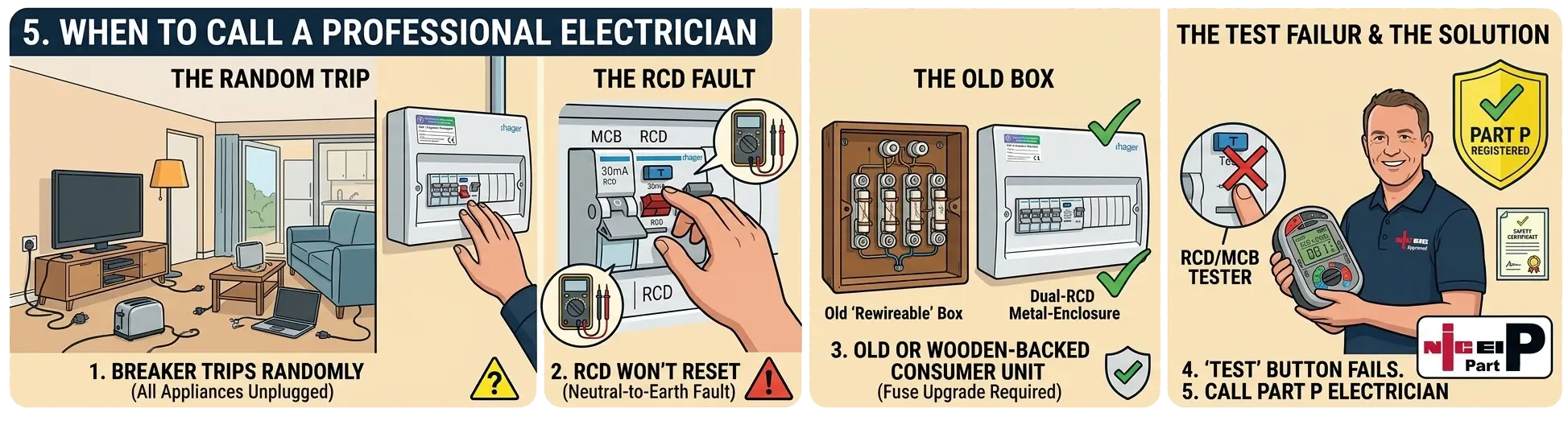
If you have unplugged every appliance and the circuit breaker still won't stay reset, the fault lies in the fixed wiring of the property. You should call a Part P registered electrician (verifiable via NICEIC or NAPIT) in any of the following situations:
- The breaker trips with nothing connected — fault is in the fixed wiring, not an appliance.
- The breaker trips randomly — even with no appliances in use, suggesting an intermittent wiring fault.
- The RCD won't reset at all — may indicate a neutral-to-earth fault that requires a multifunction tester to locate.
- You have an old rewireable fuse box — wooden-backed boards with ceramic fuse holders and thin rewireable fuse wire are no longer safe by modern standards and should be upgraded.
- The RCD Test button does nothing — every UK RCD has a "T" or "Test" button. Press it monthly: if nothing trips, your protection is not functioning and the device must be replaced.
Summary: Circuit Breaker Tripping — Key Takeaways
A tripping circuit breaker is your home's way of communicating a problem. The cause might be as simple as a £15 kettle with a failing element, or it may be a sign of ageing wiring that needs professional attention. By working through the appliance isolation process above, you can often identify the fault yourself in under ten minutes. If the problem persists after all appliances are disconnected, don't delay — call a qualified UK electrician to inspect the fixed wiring.
Questions & Answers
Real questions from homeowners — answered by our team.
Community Questions
Circuit Breaker Tripping: Frequently Asked Questions
Why does my power trip only when it rains?
Rain-related tripping is almost always caused by water entering outdoor sockets, garden lighting fittings, or an external PIR sensor housing. Moisture creates an unintended path to earth, which the RCD detects immediately and shuts the circuit down as a safety measure. The outdoor fitting will need to be dried out and its weatherproofing seal replaced or upgraded.
Can I replace the circuit breaker with a higher-rated one to stop it tripping?
Absolutely not. The circuit breaker is deliberately rated to match the maximum safe current for the cable thickness used in your walls. Fitting a higher-rated breaker would allow those cables to overheat and start a fire before the breaker ever trips. If your circuit is genuinely overloaded, the correct fix is to redistribute your appliances — not to uprate the breaker.
Why does my RCD trip when I turn a light off?
Tripping on switch-off is commonly caused by inductive kickback from a failing LED driver or transformer, which produces a brief voltage spike large enough to trigger a sensitive RCD. It can also indicate that the RCD device itself is ageing and has become over-sensitive, in which case it will need replacing.
Why does my electric shower trip the circuit breaker but other appliances don't?
Electric showers are among the highest-current appliances in a UK home, typically drawing 30–45 Amps. When the internal heating element develops a crack or pinhole, electricity leaks directly to the earth wire, triggering the RCD. This usually requires a new heating element or a full shower unit replacement.
What is the difference between a fuse box, a consumer unit, and a breaker box in the UK?
In the UK, all three terms describe the same central distribution board for your home's electricity. "Fuse box" is an older, informal term for boards that use rewireable ceramic fuses. "Consumer unit" is the correct modern technical term for boards that use MCBs and RCDs. "Breaker box" is an American term that has crossed over into informal UK usage.
My circuit breaker tripped and there is a fishy smell near the consumer unit. What should I do?
A fishy or burning plastic smell near the consumer unit is a critical warning sign that internal components are overheating and melting. This typically indicates a short circuit or severely loose connections inside the board itself. Turn off the main switch immediately — do not attempt to reset any individual breakers — and call a registered electrician as a matter of urgency.