Ceramic Disc Cartridge Replacement UK: Fix a Dripping Mixer Tap
A ceramic disc cartridge is the internal engine of modern single-lever kitchen and bathroom mixer taps. When your tap drips continuously, leaks around the handle base, or feels stiff and grinding to operate, a cracked or worn cartridge is almost always the culprit and replacing one yourself takes under 30 minutes.
Quick Answer
To replace a ceramic disc cartridge: turn off the isolation valves under the sink, remove the tap handle (Allen key grub screw), unscrew the brass retaining nut, pull out the old cartridge, and fit the new one making sure the locating pins drop into the holes in the tap body. The most common UK sizes are 35mm and 40mm measure your old cartridge before buying a replacement.
What Does a Ceramic Disc Cartridge Actually Do?
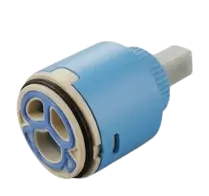
Hidden inside the main body of your tap, this cylindrical component contains two perfectly flat ceramic discs that slide across each other to control water flow. Moving the lever left or right adjusts the ratio of hot to cold water, while lifting the lever opens or closes the flow completely.
Unlike old-fashioned rubber washers that perish and need replacing every few years, ceramic discs are extremely hard-wearing but they can still be scratched by limescale or fine grit carried in the water supply, which is what causes the dripping to start.
Signs Your Tap Cartridge Has Failed
Even tough ceramic can be damaged by limescale, grit, or a sudden pressure spike. If you've noticed any of these with your mixer tap, a worn cartridge is the most likely cause:
If the drip is coming from further down under the sink itself that's a separate issue. Take a look at our guide to fixing a leaking pipe under a sink for that job.
How to Measure: 35mm or 40mm?
Cartridges are not universal. The diameter (35mm or 40mm) is the most critical measurement, but the stem shape and height also matter. The only reliable way to get the right one is to remove the old cartridge first, then either take it to your local merchant or measure it with a ruler across the widest point of the base.
If you're unsure whether your water pressure is too high and may be causing repeated cartridge damage, it's worth checking with a mains water pressure gauge normal UK domestic pressure should sit between 1 and 3 bar at the tap.
Where to Buy Replacement Cartridges in the UK
Replacement ceramic disc cartridges typically cost between £10 and £25 depending on size and brand. Both Screwfix and Toolstation stock the most common sizes, and both offer same-day collection from local branches.
| Retailer | Stock Status | What to Expect | Link |
|---|---|---|---|
| Screwfix | In Stock | Flomasta 35mm Ceramic Tap Cartridge | View Range |
| Toolstation | Available | Cartridge 35mm Spline Dia | Check Stock |
| Amazon | Available | Ceramic Disc Cartridge Selection | Find a Merchant |
How to Replace a Ceramic Disc Cartridge (Step-by-Step)
Tools you'll need: a small flathead screwdriver, an Allen key (hex wrench), and an adjustable spanner. You may also want some PTFE tape to hand in case you need to reseal any threaded connections on the supply pipes once you're done.
Turn Off Hot & Cold Valves
Before you do anything else, turn off both the hot and cold isolation valves beneath the sink usually a quarter-turn with a flathead screwdriver. Open the tap to confirm no water flows and to relieve any pressure remaining in the line. If you don't have isolation valves fitted, you'll need to turn off the main stopcock.
Find the Hidden Grub Screw
Look for a small plastic indicator plug on the top or side of the handle this is the hot/cold symbol cap. Pop it off with a flathead screwdriver. Inside you'll find a grub screw; use the correct Allen key to loosen it (don't remove it fully), then pull the handle firmly straight up and off the stem.
Access the Cartridge
Beneath the handle sits a decorative metal shroud unscrew this by hand. You'll now see a large brass retaining nut holding the cartridge in place. Wrap a cloth around it to protect the finish, then use your adjustable spanner to turn it counter-clockwise. Remove the nut and set it aside.
Align the Locating Pins
Pull the old cartridge straight out it should slide out without much force. Before dropping in the new one, check the inside of the tap body is clean and free of debris. Lower the replacement cartridge in and ensure the two small locating pins on the base drop precisely into the matching holes in the tap body. Tighten the brass retaining nut snugly by hand first, then a quarter-turn with the spanner no more. Refit the shroud and handle, then slowly turn the water back on and test.
💡 Pro Tips Before You Buy
- Measure the diameter first: Remove the old cartridge and measure straight across the base with a ruler. The difference between 35mm and 40mm is easy to get wrong by eye.
- Check the stem shape: The plastic or brass joystick on top (the stem) must match your old one square-section vs. splined or your tap handle won't refit correctly.
- Don't overtighten the retaining nut: Snug is enough. Overtightening will crack the new ceramic discs immediately.
- Hard water area? If you're in a hard water region, limescale is likely what damaged the original. Consider running the water supply through a filter or fitting an inline descaler to protect the new cartridge.
Other Plumbing Products You Might Need
Frequently Asked Questions
What size ceramic disc cartridge do I need for my mixer tap?
The two most common sizes in UK mixer taps are 35mm and 40mm in diameter. Remove the old cartridge first and measure straight across the base with a ruler. Don't guess an incorrect diameter simply won't fit.
Are all ceramic tap cartridges the same size?
No, they are not universal. While 35mm and 40mm cover the majority of UK kitchen and bathroom basin mixers, the stem shape, locating pin positions, and overall height can all vary between manufacturers. Always match the old cartridge before buying a replacement.
Why is my new ceramic cartridge still leaking?
If you've fitted a new cartridge and the tap still drips, the brass seating inside the tap body may be scored by limescale or grit no cartridge will seal against a damaged seat. Also check the locating pins are fully engaged and that no debris is trapped under the rubber gaskets.
How long does a ceramic disc cartridge last?
A quality ceramic cartridge typically lasts 10–15 years under normal conditions. In hard water areas of the UK, limescale build-up shortens this considerably. If yours is failing prematurely, check your water pressure excessive pressure spikes are a common cause. A mains water pressure gauge costs under £20 and lets you check it yourself.
Can I replace a ceramic cartridge myself without a plumber?
Yes this is one of the more straightforward plumbing jobs a homeowner can tackle. You need a flathead screwdriver, an Allen key, and an adjustable spanner. No soldering, no specialist tools. If you're confident enough to change a washer, you can do this. If you'd rather call a professional, WaterSafe lists approved plumbers by postcode.
How do I know if it's a cartridge problem or a washer problem?
If you have a single-lever mixer tap that controls both flow and temperature with one handle, it uses a ceramic cartridge. Traditional two-handle taps with separate hot and cold controls more commonly use rubber washers or individual ceramic discs. If you're unsure, removing the handle will show you which type is fitted.
What causes a ceramic cartridge to fail?
The most common causes are limescale scratching the internal ceramic discs, grit or debris in the supply water, and water pressure spikes. UK homes in hard water areas roughly the South East, East Anglia, and East Midlands tend to see earlier cartridge failure. If your tap is in a low pressure situation, that can sometimes point to a partially blocked cartridge rather than a fully failed one.