How to Use PTFE Tape: Which Way to Wrap It
PTFE tape (plumber's tape) is a toolkit essential — a thin, non-adhesive tape that seals threaded pipe joints by filling the microscopic gaps between the male and female threads. Get one thing right and it works every time: wrap it clockwise. This guide shows you exactly how to apply it, how many turns to use, the colour code for water vs gas, and the joints where you should never use it.
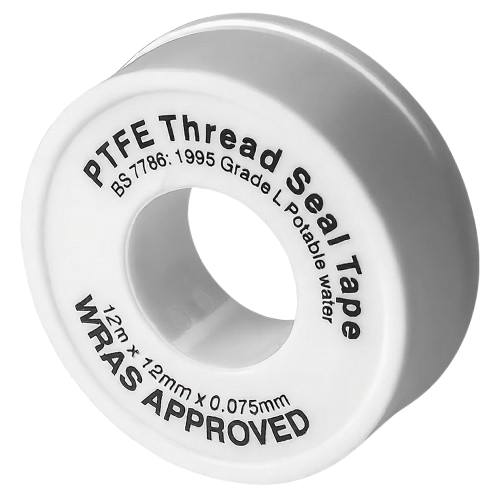
What Does PTFE Tape Actually Do?
In domestic plumbing, PTFE (polytetrafluoroethylene) tape does three jobs:
- Seals threaded joints: Fills the voids so water can't seep through the threads.
- Prevents leaks: Acts as a malleable gasket under pressure.
- Lubricates: Reduces friction, making the joint easier to tighten now and unscrew later.
How to Apply PTFE Tape Correctly
The single most important thing is the direction of the wrap. Wrap it the wrong way and it unravels as you tighten the fitting.
Clean the Threads
Make sure the male threads (the outside ones) are dry and free of grit, old tape or debris. A quick wipe with a rag is usually enough.
The Clockwise Rule
Hold the pipe end facing you and wrap the tape clockwise around the thread — the same direction the fitting screws on. This way, tightening the fitting pulls the tape into the threads instead of unravelling it.
4 to 6 Wraps
Keep the tape under moderate tension and wrap it 4–6 times, overlapping slightly. Start one or two threads back from the end so no tape overhangs into the pipe bore, where it could shred and clog the fitting.
Press and Tighten
Break the tape by pulling it tight, then press the loose end into the threads with your thumb. Screw the fitting on by hand first, then finish with a spanner.
PTFE Tape Colours Explained (White vs Yellow vs Green)
PTFE tape is colour-coded by density and intended medium. Using the wrong colour — especially white on gas — is a genuine safety risk. Match the colour to what's in the pipe:
| Colour | Use For | Notes |
|---|---|---|
| White | General water fittings | Standard density — the household default |
| Yellow | Gas (natural gas, LPG, propane) | Gas only Higher density; never use white on gas |
| Green | Oxygen & medical gas | Oil/grease-free to prevent ignition |
| Pink | Heavy-duty water & steam | Thicker than white; used by pipefitters |
| Grey | Stainless steel threads | High density, anti-seize to prevent galling |
Gas work must be carried out by a Gas Safe registered engineer. Yellow tape is the correct product, but fitting gas appliances yourself is illegal in the UK.
When & Where to Use It
Not every leak needs tape — using it in the wrong place is a common DIY mistake.
Where to Buy PTFE Tape in the UK
Standard white PTFE tape usually costs less than £1 per roll. For gas fittings you must use the thicker yellow PTFE tape, which meets specific UK safety standards.
| Retailer | Stock Status | Benefit | Link |
|---|---|---|---|
| Screwfix | In Stock | Standard & gas grade | View Product |
| Toolstation | Available | Value multi-packs | Check Price |
| B&Q | In Stock | Local click & collect | View Details |
💡 Pro Tips for a Leak-Free Finish
- Standard size: In the UK, 12mm width is standard for almost all household plumbing.
- Don't over-apply: Too much tape stops the threads engaging properly and can even crack a fitting.
- One-way street: If you loosen a joint after taping, remove the old tape and start fresh — squashed old tape rarely re-seals.
- Heating joints: On radiator valves, many plumbers use PTFE tape plus a smear of jointing compound for a belt-and-braces seal.
Frequently Asked Questions
Which way do you wrap PTFE tape?
Clockwise, looking at the end of the pipe — the same way the fitting turns to tighten. That makes the tape tighten into the threads instead of unravelling. Wrapping anti-clockwise is the top reason a taped joint still leaks.
How many times should I wrap PTFE tape?
4 to 6 wraps for standard water fittings — thick enough to seal, thin enough that the fitting still screws on fully. Too much tape can crack a fitting.
What's the difference between white and yellow PTFE tape?
White is standard density for water. Yellow is higher density, made for gas. Gas molecules are smaller than water, so white isn't dense enough to seal gas — always use yellow on gas.
Where should you NOT use PTFE tape?
Not on compression fittings (the olive seals metal-to-metal), push-fit joints, or rubber-washer connections like a hose or waste trap. Tape on a rubber seal can cause a leak. It's for threaded joints only.
What width PTFE tape do I need in the UK?
12mm is standard for almost all UK household plumbing — taps, radiator valves, shower arms and similar threaded fittings.
Can I reuse a joint after applying PTFE tape?
Remove the old tape and apply a fresh wrap before re-tightening. Reusing squashed old tape rarely re-seals properly.