Can You Service a Boiler Yourself? UK DIY Checks Explained (2026)
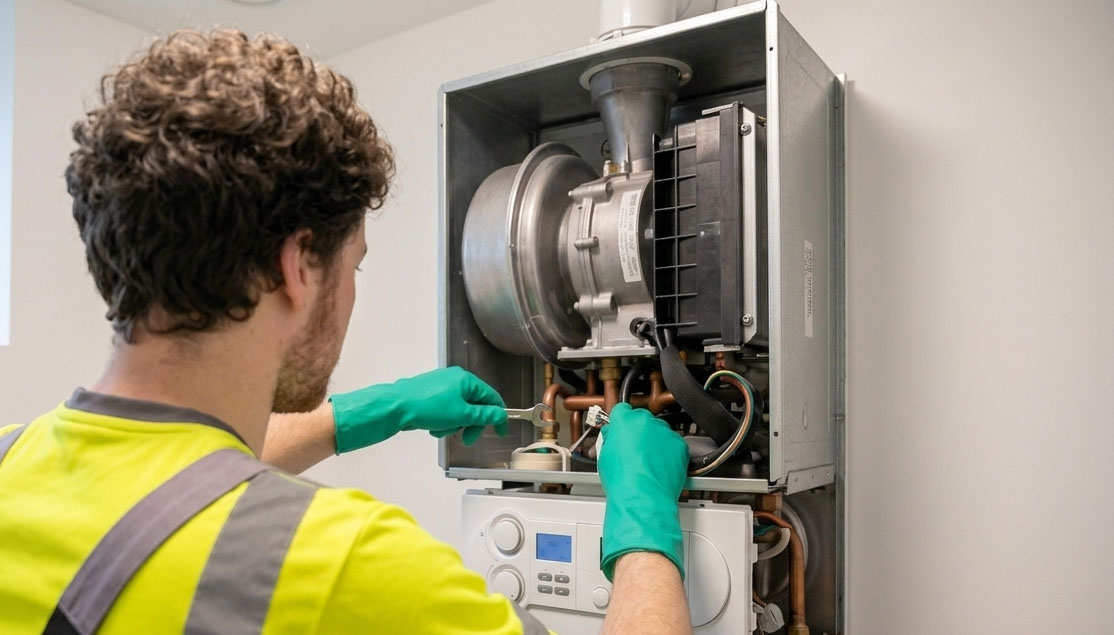
Many homeowners want to save money by servicing their own boiler. Gas appliances carry a real risk of leaks and carbon monoxide poisoning, so UK law reserves anything inside the casing for a Gas Safe engineer. A good number of preventative checks are still yours to do, though, and doing them regularly can catch problems before they turn into a breakdown.
Quick Navigation
- The DIY Boundary: What is Legal vs. Illegal?
- Check 1: Diagnosing & Re-Pressurising the System
- Check 2: Visual Flame, Flue, & Leak Audit
- Check 3: Cleaning the Magnetic System Filter
- Home Safety Kit & Essential Equipment
- Check 4: Bleeding & Balancing Radiators
- When Checks Aren't Enough: Signs You Need a Gas Safe Engineer
The DIY Boundary: What is Legal vs. Illegal?
The line is simple: external checks are fine, anything inside the gas casing isn't. That applies whether you have a Worcester Bosch, Vaillant, Baxi, or Ideal combi.
What You CAN Do Safely (DIY)
Safe external preventative maintenance:
- Checking and topping up water pressure via the filling loop.
- Inspecting the external flue path for obstructions like bird nests.
- Isolating and cleaning the external magnetic sludge filter.
- Bleeding air from cold radiators to lower system strain.
- Testing the operation of carbon monoxide detectors.
What Only a Gas Safe Professional Can Do
Internal mechanical procedures:
- Removing the main cover panel to expose the combustion chamber.
- Cleaning or replacing the spark electrode and burner element.
- Using a flue gas analyser to test combustion efficiency and ratios.
- Checking internal seals, gas valves, and gas operating pressures.
- Cleaning out the internal main heat exchanger blocks.
Check 1: Diagnosing & Re-Pressurising the System
Low water pressure is the most common reason a UK boiler locks out. It's a sealed system, so pressure drops naturally over time from tiny leaks or trapped air. Not sure what range yours needs? See our guide to boiler pressure for UK homes.
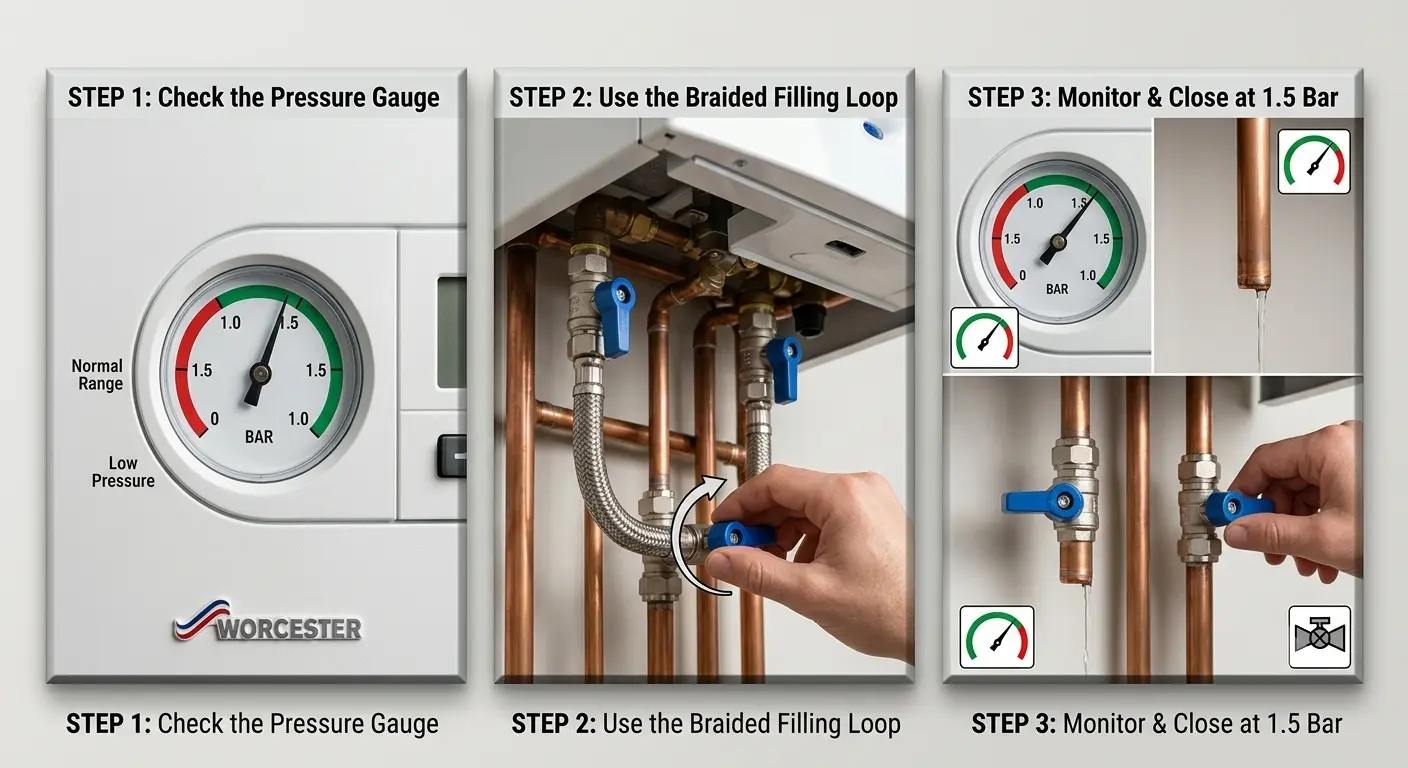
How to Top Up Your Boiler Pressure Safely
- Locate the Pressure Gauge: Check the front panel for a needle dial or digital display.
- Read the Measurement: Cold, it should sit between 1.0 and 1.5 bar. Below 1.0 bar, the boiler runs inefficiently or shuts off.
- Find the Filling Loop: Look underneath the casing for a silver braided hose with one or two tap handles.
- Open the Valves: Turn the handles slowly. Water will hiss in as the gauge rises.
- Close at 1.5 Bar: Shut both taps firmly. Don't go past 2.0 bar, or the pressure relief valve will trigger.
A one-off drop isn't a worry. Topping up every few days points to a slow leak. See why boiler pressure drops overnight for the likely causes and when to get a proper pressure test.
Check 2: Visual Flame, Flue, & Leak Audit
A quick visual check each autumn, before the heating goes back on for winter, can catch dangerous faults early.
- Flame Colour: Should be a crisp, steady blue. Yellow or orange means poor combustion and rising carbon monoxide — turn the boiler off and call an engineer.
- External Flue: Check it's unobstructed. Bird nests and ivy are common culprits, and a blocked flue traps exhaust gases indoors.
- Condensate Pipe: This plastic drain pipe can freeze and shut the boiler down in cold weather. Lag it with pipe insulation.
Worth checking any time the boiler misbehaves, not just annually. A blocked flue is a common cause when it won't fire up — see boiler not firing up for the full fix.
Check 3: Cleaning the External Magnetic System Filter
Most modern boilers have an external magnetic filter, such as a MagnaClean or Adey, on the return pipe. It catches black iron oxide sludge before it can reach the pump and heat exchanger. Cleaning it is messy but legal and straightforward.
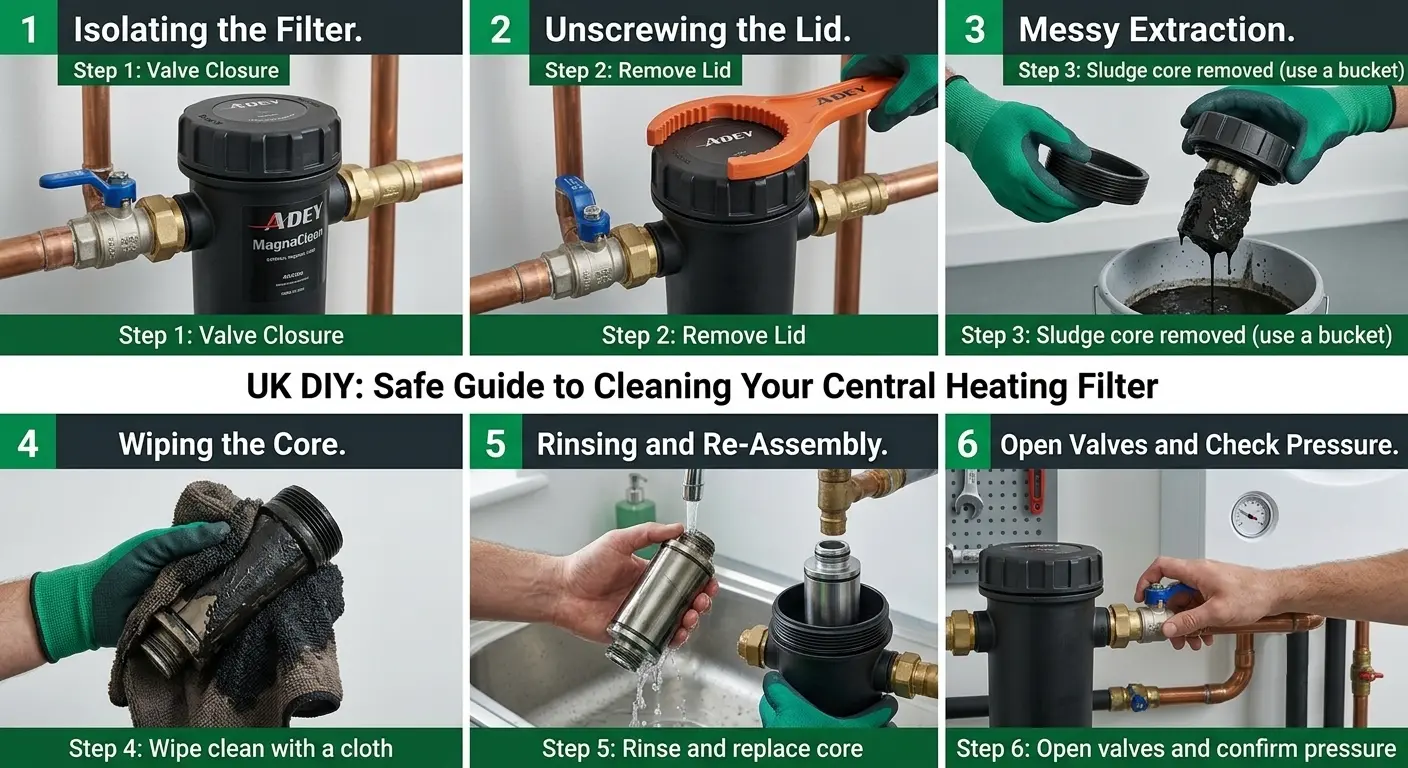
2. Close the isolating valves on both sides of the filter.
3. Bucket underneath, unscrew the lid with the supplied spanner, and pull out the magnetic core.
4. Wipe off the sludge, rinse the core, reinstall, reopen the valves, and check the pressure.
Check it every six months for the first year on a new boiler, then annually once you know how fast sludge builds up in your system.
Home Safety Kit & Essential Maintenance Equipment
With the internal work left to a professional, your job is safety kit and a couple of basic tools.
| Product Image | Essential Tool | Why You Need It | Action |
|---|---|---|---|
|
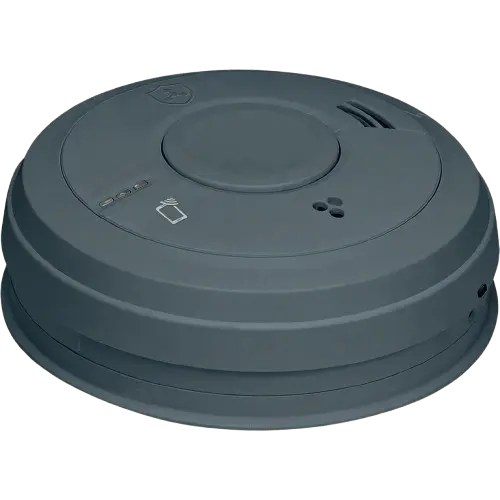
Audible Carbon Monoxide Alarm | Protects your household from invisible, odourless gas leaks. Essential near all boilers. | Check Price |
|
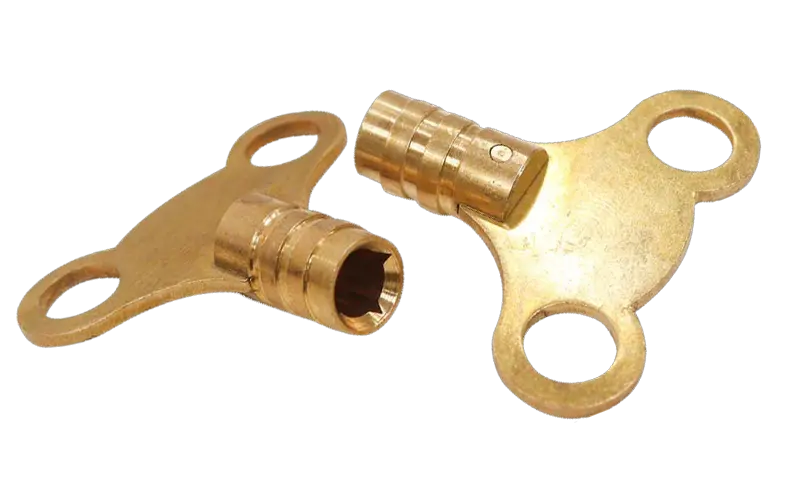
Brass Radiator Bleed Keys | Releases trapped air pockets to lower the operational strain on your boiler pump. | View Guide |
Check 4: Bleeding & Balancing Radiators
Trapped air makes your boiler work harder and pushes up your bills.
- Spotting Trapped Air: Warm at the bottom, cold at the top means air is trapped inside.
- The Fix: Let the system cool, then turn the bleed key slowly until you hear a hiss. Once water runs out smoothly, close the valve.
- Check the Gauge Afterwards: Bleeding lowers the system's water volume, so top the pressure back up to 1.5 bar with the filling loop.
Still cold at the top after bleeding? That's usually sludge or a stuck valve, not air. See radiator cold at top after bleeding for what to check next.
When Checks Aren't Enough: Signs You Need a Gas Safe Engineer
A few warning signs mean it's time to stop the DIY approach and call a professional, rather than waiting for the next scheduled service.
- Banging or vibrating noises: Often limescale build-up, a failing pump, or trapped air you can't reach yourself. See boiler vibrating noise for the likely causes.
- A yellow or orange flame: A safety issue, not maintenance. Turn the boiler off and call a Gas Safe engineer the same day.
- Repeated lock-outs after topping up: Usually points to a leak that needs proper diagnosis.
- A persistent gas smell: Leave the property, don't touch any switches, and call the National Gas Emergency Service on 0800 111 999 immediately.
Budget £60 to £120 a year for a professional service, depending on boiler type and region. It's a complement to the DIY checks above, not a substitute for them.
Questions & Answers
Real questions from homeowners — answered by our team.
Community Questions
Boiler Servicing FAQ
Will doing checks myself void my manufacturer warranty?
Completing external checks like bleeding your radiators or topping up water pressure will not void your warranty. However, failing to get a professional Gas Safe engineer to perform an annual service stamp will void almost all manufacturer warranties from Worcester Bosch, Vaillant, or Ideal.
How often should a UK boiler be professionally serviced?
A gas boiler should be professionally serviced exactly once a year. This guarantees that internal seals remain tight, the combustion process is green and efficient, and no hidden cracks are developing within the heat exchanger framework.
What happens if my boiler pressure goes over 2.5 bar?
If you overfill your boiler using the filling loop, the system will clear excess water out through the external Pressure Relief Valve (PRV) pipe on your outside wall. If the pressure remains high, you can lower it by venting water out through a radiator bleed valve.
Can a tenant service a boiler or perform these checks in a rental property?
Under UK law, landlords are entirely responsible for gas safety installations and annual checks. Tenants can bleed radiators or check pressure gauges, but they should never try mechanical maintenance. Landlords must provide a valid Gas Safety Certificate (CP12) every 12 months.
How much does a professional boiler service cost in the UK?
Most UK homeowners pay between £60 and £120 for a standard annual boiler service, depending on the boiler type and region. Combining a service with a wider central heating check-up, such as a power flush, will cost more.
Does having gas experience or general DIY skill change what I'm allowed to do?
No. Boiler servicing counts as regulated gas work, which only a Gas Safe registered engineer or someone with formal competent person status may legally carry out. Tasks the manual invites you to do yourself, like refitting a decorative panel or using the front controls, are the exception.