Audible Carbon Monoxide Alarms – Protect Your Home from the Silent Killer
Carbon monoxide (CO) is invisible, tasteless and odourless — human senses cannot detect it, which is why an audible carbon monoxide alarm is your home's only reliable early warning. Choosing an alarm with the right safety certification and fitting it in the correct position can make the difference between a warning in time and no warning at all.
Quick answer: Choose an audible CO alarm certified to BS EN 50291 with a British Standards Kitemark — a loud 85dB alarm, not a silent colour-change patch. Mount it at head height, between 1 and 3 metres from any fuel-burning appliance, at least 150mm below the ceiling, and away from extractor fans, vents or curtains. Test it monthly and replace the whole unit after 7–10 years.
Contents — jump to section
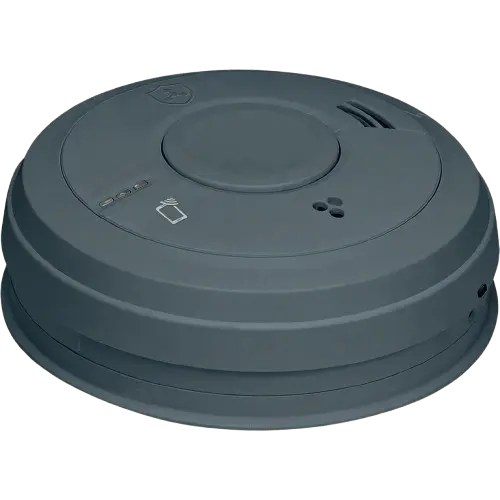
What is an audible carbon monoxide alarm?
Carbon monoxide is produced by faulty or poorly ventilated fuel-burning appliances — boilers, gas fires, log burners and cookers. Because it has no smell, colour or taste, the only way to detect it before it reaches a dangerous concentration is an alarm that actively samples the air and sounds a warning.
Look for the BS EN 50291 marking alongside a British Standards Kitemark. This certifies that the alarm's electrochemical sensor reliably tracks rising CO levels and triggers a piercing 85-decibel alarm, loud enough to wake you from deep sleep.
Signs you need an audible alarm — not just a visual indicator
Cheap colour-change "black spot" patches are still sold as carbon monoxide detectors, but they fall well short of what a home needs:
Choosing the right alarm: certification and power type
Before ordering, confirm the certification, then decide whether a sealed battery unit or a mains-powered device suits your home.
⚠️ Check for BS EN 50291 and a Kitemark before buying. This is the only mark that confirms the device is a genuine audible alarm rather than a passive colour-change indicator, and it's required for compliance with UK landlord safety rules.
| Type | Power | Best for | Notes |
|---|---|---|---|
| 10-Year Sealed Battery | Sealed, non-replaceable battery | Any room, no wiring needed | Keeps working during a power cut; simplest to fit |
| Mains-Powered (Hardwired) | Mains with battery backup | New builds and full renovations | Can be interconnected with other alarms on the circuit |
| Plug-in | Mains socket | Rooms with a spare socket near the appliance | Quick to fit, but position is limited by socket location |
Where to buy audible CO alarms in the UK
Certified alarms typically cost between £15 and £30 at UK trade and DIY merchants.
| Retailer | Stock | Model | Link |
|---|---|---|---|
| Screwfix | In stock | FireAngel FA6813 | View part |
| Toolstation | Available | Carbon Monoxide Alarm | Check price |
| eBay | Available | Kidde P3010K-CO Kidde P3010K-CO Carbon Monoxide Alarm | Check price |
How to install an audible CO alarm — step by step
Setting up your alarm is quick, but accurate placement determines how effectively it detects toxic gas before it spreads.
Identify every fuel-burning appliance
Map out anything that burns gas, wood, oil or coal: boiler cupboards, gas hobs, fireplaces, log burners, and integral garages where car exhaust fumes can build up.
Choose the correct height and distance
If wall-mounted, fit the alarm higher than the top of any doors or windows but at least 150mm below the ceiling, and between 1 and 3 metres from the nearest fuel-burning source.
Avoid dead air spaces
Don't fix the alarm next to an extractor fan, beside an air vent, or behind heavy curtains. Draughts can disperse the gas before the internal sensor has a chance to sample it.
Secure the mounting base
Fix the bracket firmly using the wall plugs and screws supplied. For a portable free-standing model, place it on an open shelf where it can't be knocked over by children or pets.
Activate and test
Pull the battery activation tab, then hold the Test/Hush button until you hear a clear, piercing sequence of beeps, confirming the internal speaker and backup battery both work.
💡 Pro tips for reliable protection
- Test monthly. Press the test button once a month to confirm the sensor and speaker are both working.
- Replace the whole unit at end of life. Most alarms chirp after 7–10 years — this means the sensor itself needs replacing, not just the battery.
- Never paint over or cover the vents. Blocking the sensor housing stops it sampling the air correctly.
- Interconnect where possible. Linked alarms mean one triggering sounds every alarm in the property — useful between a boiler cupboard and a bedroom.
- Check your compliance obligations. Landlords in England must fit a CO alarm in any room with a fixed combustion appliance, excluding gas cookers — see the FAQ below for details.
Frequently asked questions
What is an audible carbon monoxide alarm and why do I need one?
An audible CO alarm actively samples the air and sounds a loud warning, typically 85 decibels, when carbon monoxide reaches a dangerous concentration. Because CO has no smell, colour or taste, this is the only reliable way most households would know a leak was happening before symptoms set in.
What does the BS EN 50291 standard mean?
BS EN 50291 is the British and European standard that CO alarms must meet to be considered reliable. Look for this marking together with a Kitemark on the packaging, which confirms the alarm has been independently tested to detect rising CO levels and trigger an audible warning.
Are visual carbon monoxide detector patches a safe alternative to an audible alarm?
No. Visual patches change colour when exposed to CO, but they cannot wake a sleeping household and rely on someone actively checking them. They also do not meet UK landlord safety regulations, which require a proper audible alarm.
Where should I position a carbon monoxide alarm in my home?
Fit it at head height on a wall or shelf, between 1 and 3 metres from the fuel-burning appliance. If wall-mounted, keep it higher than any doors or windows but at least 150mm below the ceiling, and away from extractor fans, vents or curtains that could disperse the gas before it's detected.
Is a carbon monoxide alarm a legal requirement in UK rental properties?
In England, landlords must fit a carbon monoxide alarm in any room used as living accommodation that contains a fixed combustion appliance, such as a gas boiler, gas fire or log burner (gas cookers are excluded). Scotland, Wales and Northern Ireland each have their own broadly similar rules, so check current gov.uk guidance for your nation before letting a property.
How long do carbon monoxide alarms last?
Most alarms have a working life of 7 to 10 years, after which the sensor degrades and the unit will chirp to signal it needs replacing. This is different from a low-battery warning — an end-of-life chirp means the whole alarm should be replaced, not just the battery.
What should I do if my carbon monoxide alarm sounds?
Turn off any fuel-burning appliances if it's safe to do so, open doors and windows for ventilation, get everyone out of the property into fresh air, and do not go back inside. Call the National Gas Emergency Service on 0800 111 999, and seek urgent medical attention if anyone shows symptoms such as headaches, dizziness or nausea.