Kitchen Tap No Water? Here's How to Fix It (UK Guide)
Quick Answer
The most common reasons a kitchen tap stops working in UK homes are: a closed isolation valve under the sink, a limescale-blocked aerator nozzle, an airlock in the pipework, a failed ceramic cartridge, or an external supply outage from your water company. Start by checking whether other taps in the house still have water this one diagnostic instantly narrows down the cause.
Turning on your kitchen mixer tap to be met with silence, a dry spout, or a weak sputter is one of the most disruptive plumbing problems a UK homeowner can face. The kitchen cold tap is typically the first mains-pressure outlet in the house, so losing water here brings cooking, cleaning, and basic daily life to a halt.
The good news: in the vast majority of cases, a dry kitchen tap is caused by something you can fix yourself in under an hour, without calling an emergency plumber. The fault almost always falls into one of seven categories this guide works through each one in order of likelihood and ease of diagnosis.
Jump to a Section
1. Initial Diagnostics: Is It Just the Kitchen Tap?
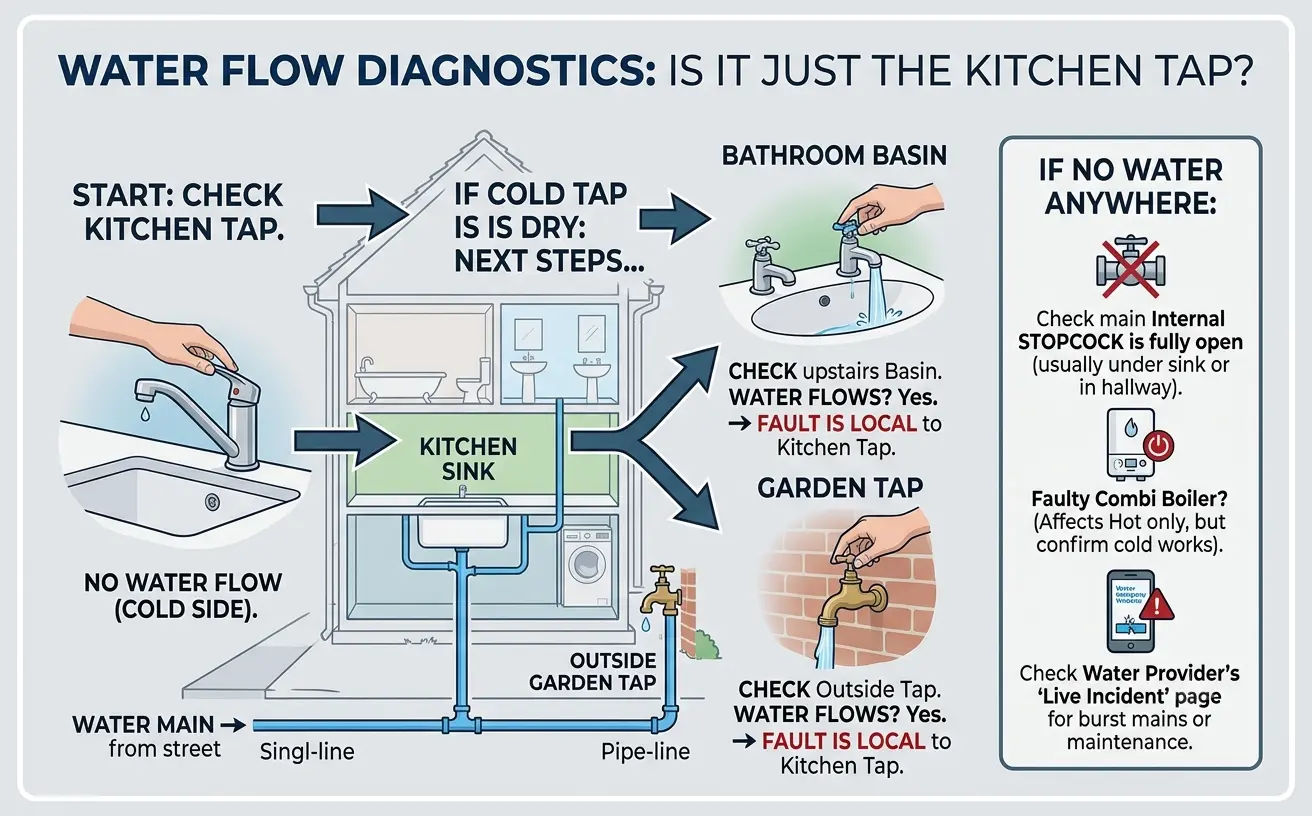
Before dismantling anything under the sink, you need to establish whether this is a fault with the kitchen tap itself, or a wider supply problem affecting the whole house. This single check will save you 30 minutes of unnecessary work.
A. Test Other Taps Around the House
Go upstairs to the bathroom and turn on the cold tap fully. Alternatively, check a downstairs cloakroom basin.
- Water flows normally elsewhere: Your main supply is live. The fault is restricted to the kitchen between the under-sink junction and the spout. If you want a precise reading of incoming pressure, a mains water pressure gauge can give you a bar figure to baseline against. Continue to Steps 2–7 below.
- All cold taps are dry across the house: You have lost the main incoming supply. Check the stopcock (Step 5) or see our full guide on no water in house UK.
B. Check the Outdoor Garden Tap
In most UK homes, the garden tap branches off the rising main just before it reaches the kitchen sink. If the garden tap runs at full pressure but the kitchen sink is dry, the fault is in a very short section of pipe between those two branch points or inside the tap body itself.
C. Isolate Hot vs. Cold
On a mixer tap, move the lever fully to hot, then fully to cold, and note what you get:
- Hot works, cold is dead: The mains cold feed line is blocked or isolated between the stopcock and the kitchen tap.
- Cold works, hot is dead: Airlock or a closed isolation valve on the hot side. Our guide on a combi boiler with no hot water covers this in detail. Note a boiler fault never cuts cold water.
- Both sides dead: Either the cartridge has failed internally, or you have a whole-house supply loss.
D. Check Your Supplier's Live Outages Map
If the whole house is out of water, look out of the window for utility vans before doing anything else. Then grab your phone and search for your regional provider's Live Incidents or Outages page Thames Water, Severn Trent, Anglian Water, Yorkshire Water, United Utilities, Welsh Water, and the others all maintain real-time postcode-searchable maps. A burst water main can cut supply to an entire street for several hours.
2. Checking Under-Sink Isolation Valves
If the problem is isolated to the kitchen tap, open the base cupboard beneath the sink and look at the pipework feeding the tap flexi-tails. Modern UK plumbing installs small isolation valves inline on both the hot and cold supply pipes one for each side of the mixer.
These valves are operated by a small flat-head screw slot embedded in the body of the valve. Heavy items shoved into a crowded under-sink cupboard washing-up liquid bottles, pans, recycling bins can catch on these levers and rotate them shut without the homeowner realising.
How to check: Look at the orientation of the screw slot relative to the pipe direction.
- Slot parallel to the pipe = valve is open ✓
- Slot perpendicular (at 90°) to the pipe = valve is closed ✗
To re-open a closed isolation valve, use a flat-head screwdriver and rotate the slot a quarter-turn until it lines up with the pipe. Water should flow immediately. This is the quickest fix on this entire list takes about 10 seconds.
Kitchen Tap Repairs: Parts You May Need
Tap parts are not universal. Cartridge and aerator sizes vary between manufacturers.
- Photograph the old part next to a ruler before ordering.
- Measure the diameter (in mm) of the existing cartridge.
- Match the thread type (M22 or M24 for aerators; 35mm or 40mm for cartridges).
| Product Image | Essential Part | Size Guide | Action |
|---|---|---|---|
|
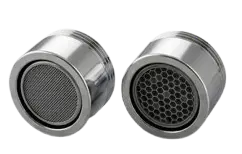
Tap Aerator Replacement Pack Clears limescale-blocked tap spouts |
Standard M24 (male) / M22 (female) | View Info |
|
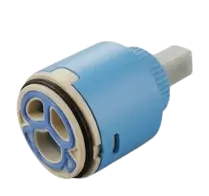
Ceramic Disc Cartridge Fixes internal lever mechanism failures |
35mm or 40mm diameters most common | View Info |
|
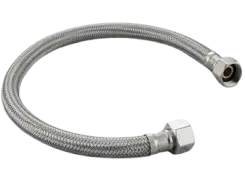
Braided Appliance Inlet Hose Used to cross-connect lines when clearing airlocks |
Standard ¾" BSP appliance thread | View Info |
3. How to Clean a Blocked Kitchen Tap Aerator
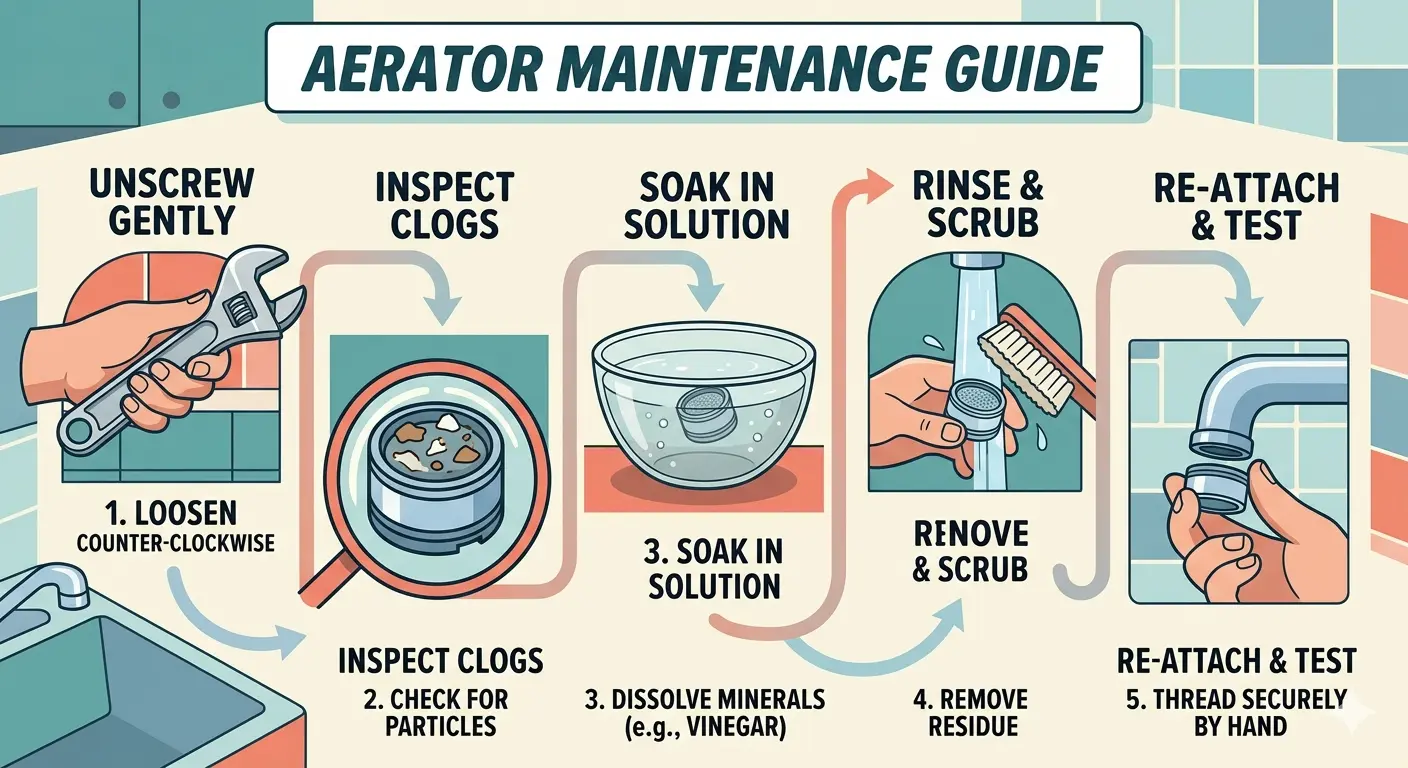
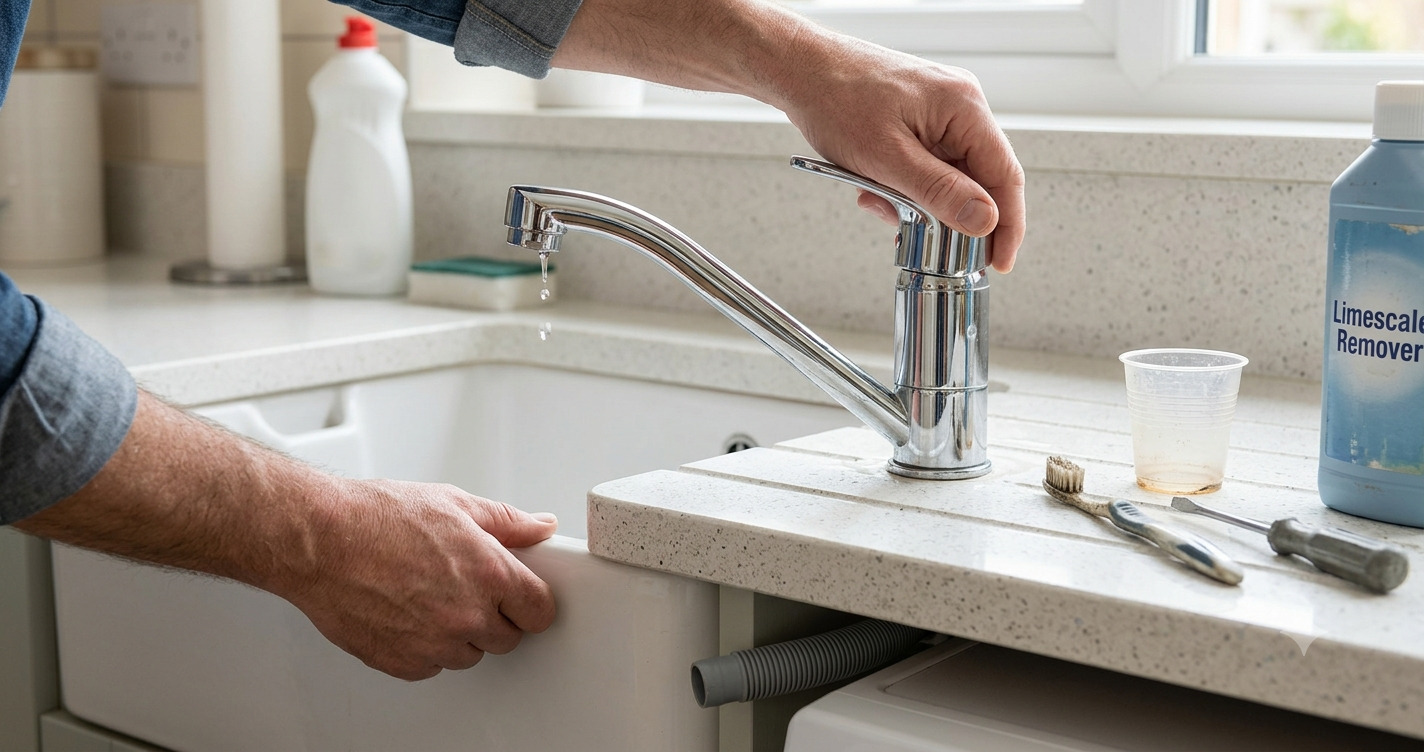
If your water flows elsewhere in the house but the kitchen tap produces only a trickle or nothing a blocked aerator is the single most common culprit, especially in hard-water areas of southern and eastern England.
Hard water contains dissolved calcium carbonate. When water sits in your pipework and gets heated and cooled repeatedly, this calcium separates out and forms the chalky, crusty deposit you'll recognise as limescale. Flakes of it can break loose from inside the pipes and lodge directly in the small mesh filter screwed into the tip of your kitchen spout the tap aerator.
Its purpose is to mix air into the water stream for a smooth, non-splashing flow. But the fine mesh makes it an effective trap for debris. When it blocks, water pressure behind it builds and finds nowhere to go. Limescale build-up at fixtures also accounts for weak shower pressure in hard-water homes if you're having problems at both, descale both at the same time.
Tools You'll Need
- Adjustable spanner or water pump pliers
- Dry cloth or microfibre rag (protects the chrome finish)
- White vinegar or descaler (Kilrock, Viakal, Calgon)
- Old toothbrush
- Small cup or bowl
Step-by-Step: Descale and Unblock the Aerator
- Unscrew the aerator: Grip the metal ring at the very tip of the spout and turn counter-clockwise. If limescale has cemented it in place, wrap a cloth around the nozzle to protect the finish, then use pliers to nudge it loose.
- Inspect the mesh: Inside the housing you'll typically see a plastic mesh screen packed with gritty white limescale, rust particles, or sandy debris. Tap it gently on the counter to knock loose material free.
- Soak in vinegar: Submerge the whole aerator assembly in a cup of white vinegar or liquid descaler. Leave it for 30 to 60 minutes. The acid dissolves the calcium carbonate without damaging the plastic or rubber components.
- Scrub, rinse, and refit: Scrub remaining chalky residue off the mesh with an old toothbrush. Rinse under a separate tap. Thread the aerator back into the spout clockwise and test the flow. In most cases, the improvement is immediate and dramatic.
If you are replacing the aerator entirely rather than descaling it, check our tap aerator buying guide for the correct M22 or M24 thread size for your spout.
4. How to Clear a Plumbing Airlock
An airlock is a bubble of trapped air that has settled at a high point inside your pipework. This pocket of air creates a physical barrier that the normal head of water pressure cannot push past water stops flowing, even though the supply is live.
The classic scenario: you've recently drained down your plumbing system to fit a radiator or replace a bathroom valve, then refilled it. Air that wasn't properly bled out of the system has risen to a high point in the pipework and stalled the flow. Airlocks can also develop after a local water company mains repair that temporarily depressurises the street supply.
Because your mains cold supply runs at significantly higher pressure than a gravity-fed hot water circuit, you can use the cold pressure to drive the air bubble backwards through the hot water line and vent it out through the open vent pipe above your loft tank.
The Washing Machine Hose Method
- Pull the washing machine away from the wall slightly to access the inlet valves at the back. You'll see a blue cold lever and a red hot lever, typically ¾" BSP fittings.
- Disconnect the appliance hoses and connect a single washing machine inlet hose between the cold valve and the hot valve, creating a temporary closed bridge between the two circuits.
- Open the hot water valve fully first.
- Slowly open the cold water valve. You'll hear a rushing sound as high-pressure mains water forces its way backwards up into the hot water circuit, pushing the trapped air pocket ahead of it.
- Hold this connection open for 30 to 45 seconds. Then close the cold valve, close the hot valve, remove the temporary hose, reconnect the appliance hoses, and test your kitchen mixer. The sputter as trapped air exits is normal flow should stabilise within a minute.
If you're regularly getting airlocks in the hot water system, this points to an underlying layout issue see the professional advice section below.
5. Inspecting the Main Internal Stopcock
If no cold water is running anywhere in the property and your water supplier's outage map shows no live incidents in your area, the problem is with your main internal stopcock the master shut-off valve for your entire home's water supply.
In most UK houses, the stopcock is located under the kitchen sink, inside a utility room cupboard, or low on the wall near the front door. It usually looks like a traditional brass tap with a large oval or cross-head handle.
What to check:
- Is it fully open? Turn the handle counter-clockwise as far as it will go. A partially closed stopcock is a surprisingly common cause of whole-house low pressure, especially after building work.
- Is the handle spinning freely with no resistance? This is a sign that the internal brass washer has sheared off the spindle. The stopper may still be physically dropped inside the valve body, blocking the flow. If the handle spins with zero resistance and no water arrives, the valve has failed mechanically. It needs to be cut out and replaced this requires professional intervention (see below).
- Is it corroded shut? Very old brass stopcocks in Victorian or Edwardian properties can seize solid through decades of mineral deposits. Do not force it excessive torque can crack the valve body and cause a flood.
6. Frozen Pipes: What to Do in Cold Weather
A kitchen tap that stops working suddenly during a cold snap particularly below −3°C is almost certainly a frozen pipe. Water expands as it freezes, creating a solid ice plug that blocks the entire bore of the pipe.
The most vulnerable locations are pipes running through:
- Uninsulated external wall cavities directly behind the kitchen sink
- Unheated garages or outbuildings the supply passes through
- Cold crawlspaces beneath ground-floor kitchen extensions
- Loft spaces where the rising main exits the insulation layer
Safe Thawing Procedure
- Open the kitchen tap: Leave the lever open so water can start flowing the moment the ice clears.
- Locate the frozen section: Trace the pipework back from the kitchen into colder areas of the house. Touch the pipes the frozen section will feel noticeably colder than surrounding pipe.
- Apply gentle heat: Use a domestic hair dryer on a medium setting, or wrap the pipe section in towels soaked in warm (not boiling) water. Start nearest the tap and work backwards toward the cold zone.
- Listen for flow: You'll hear water begin to trickle once the ice clears. Let it run for a minute to confirm full flow is restored before checking for leaks. Frozen pipes that have expanded can split inspect the entire exposed section for cracks once thawed.
Once the immediate problem is resolved, wrap any vulnerable pipe sections in foam lagging insulation to prevent a recurrence. Screwfix and Toolstation both stock pipe lagging in standard 15mm and 22mm diameters.
7. How to Replace a Broken Tap Cartridge
If all of the checks above come back clear supply is live, isolation valves are open, the aerator is clean, there's no airlock or frozen pipe the problem is inside the tap body itself. Modern single-lever and dual-lever mixer taps don't use traditional rubber washers. They use a ceramic disc cartridge: a sealed plastic-and-ceramic assembly with two polished discs that slide against each other to control water flow and temperature.
These cartridges are extremely reliable, but they can fail. The internal plastic mechanism can snap from heavy-handed use, or the ceramic plates can crack from limescale pressure or a water hammer shock. When the cartridge fails in the closed position, the lever moves freely but nothing happens no water at all. For a closer look at what to buy, see our ceramic disc cartridge guide.
How to Replace a Mixer Tap Cartridge
- Isolate the supply: Close both under-sink isolation valves. Turn the tap lever to verify it's completely dead.
- Remove the handle cap: Look for a small plastic dot on the top of the lever (usually red/blue). Pop it off with a small flat blade or pick.
- Undo the grub screw: Insert a 2mm or 2.5mm Allen key into the exposed hole and turn counter-clockwise. Once loose, pull the lever handle upward off the stem.
- Remove the shroud and locking nut: The decorative chrome shroud ring unscrews by hand. The large brass locking nut beneath it requires an adjustable spanner turn counter-clockwise.
- Extract and replace the cartridge: Pull the cartridge straight up out of the valve body. Take it to Screwfix or Toolstation to match the exact dimensions (35mm or 40mm body diameter; note the number of tabs and orientation pins). Drop the replacement in, reassemble in reverse order, reopen the isolation valves, and test.
When to Call a Professional Plumber
Most of the fixes above are straightforward DIY work. But there are situations where you need a professional, either for safety or because the scope of the job demands specialist tools:
- Failed or seized main stopcock: If the master valve has broken internally or is corroded solid, a professional needs to freeze the incoming supply at the street boundary box to replace the valve safely. Never force a seized stopcock you risk splitting it.
- Suspected underground supply pipe leak: If the stopcock is fully open but whole-house pressure has gradually dropped, and your water meter dial is spinning with all taps off, you likely have a burst communication pipe buried under the driveway or garden. This pattern of unexplained pressure loss is also covered in our guide on why water pressure drops at night.
- Recurring airlocks: If your system keeps developing air blockages after drawing hot water, the pipework layout has a design fault poor gradient, wrong pipe routing, or a missing air separator. This needs professional diagnosis and modification.
- Any work on the mains supply pipe: Modifications to the rising main or boundary stopcock are notifiable works under the Water Supply (Water Fittings) Regulations 1999. Always use an approved contractor listed on the WaterSafe register.
Kitchen Tap No Water Frequently Asked Questions
Why is water sputtering and coughing out of my kitchen tap?
Sputtering accompanied by hissing noises almost always means air has entered the pipework an airlock. This commonly happens after local water mains maintenance in your street temporarily depressurises the supply. Open all cold taps in the house simultaneously for 2 to 3 minutes. This purges the trapped air safely through each spout and stabilises your system's pressure.
Can a faulty combi boiler cause no cold water to come out of my kitchen tap?
No. The kitchen cold tap is fed directly from the incoming mains supply before water ever reaches your boiler or heating system. A combi boiler fault, pressure drop, or total breakdown will cut off your hot water but the mains-fed cold line to your kitchen tap is completely independent and unaffected.
Why is my hot water tap not working but the cold is fine?
If cold water runs normally but the hot side is dry, the fault is confined to your heating circuit. The most common causes are: a tripped or locked-out boiler, low boiler system pressure, a closed hot-side isolation valve under the sink, or an airlock trapped in the hot water pipework. Our guide on a combi boiler with no hot water walks through each cause.
What is the difference between a stopcock and an isolation valve?
A stopcock is the master shut-off valve for the entire property turning it off stops water reaching every tap and appliance in the building. An isolation valve is a small inline valve on the pipe feeding a single tap or appliance, operated with a flat-head screwdriver. It lets you cut off water to one fixture for repair work without affecting the rest of the house.
How do I know if my water supplier has cut off my water supply?
If all cold taps in the house have gone dry simultaneously, check your regional water provider's website. Thames Water, Anglian Water, Yorkshire Water, Severn Trent, United Utilities, and all other UK suppliers maintain live outage maps you can search by postcode to see if a burst main or planned maintenance is affecting your street.
Can a broken tap cartridge stop water from flowing completely?
Yes. Modern mixer taps use a ceramic disc cartridge to control both flow and temperature. If the internal plastic mechanism snaps, or the ceramic plates crack and seize in the closed position, no water will pass through the spout even with the lever pulled fully open. Replacing the cartridge fixes this immediately.
Could frozen pipes stop my kitchen tap from working?
Yes, particularly in cold snaps below −3°C. Pipes running through unheated spaces a garage, crawlspace under a kitchen extension, or directly behind an uninsulated external wall can freeze solid, forming a complete ice blockage. Thaw carefully using a hair dryer on a medium setting, working along the pipe from the tap end backwards. Never use a blowtorch.
Will cleaning the tap aerator fix my water pressure?
If water is flowing but the pressure is weak particularly if the issue has developed gradually rather than appearing suddenly a limescale-blocked aerator is the most likely cause. Unscrew the nozzle from the spout tip, soak it in white vinegar for 30 to 60 minutes, scrub with a toothbrush, and refit. Flow improvement is usually immediate.