Slow Draining Bath? UK Causes & DIY Fixes
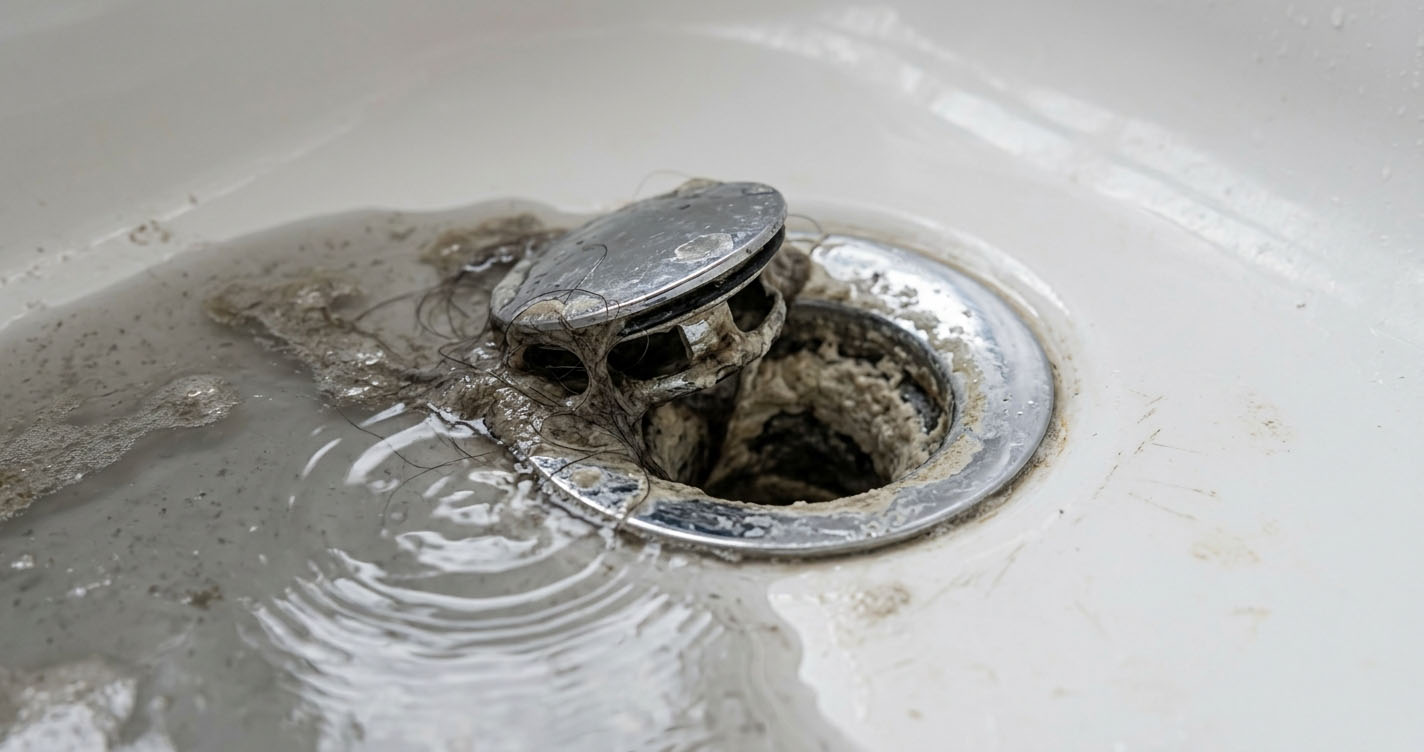
A bath that fills with standing water while you're still in it is one of the most common plumbing complaints in UK homes and it's almost always something you can fix yourself in under 20 minutes. The vast majority of slow-draining baths come down to one of a handful of root causes: a hair and soap blockage just below the drain cover, a scaled-up trap, a partial clog deeper in the waste pipe, or less commonly a problem with the shared waste stack serving the whole bathroom. Understanding which one you've got determines whether you need rubber gloves or a plumber.
This guide covers every cause in the order you're most likely to encounter it, with clear DIY checks before escalating to anything that requires professional help.
Quick Navigation
1. Why Your Bath Drains Slowly in UK Homes
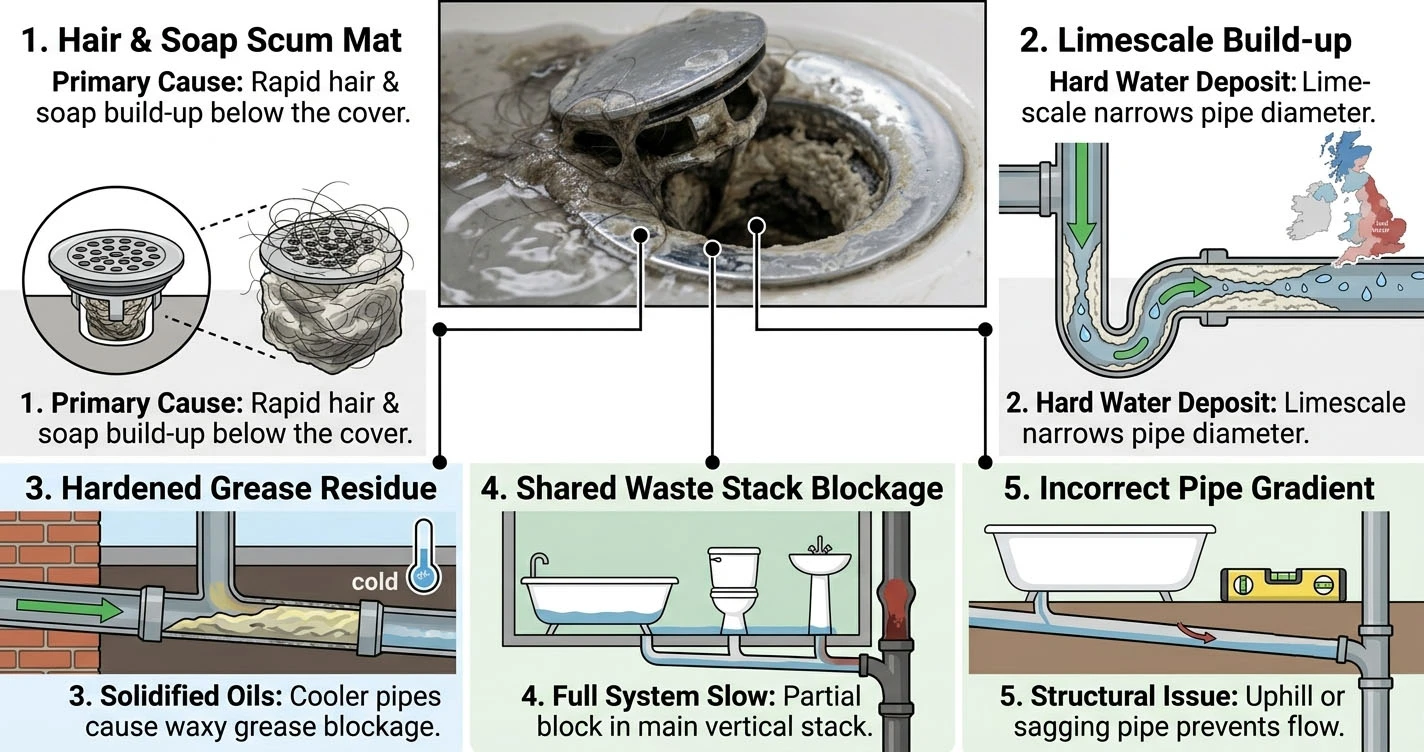
Before trying any fix, it helps to understand how a bath waste system actually works. Water leaving your bath travels through the plughole, drops into a trap (a curved section of pipe that holds a water seal to block sewer gases), and then flows along a short horizontal waste pipe into the soil stack the large vertical pipe running through your home that carries waste from all bathroom fixtures down to the underground drain.
A slow-draining bath means something is restricting flow at one of these points. The most common culprits in UK homes, in rough order of frequency:
- Hair and soap scum caught at the drain cover. This is responsible for the majority of slow bath drain calls in the UK. Every wash sends hair into the drain, where it catches on the edges of the cover, tangles together, and combines with soap and conditioner residue to form a semi-solid mat that progressively blocks the opening. In households with long hair, this can happen within weeks of a previous clear-out.
- Limescale build-up inside the trap and waste pipe. In hard water areas which covers most of the South East, East Midlands, East Anglia, and parts of Yorkshire dissolved calcium and magnesium in the water deposits as limescale on any surface water sits against. Inside a trap or waste pipe, this narrows the bore progressively and combines with soap scum to create a tough lining that resists simple flushing.
- Grease and soap residue hardening inside the waste pipe. Bath products shower gels, conditioners, body lotions are partially oil-based. In cooler UK houses, this residue can solidify inside uninsulated waste pipes, especially if they run through an external wall or a cold underfloor void.
- A partial blockage in the shared waste stack. All bathroom fixtures bath, basin, toilet, shower ultimately drain into a shared soil stack. If that stack has a partial blockage, every fixture in the bathroom may drain slowly. If your sink is also draining slowly at the same time, a shared stack blockage is very likely. This is more common in older UK properties where cast iron stacks have corroded internally or where tree root ingress has partially closed an underground section.
- Incorrect waste pipe gradient. In UK plumbing, horizontal waste pipes should run at a gradient of around 18–90mm per metre to drain by gravity. If a previous owner has altered the bathroom layout and the waste pipe was re-routed with an insufficient fall or worse, running slightly uphill water pools inside the pipe after each use and drains very slowly. This is a structural problem that requires a plumber to correct.
2. Common Plumbing Faults That Slow a Bath Drain
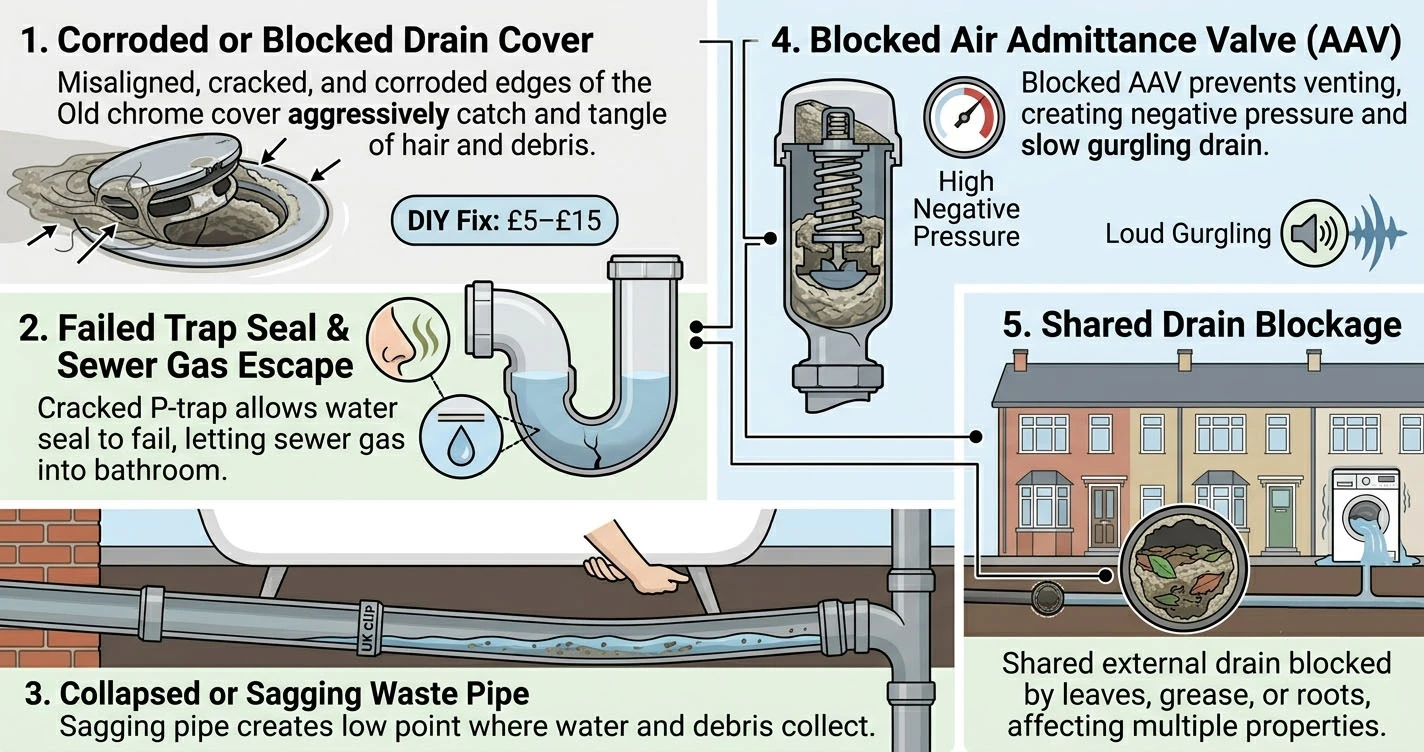
If your bath was draining fine until recently and has gradually or suddenly slowed, a specific fault is almost certainly to blame.
Blocked or corroded drain cover. In older UK baths, the chrome or plastic drain cover can corrode, warp, or crack, leaving a misaligned edge that catches hair and debris far more aggressively than a flush-fitting modern cover. If the cover itself looks damaged, replacing it costs around £5–£15 and often improves drainage immediately.
Failed or displaced trap seal. The trap beneath your bath most commonly a P-trap in UK installations can crack if the bath has been knocked or if a heavy cleaning chemical has been used regularly. A cracked trap lets the water seal escape, which means sewer gases can enter the bathroom (you'll smell them), and drainage can become erratic. This needs a plumber to replace the trap.
Collapsed or sagging waste pipe. Plastic push-fit waste pipes the standard in UK homes since the 1980s can sag between fixings if they haven't been clipped at the recommended intervals. A sagging section creates a low point where water and debris collect, causing both slow drainage and a persistent odour. Checking the waste pipe run under the bath (by removing the bath panel) often reveals this at a glance.
Blocked air admittance valve (AAV). Many UK bathrooms that are not on an external wall have an AAV fitted on the waste pipe rather than connecting directly to the soil stack. An AAV is a one-way valve that lets air into the waste system to prevent siphoning of the trap. If the AAV is blocked, jammed, or has failed, negative pressure builds up in the waste pipe as water drains and the bath empties very slowly with a loud gurgling sound. AAVs are easy and inexpensive to replace.
Shared drain blocked by external debris. In UK terraced houses, the underground drain often runs under the shared garden or passageway and serves multiple properties. Leaves, silt, grease from neighbouring kitchens, or tree root ingress can partially block this shared section and cause slow drainage in every connected property. If a washing machine drain is also overflowing nearby, the two problems are almost certainly connected. This is one to flag to your neighbours and, if necessary, report to your local water company.
3. When a Slow Bath Drain Signals a Serious Problem
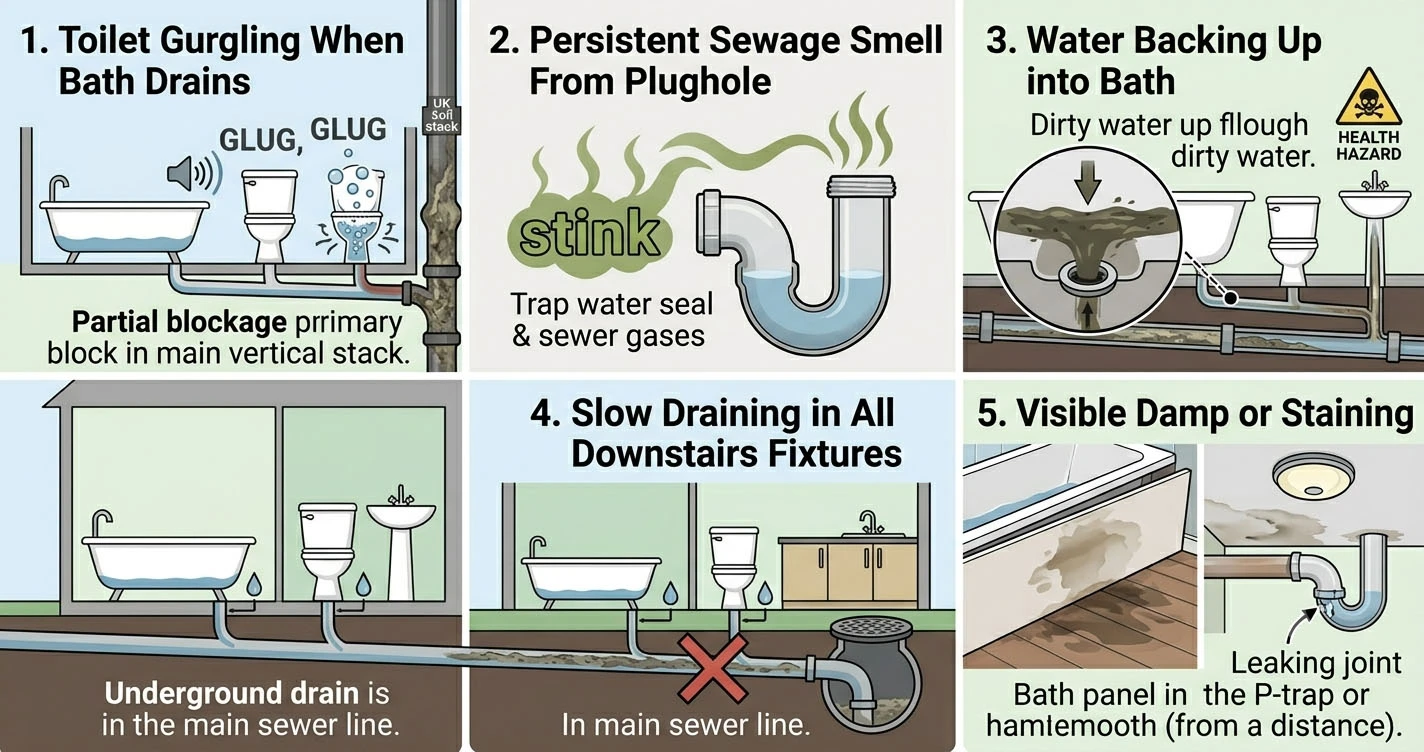
Most slow bath drains are a nuisance, not an emergency. But these specific symptoms suggest something more serious that needs prompt attention:
- The toilet gurgles or bubbles when the bath drains. This is the clearest sign that the blockage is in the shared soil stack downstream of both fixtures. Air is being sucked back through the toilet trap as the bath water drains past the blockage. Do not use drain chemicals they cannot reach a stack blockage and can damage seals. If the toilet itself is also slow to flush, our guide on unblocking a toilet without chemicals covers the parallel steps. Otherwise, call a drainage company.
- Foul sewer smell from the bath or plughole. A persistent sewage smell from the bath plughole especially when water hasn't been run recently means the trap's water seal has been lost or the trap is cracked. The seal is what prevents sewer gas from entering the bathroom. Run the bath briefly to re-establish the seal; if the smell returns quickly, the trap needs replacing.
- Water backing up into the bath from the waste pipe. If dirty water from the basin or toilet is coming back up through the bath plughole, there is a serious downstream blockage. Stop using all bathroom fixtures immediately and call a drainage contractor this is a health hazard.
- Slow drainage in all downstairs fixtures as well. If your kitchen sink, ground floor WC, and outdoor drains are all slow or backing up, the blockage is in the main underground drain or sewer. This is beyond DIY territory and in the case of a shared sewer, may be the water company's responsibility to clear.
- Visible damp or staining around the bath waste area. Damp patches on the floor next to the bath, or staining on the ceiling of the room below, suggests the waste pipe or trap is leaking rather than simply blocked. A leak can cause significant structural damage to floors and joists. Investigate and repair promptly the access panel on the side of the bath is usually the starting point.
4. DIY Fixes to Clear a Slow Bath Drain
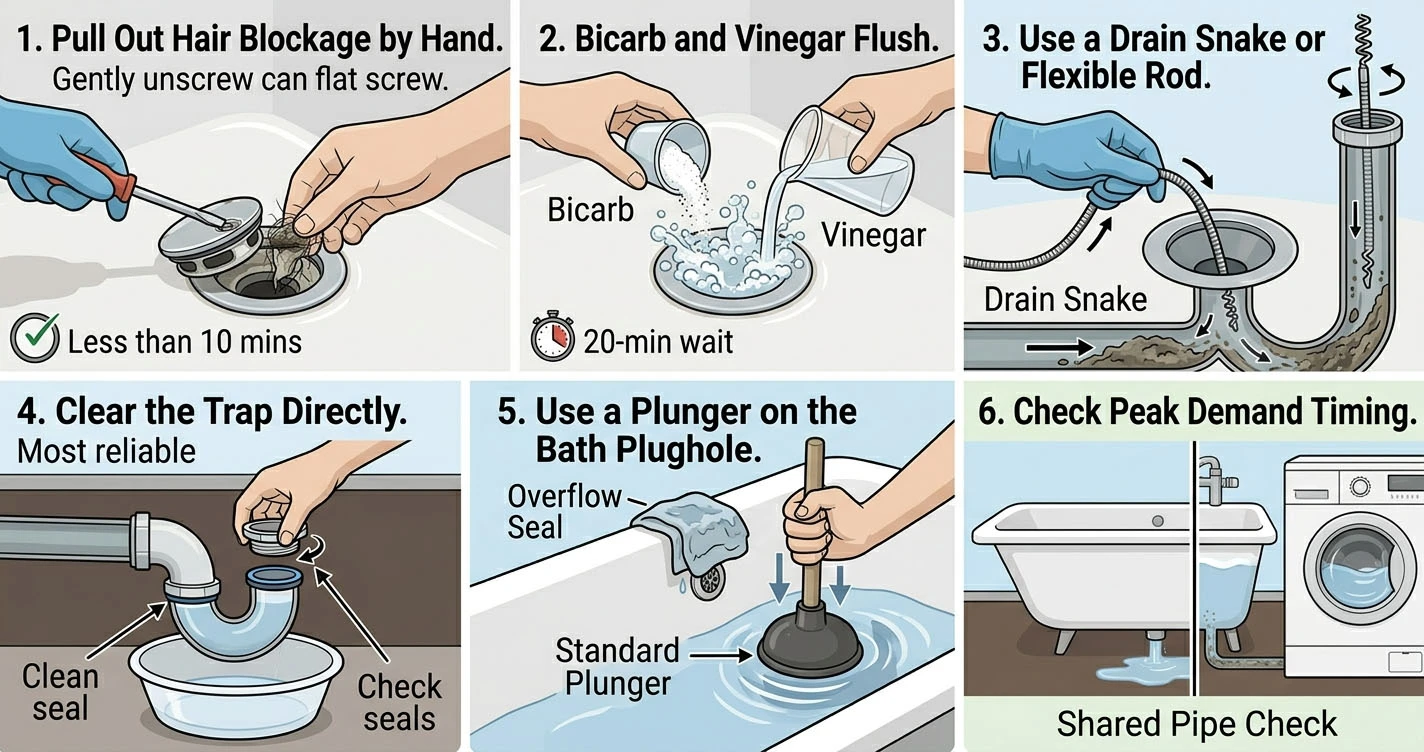
Work through these in order the majority of slow UK bath drains are resolved at step one or two.
- Pull out the hair blockage by hand. Put on rubber gloves. Unscrew or pop off the drain cover most UK bath covers either unscrew with a flathead screwdriver through the centre slot or simply lift out. You will almost certainly find a compacted plug of hair and soap scum immediately below. Pull it out, clean the underside of the cover, and refit. Test the drain. This one step clears a majority of slow bath drains with no tools, no products, and no cost.
- Bicarb and vinegar flush. Pour half a cup of bicarbonate of soda (baking soda) down the plughole, then immediately follow with half a cup of white vinegar. The reaction fizzes aggressively, breaking down soap residue, grease, and soft limescale inside the trap. Leave for 15–20 minutes, then flush through with a full kettle of boiling water. This is safe for all UK waste pipe materials, including older solvent-weld plastic and lead waste pipes, and won't damage chrome fittings.
- Use a drain snake or flexible rod. A drain snake a coiled wire with a small hook or corkscrew tip is available from any UK hardware shop for around £5–£15. Feed it into the plughole and push it down through the trap while rotating. When you feel resistance, rotate more firmly and then pull back slowly: you will retrieve the blockage or break it up enough to flush clear. This reaches 30–60 cm into the waste pipe, well past the trap, where a coat hanger can't reach.
- Clear the trap directly. If your bath has an access panel on the side most modern UK baths do remove it. You will see the waste pipe dropping from the plughole and curving into the trap below. Place an old towel and a bowl under the trap, then unscrew it by hand (most are hand-tightened on UK plastic waste systems) or with an adjustable spanner. Empty and clean the trap, check the rubber seal is intact, refit, and test. This is the most reliable DIY fix for a stubborn slow-draining bath.
- Use a plunger on the bath plughole. Cover the bath overflow with a damp cloth (this seals it and creates useful back pressure). Place a cup plunger directly over the plughole and push down firmly then pull up sharply several times. The pressure dislodges blockages in the upper section of the trap. Avoid using a plunger if you've recently used chemical drain cleaner the caustic liquid can splash back.
- Check peak demand timing. If the bath only drains slowly when the washing machine or another appliance is running, and there is no physical blockage, the shared waste pipe may be undersized for simultaneous use a legacy of older UK building standards. A plumber can upsize the waste pipe or re-route it to a separate connection on the stack.
If clearing the bath drain has also produced a bad smell rather than just improved drainage, our guide on smelly bath drains in UK homes covers the causes and fixes for waste odour in detail.
5. Permanent Fixes & When to Call a Plumber
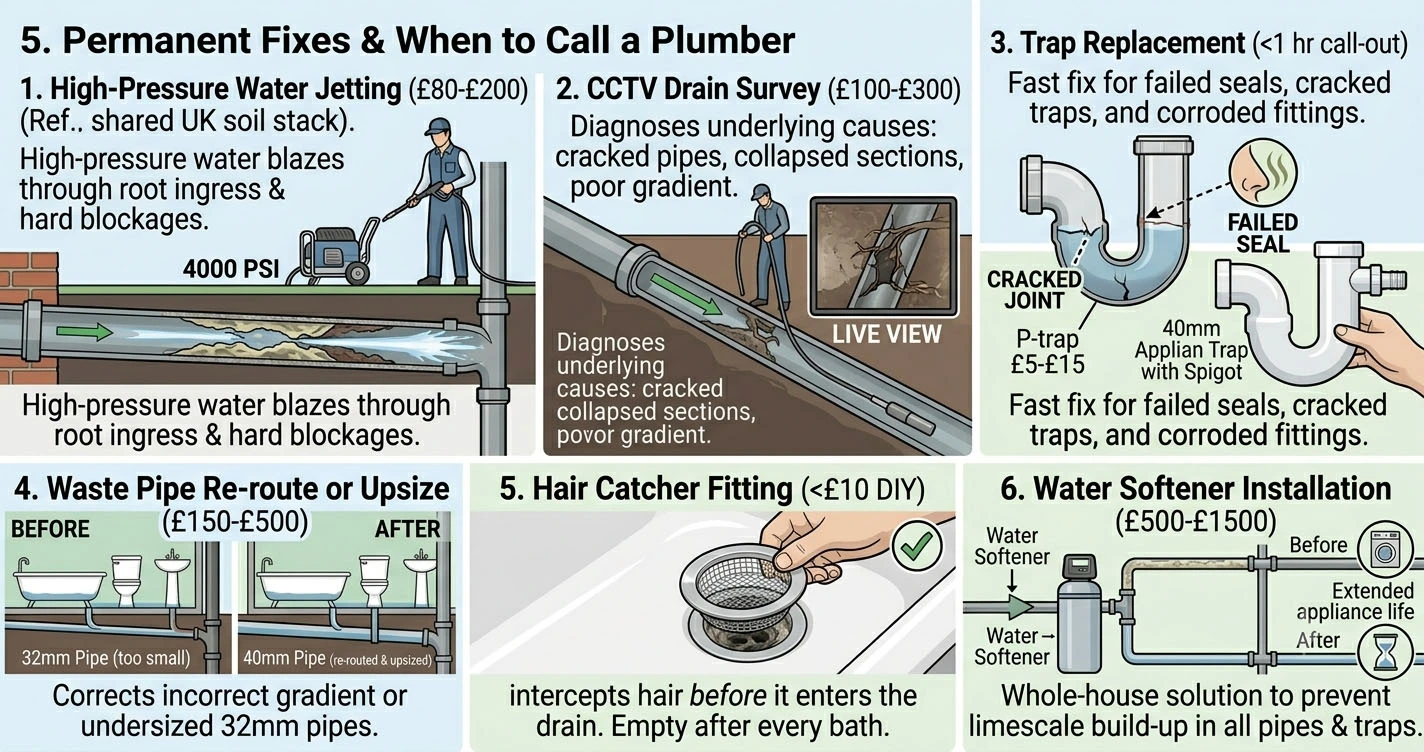
If the DIY steps haven't resolved the problem, or if the same drain keeps blocking every few weeks, a plumber or drainage contractor can offer more lasting solutions.
- High-pressure water jetting. A drainage contractor inserts a high-pressure jetting hose into the soil stack or underground drain and blasts water at up to 4,000 PSI. This shears through compacted limescale, grease, root ingress, and hardened debris that cannot be cleared by rodding or domestic tools. It is the standard professional solution for a recurring slow bath drain and typically costs £80–£200 for a single domestic call-out.
- CCTV drain survey. If jetting resolves the blockage but it returns quickly, a CCTV survey sends a small camera through the drainage system to identify the underlying cause a cracked pipe, root intrusion, a collapsed section, or a poor-gradient joint. Most UK drainage companies include a short CCTV inspection as part of a jetting job. A standalone full survey costs £100–£300 and is invaluable before buying a property with drainage complaints.
- Trap replacement. If the bath trap is cracked, has corroded fittings, or has a failed rubber seal that you can't reseat, a plumber can replace the entire trap in under an hour. A standard plastic P-trap for a UK bath costs around £5–£15; for a bath with a washing machine or appliance waste sharing the same connection, a 40mm appliance waste trap with spigot is the correct fitting. Labour for replacement is usually under an hour's call-out rate.
- Waste pipe re-route or upsize. If the slow drainage is structural a waste pipe with an incorrect gradient, or a 32mm pipe that should be 40mm a plumber can re-run the waste correctly. This is particularly common after bathroom refits where a DIY installer has shortened or rerouted the waste without maintaining the fall. Cost depends on access and run length but typically falls between £150 and £500.
- Hair catcher fitting. Not a plumber's job, but the single most effective preventive measure: fit a stainless steel hair catcher over the bath plughole. They sit flush or slightly raised and intercept hair before it enters the drain. A good-quality one costs under £10 and eliminates the most common cause of slow bath drains entirely. Empty it after every bath.
- Water softener installation. In hard water areas, a whole-house water softener prevents limescale building up anywhere in the plumbing system including waste pipes and traps. It does not clear an existing blockage, but it dramatically reduces the rate at which future scale accumulates. A softener is a significant investment (typically £500–£1,500 installed) but pays dividends in extended appliance life and reduced limescale maintenance throughout the home.
Slow Draining Bath UK FAQs
Why is my bath draining slowly all of a sudden?
A sudden slowdown is almost always caused by a hair and soap scum blockage just below the drain cover, or a build-up in the P-trap that has finally reached a tipping point. Remove the drain cover and pull out any visible debris first. If that doesn't resolve it, the bicarb and vinegar method or a drain snake clears most cases. A sudden slowdown across all bathroom fixtures at once points to a blockage in the shared waste stack that requires a drainage contractor.
Can I use chemical drain unblocker in a UK bath?
Caustic soda-based drain cleaners are effective on grease and hair but can damage older plastic waste pipes and seals with repeated use. They should never be used around chrome or nickel-plated fittings as they cause pitting and corrosion. For routine slow drains, bicarbonate of soda and white vinegar is safer for your pipework and just as effective on soft blockages. Reserve chemical unblockers for stubborn cases and always follow the label instructions fully.
What is the U-bend under my bath and why does it block?
The U-bend more accurately a P-trap in UK bath plumbing is the curved section of waste pipe directly below the plughole. It holds a small amount of water permanently to prevent sewer gases entering the bathroom, which is a legal requirement in UK plumbing. Hair, soap, conditioner residue, and limescale collect in this curve over time. Physically unscrewing and clearing the trap is the most reliable DIY fix for a persistently slow-draining bath.
Is it normal for a bath to drain slowly in a hard water area?
Yes in hard water areas such as the South East, East Anglia, and the Midlands, limescale accumulates inside waste pipes and traps far faster than in soft water areas. It combines with soap scum to form a tough crust that progressively narrows the pipe bore. Regular monthly treatment with white vinegar keeps it at bay. A whole-house water softener will significantly reduce the rate of limescale build-up throughout your home's entire plumbing system over time.
My bath and basin are both draining slowly what does that mean?
When two or more bathroom fixtures drain slowly at the same time, the blockage is almost certainly in the shared waste pipe or soil stack that both drain into not in the individual traps. This is confirmed if the toilet also gurgles when the bath empties. See our slow sink drain guide if you want to rule out an individual basin trap first. Clearing both individual traps and finding no blockage is a strong sign the shared section needs a drainage contractor with high-pressure jetting equipment.
Why does my bath drain make a gurgling noise?
Gurgling from the bath drain is caused by air being pulled through the water seal in the trap as water drains a sign the waste pipe venting is restricted. In UK homes, the soil stack provides this ventilation. If the stack is partially blocked, or if an air admittance valve (AAV) on the waste pipe has failed, negative pressure draws air through the trap and produces the gurgling sound. Persistent gurgling without a visible blockage points to a venting issue and should be checked by a plumber.
How often should I clean my bath drain to prevent slow draining?
For a typical UK household, flushing the bath drain with a kettle of boiling water once a week prevents most grease and soap residue from hardening. A monthly bicarb and vinegar treatment keeps the trap and upper pipe clear of soft scale. Fitting a stainless steel hair catcher over the plughole is the single most effective preventive step it stops the main cause of slow bath drains before debris enters the pipe at all.