Garden Tap Dripping or Leaking? UK Causes & DIY Fixes (2026)
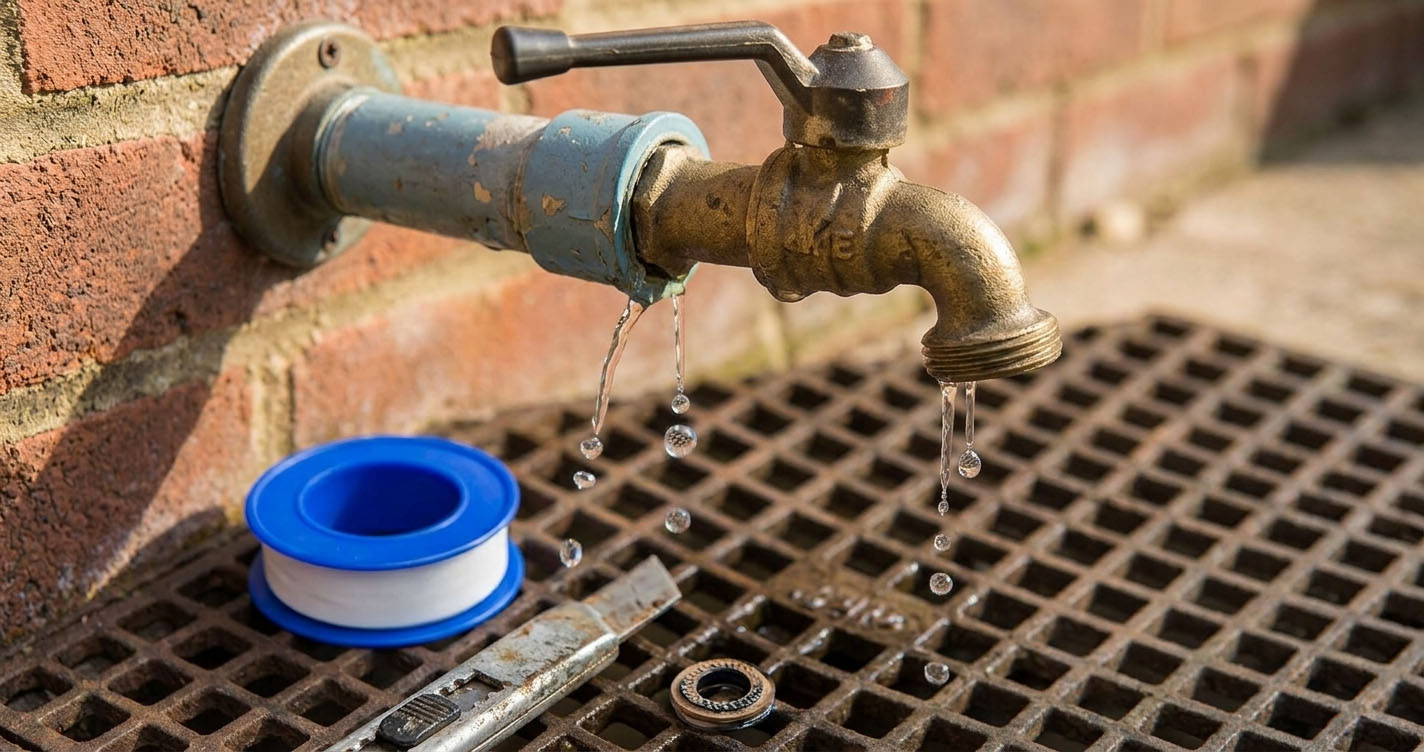
A dripping garden tap in a UK home is almost always caused by a worn internal rubber washer (drip from the spout) or deteriorated gland packing (leak around the handle). Replacing a 1/2-inch tap washer costs under £2 and takes about 20 minutes with an adjustable spanner. If tightening the gland nut by a quarter turn doesn't stop a handle leak, wrap PTFE tape around the spindle thread and refit the nut. A full replacement tap costs around £10–£15 from Screwfix or B&Q.
A dripping outdoor tap is a frustratingly common problem for UK homeowners. Whether it's a slow constant drip from the spout wasting metered water, or a messy leak spraying from around the handle when the tap is turned on, ignoring it leads to soggy brickwork, moss growth, and an unnecessary addition to your water bill.
Fortunately, traditional British brass garden taps are simple, hard-wearing fixtures that are straightforward to fix yourself. Most faults come down to a hardened rubber washer worn down by frost, or a loose gland nut that needs a minor tighten. Before calling a plumber, you can usually solve the problem in under 30 minutes with basic hand tools. For comparison, the same approach applies to leaks under kitchen and bathroom sinks — identify the source first, then target the right component.
Quick Navigation
1. Diagnose Your Leak: Where Is the Water Coming From?
The location of the leak tells you exactly which component has failed. Getting this right saves you from dismantling parts of the tap you don't need to touch.
The Water Flow Test
- Dry the tap body completely with an old towel so you're starting from a dry surface.
- Observe the tap under pressure — keep it turned off initially, then open it with a hose attached. Watch where water first appears.
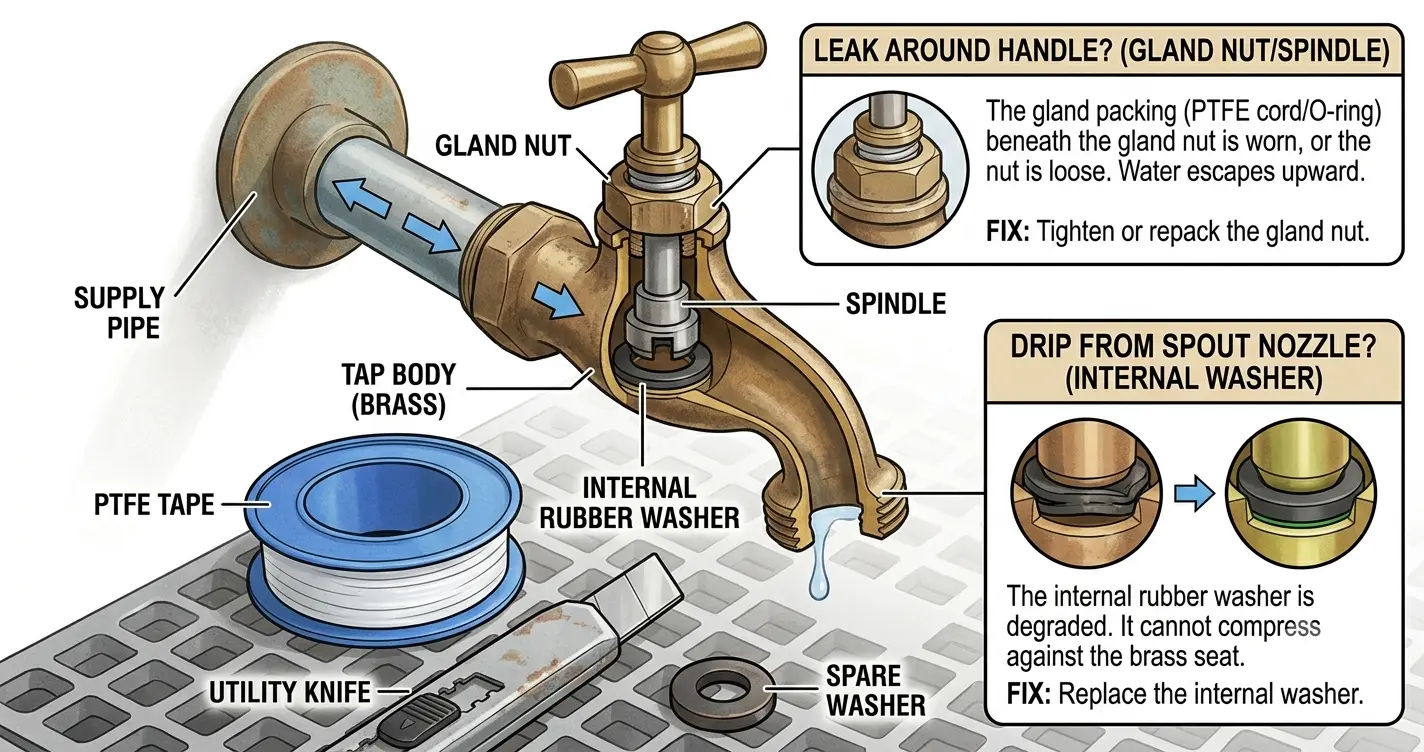
Water Drips from the Spout Nozzle
The culprit: The internal rubber washer has degraded, flattened, or split. It can no longer compress tightly against the brass seat inside the tap body, so water slips past even when the handle is wound fully shut.
The fix: Replace the washer — see Section 2 below.
Water Leaks Around the Handle or Spindle
The culprit: The gland packing (PTFE cord or O-ring) beneath the gland nut has worn down, or the nut itself has loosened over time. Water under pressure escapes upward along the metal spindle.
The fix: Tighten or repack the gland nut — see Section 3 below.
Pro tip: Most UK domestic outdoor taps use a standard 1/2-inch thread connection and a 1/2-inch replacement rubber washer. A small number of older or larger taps use 3/4-inch — take the old washer with you to the merchant to be sure.
2. How to Replace an Outside Tap Washer
If your tap drips continuously from the outlet when turned fully clockwise, the internal washer is the cause. Friction, frost, and hard water minerals break down the rubber over time and the watertight seal fails.
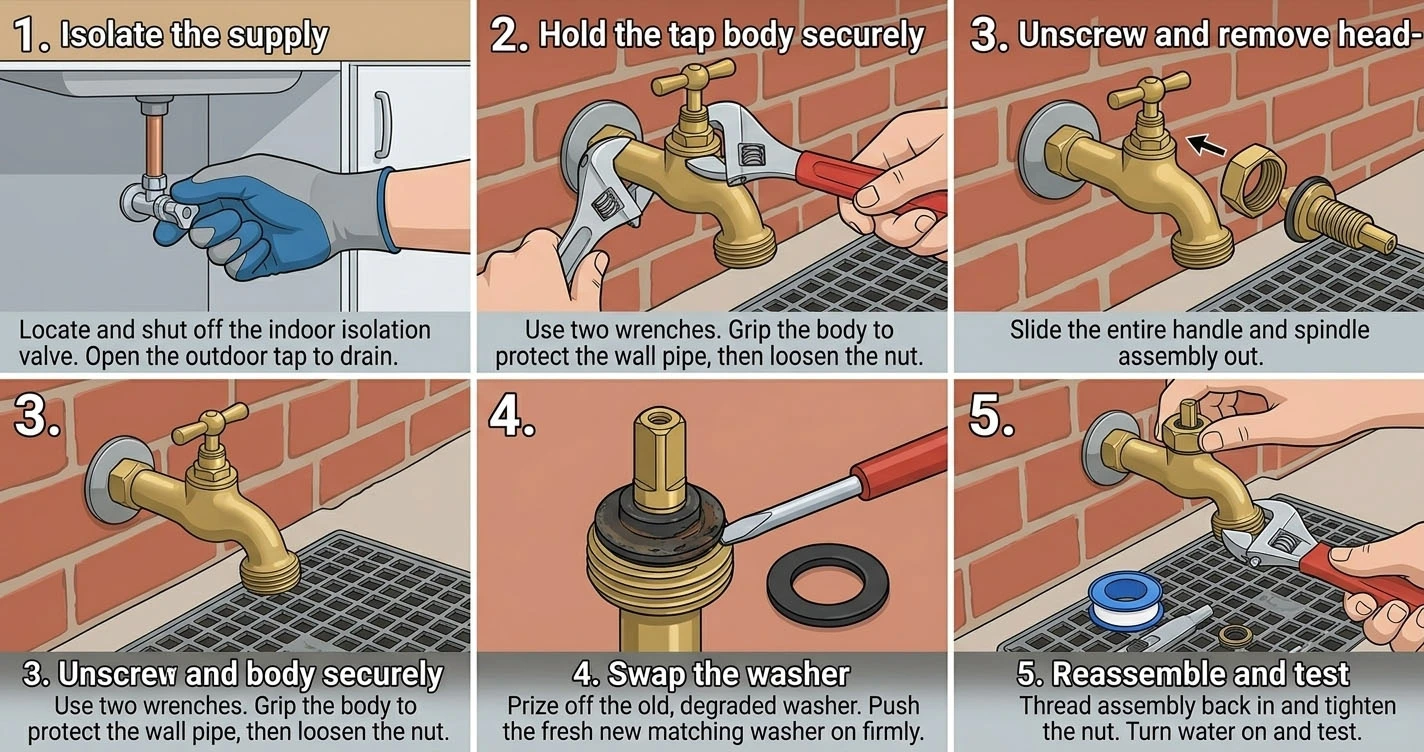
- Isolate the supply. Locate the internal shut-off valve supplying the outdoor line — often under the kitchen sink or in an adjacent cupboard. Turn it off fully. Then open the outdoor tap handle anticlockwise to drain any residual water in the pipe.
- Hold the tap body securely. Use an adjustable spanner on the large central headpiece nut. Use a second spanner or pipe wrench to grip the tap body itself. This is a critical step — if you don't hold the body, the torque of unscrewing the nut can twist and crack the copper pipe inside your wall.
- Unscrew the headpiece nut anticlockwise until the entire handle and spindle assembly slides out of the brass outer casing.
- Swap the washer. At the base of the spindle you'll see a small circular rubber washer held on a metal prong or screw. Prise the old washer off with a flathead screwdriver and push a fresh matching washer firmly onto the stem.
- Reassemble and test. Thread the spindle back into the tap housing and tighten the headpiece nut — firm but not overtight. Turn the isolation valve back on and test for drips.
If the drip returns within a short time after fitting a new washer, the brass seat inside the tap body is likely scored. At that point, replacing the whole tap is more reliable than repeated washer changes — see Section 4.
3. Fixing a Leak from the Spindle or Gland Nut
If water appears from directly beneath the handle when the tap is running, the problem is not the washer — the gland packing around the rotating spindle has deteriorated.
Work Through These Steps in Order
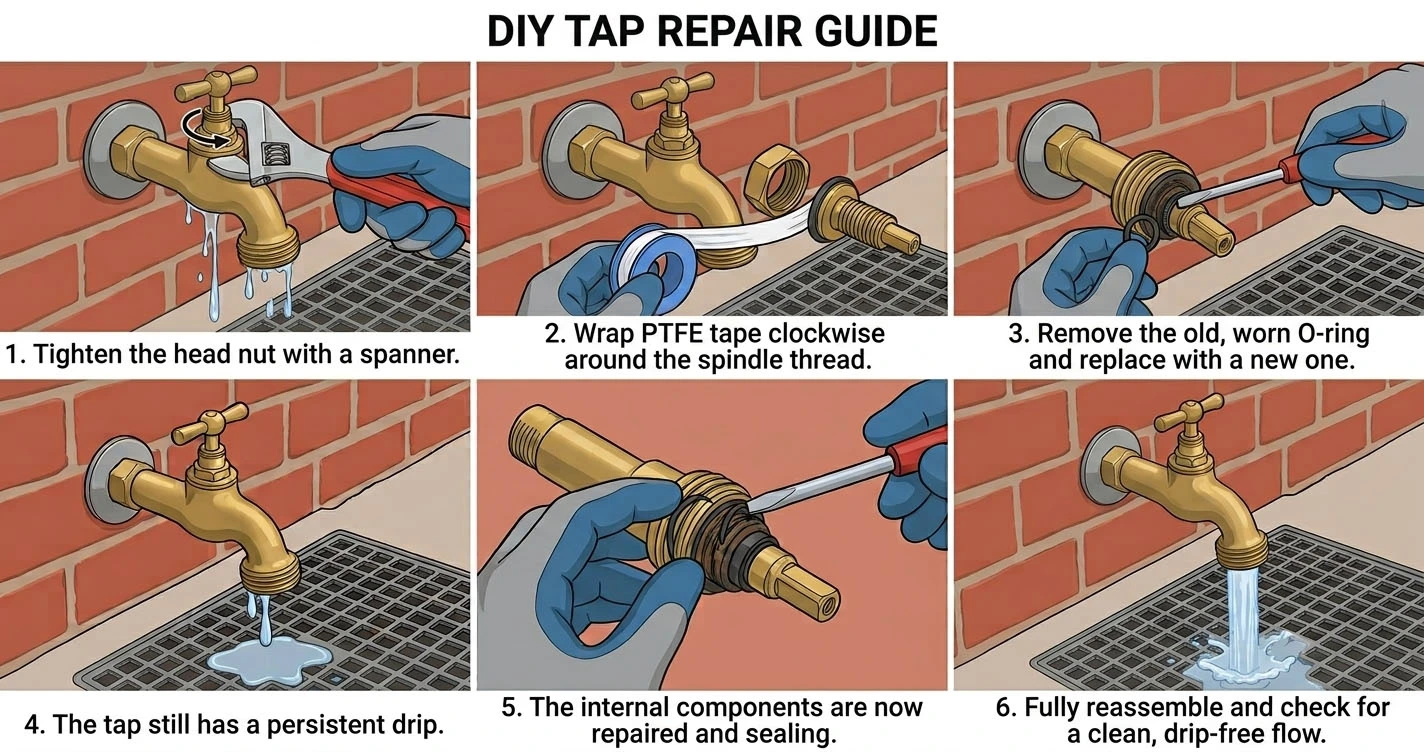
- Try tightening the gland nut first. The small nut sitting directly beneath the tap handle often backs off over years of use. Turn it clockwise by roughly a quarter turn with an adjustable spanner. Turn the tap on and check whether the leak has stopped. Don't overtighten or the handle will become stiff to turn.
- If tightening fails, repack the gland. Turn off the isolation valve and remove the handle screw to take off the handle wheel. Back off the gland nut completely. Wrap a short length of PTFE tape clockwise around the exposed spindle thread and push it down into the recess cavity. Re-tighten the gland nut over it — the nut compresses the tape to form a watertight seal around the moving spindle.
- Replace the O-ring if fitted. Some modern garden taps use a rubber O-ring rather than PTFE packing. If you can see a groove on the spindle with a deteriorated O-ring in it, replace it with a matching size. O-rings are available in assorted packs from any plumbing merchant.
The same PTFE technique is used on other supply connections around the home — if you've had issues with water pressure dropping at night, loose threaded joints elsewhere in the system can sometimes contribute.
4. When to Replace the Whole Tap Assembly
Washers and PTFE tape solve the majority of garden tap leaks. But if the internal brass seat has corroded or been damaged by freezing, a new washer will split and fail again quickly. In that case, replacing the entire tap is the right call — and it's straightforward.
- Isolate the internal water supply and drain the line as described in Section 2.
- Unscrew the entire brass tap assembly anticlockwise from the wall flange socket. Use two spanners — one on the tap body, one on the wall fitting — to avoid straining the pipework.
- Clean the female thread on the wall fitting. Remove any old PTFE tape or thread sealant residue.
- Wrap fresh PTFE tape clockwise around the new tap's male thread, 10 to 15 times, stretching slightly as you go.
- Screw the new tap in by hand first, then tighten with a spanner to a firm stop. Don't overtighten.
- Turn the supply back on slowly and check for leaks at the wall fitting joint before connecting a hose.
Standard replacement brass garden taps cost between £10 and £25 from Screwfix, Toolstation, or B&Q. If you're replacing a tap that's also connected to a hosepipe irrigation system, check that the new fitting accepts the same hose connector — most UK garden hoses use a standard Hozelock-compatible fitting.
5. Essential Tools & Spare Parts
Everything below is available at Screwfix, Toolstation, B&Q, or any local plumbers' merchant. Costs are minimal for the parts — the washer itself is often under £1.
| Product Image | Essential Part or Tool | Why You Need It | Action |
|---|---|---|---|
|
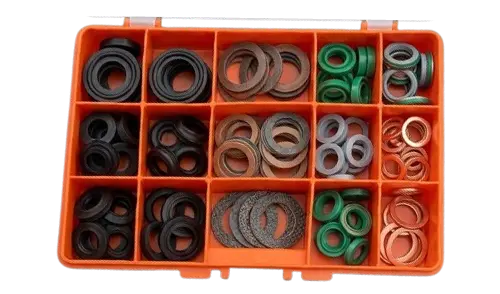
Assorted Rubber Tap Washers 1/2-inch and 3/4-inch sizes |
Covers the standard UK tap sizes — buy a pack rather than a single washer so you have spares. | View Info |
|
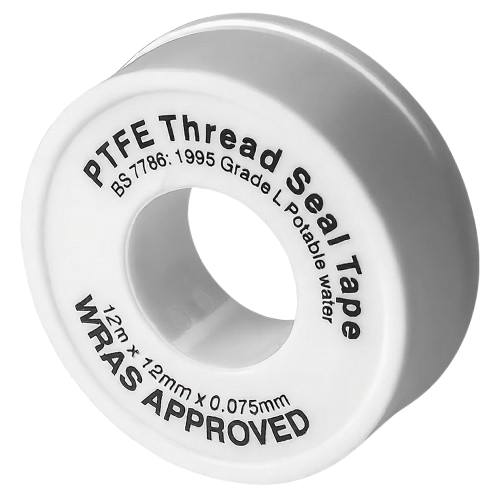
PTFE Tape (12mm) White thread seal tape |
Seals threaded connections and repacks the gland around the spindle to stop handle leaks. | View Info |
|
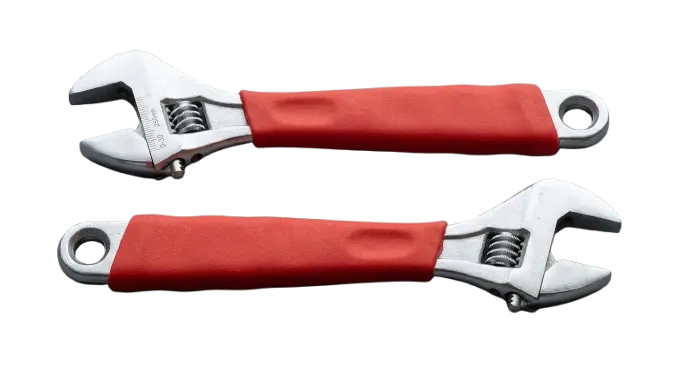
Adjustable Spanners (pair) For two-wrench technique |
One holds the tap body, one turns the nut — essential to avoid twisting and cracking the supply pipe in the wall. | View Guide |
6. Preventing Winter Frost Damage
The best way to avoid a leaking garden tap is to prevent frost damage before it occurs. When water freezes inside a brass tap housing it expands with enough force to crack the internal seat, split rubber washers, or distort the tap body itself — and the damage only becomes apparent when the tap thaws and starts dripping the following spring.
- Fit an insulated tap cover in autumn. Foam or polystyrene tap covers are available for around £3–£5 at most garden centres and DIY retailers. Fit one before the first hard frost. If you've already had frozen or burst pipes elsewhere in the house, prioritise outdoor tap insulation as part of the same winter preparation.
- Drain the outside line before winter. Turn off the internal isolation valve supplying the outdoor tap, then open the garden tap fully and leave it open until no more water drains out. This leaves the external pipe dry and unable to freeze.
- Check the double check valve annually. Frost can damage check valves as well as taps. If you're replacing the tap after frost damage, inspect the check valve and replace it if the body feels loose or cracked.
Questions & Answers
Real questions from homeowners — answered by our team.
Community Questions
Garden Tap Dripping & Leaking — FAQs
What size washer does a standard UK outside garden tap require?
The vast majority of UK domestic garden taps use a standard 1/2-inch rubber tap washer. Take the old washer to any hardware shop or builders' merchant to match the size — some older or commercial taps use 3/4-inch. Assorted washer packs from B&Q or Screwfix cover both sizes and cost under £3.
Why is water leaking out from around the tap handle when it's open?
The gland packing beneath the gland nut has compressed or deteriorated. Try tightening the gland nut a quarter turn clockwise with a spanner — this often stops the leak immediately. If it doesn't, pack the recess with PTFE tape wrapped clockwise around the spindle thread and refit the nut over it.
I have replaced the washer but the outdoor tap is still dripping. Why?
If a new washer fails to stop the drip, the internal brass seat inside the tap body is likely scored, corroded, or pitted by hard water scale. The rubber washer can't make a full seal against a damaged seat. At this point, replacing the whole tap assembly is the most reliable and cost-effective fix.
Is it legal to replace or install an outside garden tap yourself in the UK?
Yes, you can carry out DIY maintenance and direct replacement of an existing garden tap. However, any installation must comply with the Water Supply (Water Fittings) Regulations 1999, which require a double check valve on the internal supply line to prevent backflow contamination of the mains drinking water supply. WRAS-approved check valves are readily available from Screwfix and Toolstation.
How do I prevent my garden tap from freezing in winter?
Fit an insulated foam or polystyrene tap cover before the first hard frost — available from garden centres for around £3–£5. Also turn off the internal isolation valve supplying the outside line and open the tap fully to drain all standing water from the pipe. A dry pipe cannot freeze and split.
Can I use PTFE tape to stop a dripping garden tap spout?
No. PTFE tape is for sealing threaded pipe connections and repacking the spindle gland — it will not stop a drip from the spout. A dripping spout means the internal rubber washer has failed and needs replacing. PTFE applied elsewhere on the tap will have no effect on that leak.